
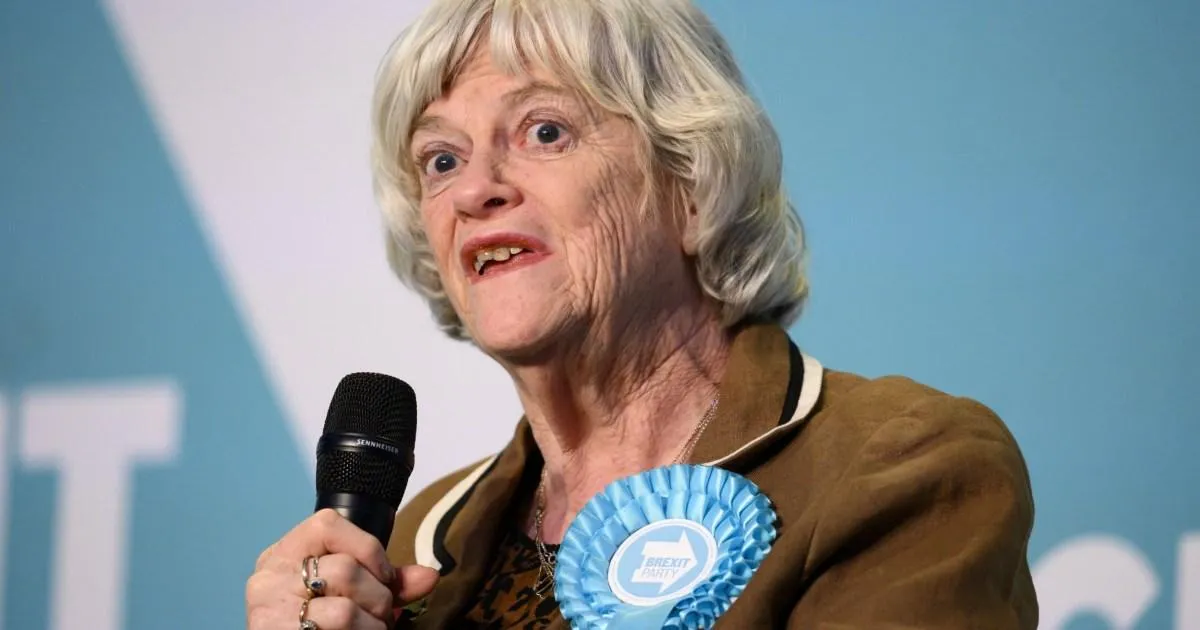
The news of Ann Widdecombe’s death has sent shockwaves through the country, transforming from a mournful announcement into a chilling mystery that has gripped the public consciousness. Initially, her management team communicated the news with the quiet dignity expected when a prominent public figure passes away, asking for privacy for her family. However, the atmosphere shifted rapidly when it was revealed that her death was not the peaceful departure of a 78-year-old retired politician, but an act of brutal violence. Discovering the former MP for Maidstone in her Dartmoor home, covered in blood with severe head wounds, turned a quiet corner of Devon into the focal point of a major criminal investigation.
The sequence of events leading up to the discovery of her body paints a painful picture of a life cut short in its own sanctuary. Investigators have determined that the attack likely occurred around midday on Wednesday, July 8. The grim reality of those final hours is underscored by the small, digitized trail left behind; the producer of a show on which she was scheduled to appear via Zoom began sending frantic messages when she failed to log on. They waited in vain for a response that would never come, as her phone sat silent, its final message timestamped at precisely 12:19 p.m. It is a sobering reminder of how quickly a schedule can be silenced by an unthinkable act.
Devon and Cornwall Police have been working with intense, focused urgency, launching a murder investigation that mobilized their Major Crime teams. For a brief window, it seemed as though a breakthrough had been found when a 26-year-old local man was taken into custody near her home. The development briefly relieved a community stunned by the violence in their midst, yet the investigation took another turn when police released him, confirming he had no involvement in the tragedy. This has left detectives back at the drawing board, casting a wide net in a renewed, urgent search for the perpetrator—a man described as white and potentiality dressed in hiking gear, adding an unsettling layer of mystery to the perpetrator’s profile.
In the aftermath of the announcement, the public discourse has been understandably careful, with leaders like Prime Minister Sir Keir Starmer urging the nation to remain vigilant while avoiding the trap of premature speculation. While the world watched to see if this was a politically motivated hit, the police have remained steadfastly open-minded, stating that there is currently no evidence to suggest her political history was the catalyst for her murder. In the corridors of power and the quiet lanes of Dartmoor alike, there is an uncomfortable awareness that even a well-known, high-profile figure can become a victim of a random, inexplicable crime of opportunity or internal malice.
For the residents of the quiet area surrounding “Widdecombe’s Rest,” the reality is particularly hard to process. Neighbors describe her as a woman who was approachable but private, a figure who had become a fixture of their landscape. They recount the shock of seeing the tranquil, low-crime neighborhood become a scene of a high-stakes crime investigation. Hearing stories of strange vans arriving in the dead of night, or simply seeing a garden fence where a tragedy occurred, has forced them to confront the fragility of their own safety. The community’s grief is laced with a pervasive, lingering unease, as they recall the “character” who lived among them, suddenly snatched away in a manner that feels completely at odds with the peaceful hills of Devon.
As the investigation continues to unfold, the focus remains on finding the truth and achieving justice for Ann Widdecombe. Her management team remains devastated, supporting the police while reiterating the family’s plea for privacy. With every passing day, the detectives are meticulously piecing together the timeline, hoping that the digital footprint, forensic evidence, and eyewitness accounts will eventually converge to identify the person responsible. For now, the story of Ann Widdecombe sits at the intersection of public tragedy and the deeply personal loss of a life that once commanded the national stage, leaving the country to wait for answers that cannot come fast enough.