



The Quiet Horror of a Double Life
In the tapestry of human existence, there are few threads as jarring as the revelation of a double life—the seemingly ordinary individual harboring a capacity for extraordinary violence. This unsettling truth came into sharp focus on a drizzly London morning as Joshua Kerry, a 28-year-old man from the unassuming town of Rotherham, South Yorkshire, appeared in the dock of Westminster Magistrates’ Court. His presence there was not for a minor infraction but for crimes so grave they have sent shockwaves through the British political establishment. Kerry is charged not only with the horrific murder of Dame Ann Widdecombe, a formidable political figure and former Conservative minister, but also with the preparation of terrorist acts, a charge that paints a picture of calculated, cold-blooded intent that allegedly stretched far beyond a single, tragic act of violence. The court proceedings unveiled a chilling narrative of obsession, meticulous planning, and a trail of destruction that began months before the fatal hammer attack, weaving a disturbing connection between the country’s political elite and the defendant’s alleged campaign of terror.
An Attack at the Home of a Political Firebrand
The prosecution’s opening statement, delivered by Kashif Malik, laid out a sequence of events that suggests a pattern of targeted aggression. The court heard that Kerry is accused of engaging in “online reconnaissance on prominent people and institutions,” meticulously gathering intelligence on high-profile figures. This alleged surveillance bore its first fruit of violence on April 20, 2025, in a chilling incident at the south London home of Reform UK leader Nigel Farage. A journey of nearly 200 miles from his home in Yorkshire to the capital was allegedly undertaken with a single, menacing purpose: to firebomb the residence of one of Britain’s most polarizing politicians. The daring and brazenness of the act were evident in the description of the scene that awaited Mr. Farage’s partner, Laure Ferrari. Returning home, she discovered the front door of their home had been violently forced, with half of the wooden door frame “hanging off.” The attack, though thwarted in its ultimate goal, had succeeded in leaving a physical and psychological scar. The discarded instrument of attempted destruction—a bottle of lighter fluid—was found left in the porch, a chilling memento of the intent to create a conflagration.
A Deliberate Act of Intimidation
The details provided to the court on Thursday painted a stark picture of the attempted intrusion. The damage was not accidental or the work of a bumbling opportunist. The prosecution detailed how forensic examination of the door frame discovered a distinctive “toolmark” originating from a “27mm single bladed edge.” This specific and precise detail points to a deliberate attempt at forced entry, the assailant using a tool to try and pry his way into the home. The inference drawn by the prosecution was that a determined effort was made to gain access to the property, a fact that elevates the incident from simple vandalism to a targeted home invasion. Whether the goal was to confront the political leader, set the house ablaze, or simply to signal his reach and menace, the message was clear: no one, even in their private sanctuary, was safe from Kerry’s alleged campaign of intimidation. The court heard that for Kerry, this event was not a standalone offense but a part of a longer, more sinister pattern, fitting into the timeline of his charge for preparing terrorist acts between May 31, 2024, and July 8, 2026.
The Tragic End of Ann Widdecombe
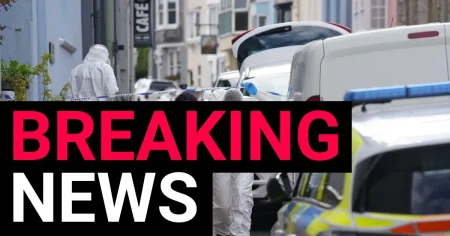
The connection between the attack on a politician’s home and the murder of another would soon become tragically clear. The court was reminded that just weeks after the alleged attack on Mr. Farage’s residence, Kerry is separately charged with the murder of Dame Ann Widdecombe. The 78-year-old former MP and government minister, who had become a prominent figure for the Reform UK party, was found dead at her home in the serene and remote setting of Haytor on Dartmoor, Devon. The brutality of her death is almost beyond comprehension: she was struck over the head with a hammer a staggering 21 times. The sheer force and number of blows speak to a frenzied, merciless attack, a profound act of violence directed at an elderly woman. The juxtaposition of the rural peace of her Dartmoor home with the savagery of the assault underscores the horror of the crime. This act of violence is the focal point of a separate murder charge, yet its connection to the preparatory actions taken against other political figures forms the core of the prosecution’s case, suggesting a systematic targeting of individuals associated with a particular political movement.
A Reopened Investigation and Missed Chances
The revelation in court has cast a glaring spotlight on a potential failure in the initial police response to the earlier incident. In August, counter-terror police made the startling admission that they had reopened a year-long investigation into the alleged attack at Mr. Farage’s home. The Metropolitan Police and CTP London had initially investigated the incident as nothing more than an “attempted burglary,” a classification that seems utterly inadequate in light of the new evidence. No arrests were made at the time, and the case was closed pending any new lines of inquiry. However, upon its reopening, CTP London identified a line of inquiry that “may have been relevant” but had not been “identified and pursued by them at the time.” This admission is a deeply troubling one, hinting at a missed opportunity to potentially intervene before the fatal attack on Dame Ann. It raises profound questions about how a potential act of terrorism against a senior political figure could be so catastrophically misread as a simple burglary, and how the resources of the state failed to connect the dots that could have saved a life.
A Broader Conspiracy and a Day in Court
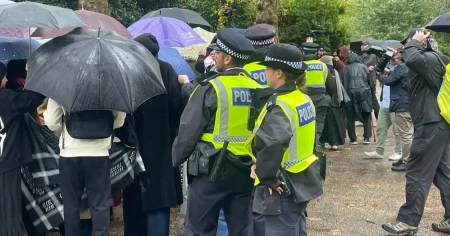
The court proceedings on that day were a stark tableau of these weighty accusations. Kerry, dressed in a grey tracksuit, spoke only to confirm his identity, his demeanor providing no outward clue to the alleged horrors attributed to him. The prosecutor’s timeline, stretching to July 8, 2026, suggests a long-term ambition for violence that was eventually tragically realized on that date with the murder of Ann Widdecombe. The case has inevitably drawn attention to the charged political climate surrounding figures like Nigel Farage and the increasing threats they face, but also to the individual narrative of a young man allegedly consumed by extremist ideology. As Kerry was remanded to appear at the Old Bailey on Friday, the full weight of the investigation now falls on the legal system. The case is a chilling reminder of the fragility of public life and the hidden dangers that can lurk in the shadows of public discourse. The question of what led Joshua Kerry to this point—what radicalization, what grievances, what mental state triggered such a violent campaign—will now be the focus of a trial that promises to lay bare a deeply disturbing story of hatred and violence at the heart of British society.