


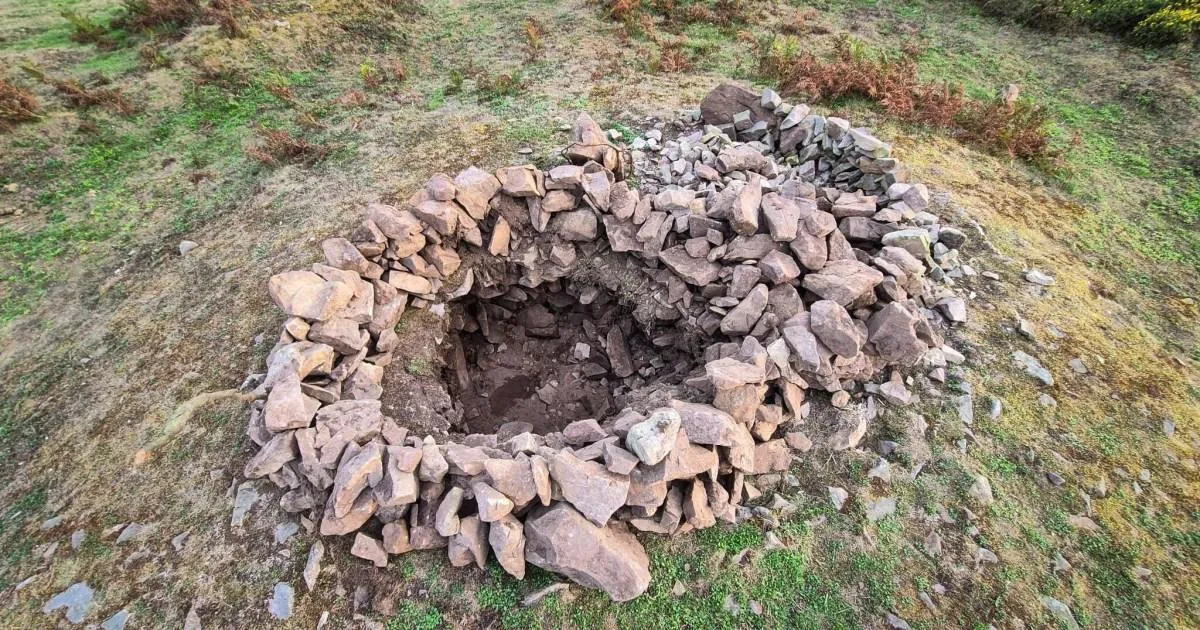
There is something deeply unsettling about a stone being pulled from a 4,000-year-old burial mound. It looks like a small act, perhaps even innocent, but at Fire Beacon Cairn near Crowcombe, in the Quantock Hills National Landscape of Somerset, it is a kind of theft from the dead. The ancient Bronze Age mound was vandalised twice in a matter of days, with rocks removed from a site that is legally protected and considered part of the United Kingdom’s irreplaceable heritage. The damage was spotted by a landowner, who quickly reported it to local rangers and Historic England. For those who know what the cairn really is, the news was not a bureaucratic nuisance but a deep, quiet grief. Iain Porter, head ranger of the Quantock Hills, put it plainly: “It’s not a pile of stones – it’s a very important historic site… showing the ceremonial nature of that landscape historically.” That simple sentence matters. It reminds us that the mound is not rubble from some forgotten path, but a deliberate monument, built by human hands to honour human bones. A place once marked by respect has now been marked by damage.
To understand why this matters so much, you have to step back and see the whole landscape. The Quantock Hills are dotted with around fifty Scheduled Monuments, a dense network of ancient places that makes this part of Somerset feel less like a countryside and more like an open-air cathedral. Fire Beacon Cairn is one of the most significant of these. It is a human-made mound formed from a stack of stones, intended to mark a burial site, and it still measures roughly 4.9 feet high and about 82 feet in diameter. That may not sound enormous, but its importance has nothing to do with size. It was built in the Bronze Age, a time when communities gathered around the dead in ways that we can only half understand. The area was sacred long before the Bronze Age, through the Neolithic and into the Iron Age, and generations of people returned to these hills to bury their kin, mark their seasons, and hold ceremonies that connected them to the land. When a person walks past the cairn today, they are walking through a memory that has survived the collapse of empires, the rise of industry, and the sweeping changes of modern life. It is strange to think that a monument so patient and enduring could be harmed in a few careless moments, but that is exactly what happened. A quiet hill, an ancient grave, and a vandalism that seems to carry no motive except perhaps curiosity, boredom, or some misunderstanding of what this place truly was.
The legal side of the story is clear. Fire Beacon Cairn is a Scheduled Monument, which means it is protected by law. It is illegal to move rocks, stones, or soil, to dig into the ground, or to cause any damage to the site. It is also illegal to use metal detectors in these places, because even small signs of disturbance can destroy the fragile context that archaeologists rely on. The recent vandalism, which occurred last week and again over the weekend, is therefore a criminal offence. Historic England, the national heritage body, confirmed that the cairn had only recently been repaired after it was vandalised two years ago. That fact adds a particular sadness. The monument had already been hurt before, then carefully put back together by people who cared, only to be hurt again. It survived four millennia of weather, war, and neglect, but it cannot simply survive indifference forever. Every time someone removes a stone, they erase a piece of the story that no book can fully rewrite. They might think they are taking home a souvenir from an old hill, but they are actually stealing from everyone who has ever lived there, and from everyone who will ever wonder about the people who came before them.
Experts have responded with words that mix professional concern and personal heartbreak. Iain Porter noted that archaeologists and heritage officers are especially worried because the cairn may contain finds, archaeological evidence of use, and dating material that are still hidden inside the mound. “That’s where it’s going to be,” he said, meaning that the heart of the site, the part that could tell us when it was built, how it was used, and by whom, is exactly the part that is most vulnerable to disturbance. Repairing the damage will cost money, but the financial cost is small compared to the loss of knowledge. Dr Richard Brunning, senior historic environment officer at the South West Heritage Trust, called the vandalism “especially worrying” and said that ancient monuments that have survived this long would be terrible to lose “on someone’s whim.” He also reminded everyone why these sites matter so deeply to modern science. When ancient monuments are excavated properly, they often hold human remains. Those bones are not just relics; they are archives. Dr Brunning explained that specialists can now study DNA from people buried thousands of years ago, doing “all sorts of wonderful bits of science that you could never do in the past.” That means we can learn about appearance, ancestry, diet, diseases, and even family relationships that were completely invisible before. Every damaged stone could be a barrier between us and that knowledge. It is as if the ancient dead are trying to speak, and we have just thrown dirt over their voices.
Still, the response from the heritage community has been one of determination rather than despair. Historic England, the South West Heritage Trust, and the Quantock Hills National Landscape team are working with the landowner to assess the damage and plan repairs. They have asked the public to remain vigilant and to report any further vandalism. The message is not just about punishment, though it is clear that damaging a Scheduled Monument is a serious offence. It is also about shared responsibility. These ancient places belong to no single person; they belong to the story of human civilisation. Iain Porter, as manager of the Quantock Hills National Landscape team, admitted that it is “upsetting to see the level of damage caused to this Scheduled Monument.” He spoke of the wider prehistoric landscape, a vast network of sites that helps modern people understand the ceremonial importance of these hills from the Neolithic, through the Bronze Age, and into the Iron Age. In other words, the cairn was never alone. It was part of a world of standing stones, burial mounds, and sacred ridges that ancient people used to guide their lives and remember their ancestors. When one monument is damaged, the whole network loses meaning. The hope is that public attention will turn from curiosity to care. The hope is that someone who sees a person taking stones from a hill will say something, report it, and refuse to let silence become an accomplice.
In the end, this story is not only about a mound of old rocks in Somerset. It is about how we treat anything that existed before us. Fire Beacon Cairn has stood through the slow growth of forests, the coming and going of civilisations, the invention of writing, the birth of science, and the entire recorded history of the British Isles. It is a monument shaped not by machines but by human hands, carrying the weight of memory in every stone. The people who built it are long gone, but their bones and their stories remain somewhere in that earth, protected for future generations to understand through everything from careful excavation to DNA analysis. To vandalise it is to break a promise we make to the past and to the future. Yet there is still time for vigilance and repair. There is still time for us to decide that ancient places are not resources to be taken from, but gifts to be handed onward. Maybe the greatest lesson of this damaged cairn is that our ancestors watched over their dead with awe, and we, thousands of years later, are their descendants and their guardians. The hill can be mended, the stones can be put back, and the site can once again stand quietly under the sky. But it will only survive if we understand that every stone matters, every monument deserves respect, and every act of destruction begins with people who forget that they are not the first to walk this land. With that understanding, Fire Beacon Cairn may still stand for another four thousand years—and perhaps one day, the only people who remember its injury will be the ones who came together to save it.