



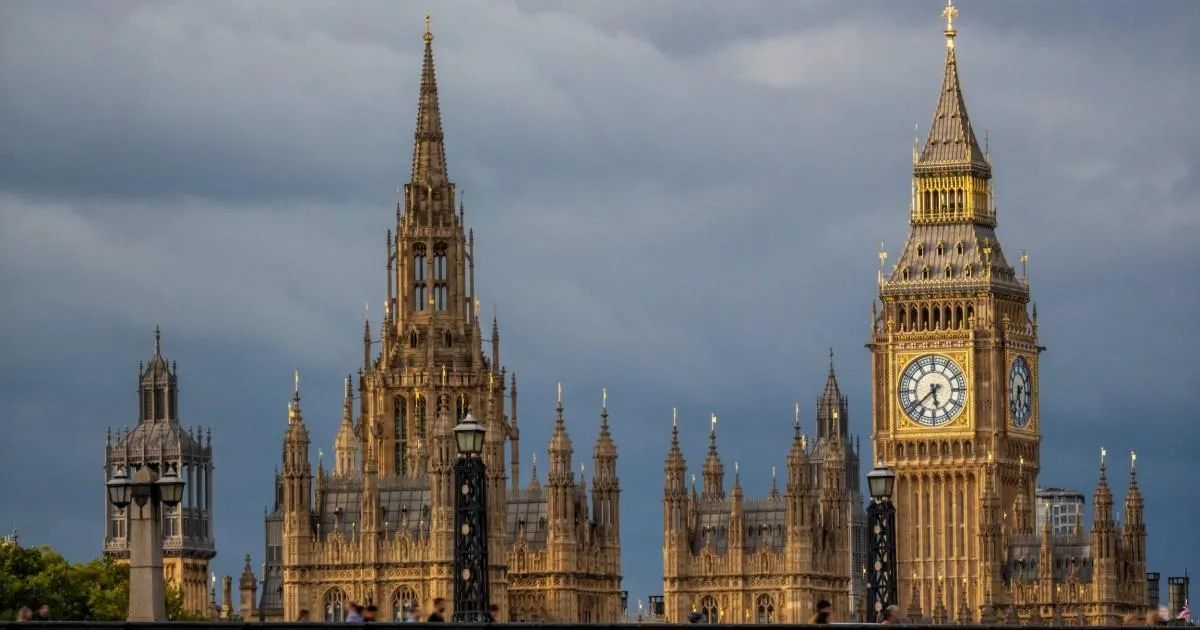
An extraordinary security breach unfolded at the heart of British democracy early this past Sunday, turning the quiet, hallowed corridors of the Houses of Parliament into the site of an inexplicable late-night adventure. A woman in her fifties, who had spent her day as an ordinary visitor on a guided tour of the Westminster complex, decided that she wasn’t quite ready to leave when the day’s activities concluded. Instead of heading for the exit, she slipped away from her group and locked herself inside a toilet marked as being “under maintenance.” There, amidst the silence of the massive, historic estate, she waited for the crowds to dissipate and the evening to settle in.
What follows reads almost like a scene from a film; as the sun set and the seat of government went dark, the woman emerged from her hiding spot to explore the labyrinthine rooms of the Palace of Westminster entirely on her own. For several hours, she wandered through the sprawling, shadowed halls that are usually bustling with politicians, civil servants, and security personnel. It was a surreal intrusion into one of the most protected buildings in the United Kingdom, made all the more striking by the fact that she managed to navigate the estate undetected for such a prolonged period during the dead of night.
It wasn’t until the early hours of Sunday morning that her quiet exploration finally drew the attention of the authorities. She was eventually apprehended in Westminster Hall—the legendary stone-walled chamber where tours typically begin and end—by Perimeter Officers who are usually tasked with keeping a watchful eye on the external boundaries of the estate. The sight of an unaccompanied civilian wandering through one of the most secure buildings on the planet understandably sent a ripple of concern through the parliamentary security apparatus, leading to her immediate arrest on the suspicion of trespassing under the Serious Organised Crime and Police Act 2005.
The incident has naturally prompted a flurry of internal questions regarding the effectiveness of the night watch. Reports suggest that parliamentary authorities have launched a formal investigation to determine how it was possible for a visitor to remain on-site, hidden and undetected, for so many hours. Whispers in the tabloids suggested that perhaps some security personnel might have been caught napping on the job, though official sources maintain that no disciplinary action is currently being taken against any staff members. It serves as a stark reminder of the challenges involved in securing a massive, historic structure that must balance its identity as a functional workplace with its role as a heritage site.
Despite the gravity of the breach, the authorities have been quick to tamp down any whispers of a larger threat. When questioned about the woman’s motives, officials and police investigators indicated that they do not believe she had any malicious intent. There was no plot, no weapon, and no sign of an organized attempt to disrupt the workings of the state; it appears to have been an act of curiosity or eccentricity that simply spiraled into a legal predicament. The Metropolitan Police have since released her on bail while they continue their inquiries, but the incident remains a puzzling anomaly in the history of the Westminster estate.
Ultimately, the Palace of Westminster has issued a statement emphasizing that while they cannot divulge the intricacies of their security protocols, the safety of those who work and visit the site remains their highest priority. A full, internal review is currently underway to ensure that no such quiet, nocturnal wandering can happen again. While for now, the story rests as a strange footnote in the busy news cycle of British politics, it serves as a sobering lesson that even in the most fortified and closely watched halls of power, the unexpected can still happen when the lights go out and the doors are thought to be locked.