



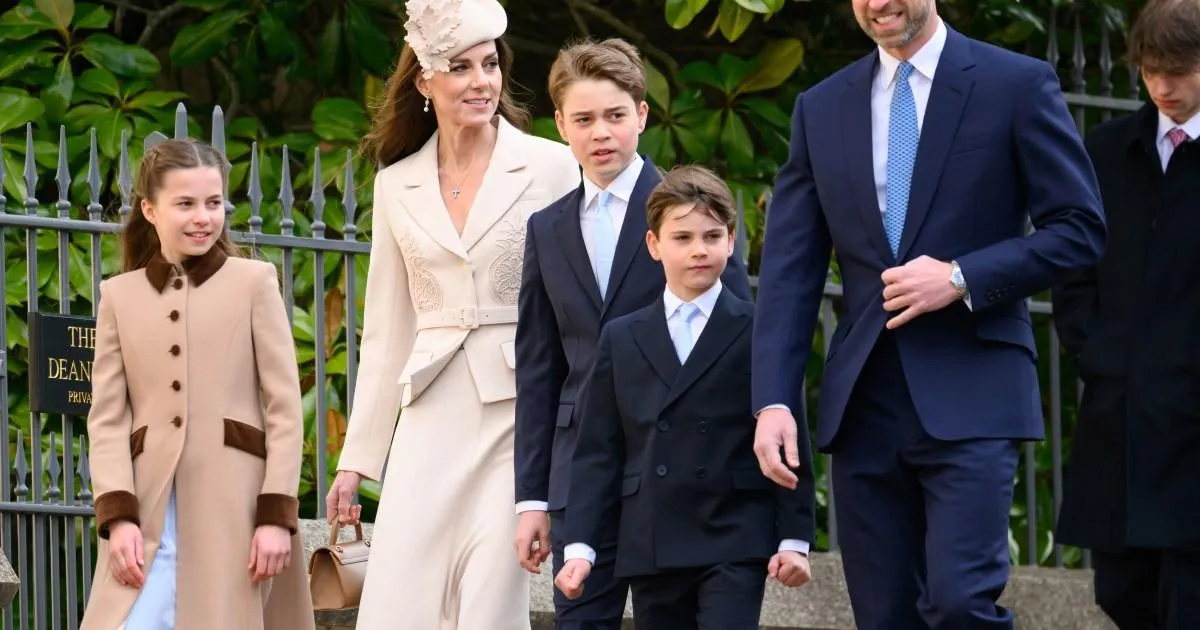
Prince William and Kate Middleton have built a reputation for gently nudging the British monarchy into the modern era, consistently choosing to prioritize their personal values over centuries-old rigidity. From their relaxed approach to public appearances—marked by the occasional selfie or a candid moment of affection—to the way they plan their private lives, they have made it clear that their priority is creating a sense of normalcy for their family. This pattern of breaking with tradition has been a constant theme since their wedding, where they famously pushed back against expected honeymoon protocols. Now, that same spirit of autonomy is shifting toward how they plan to raise Prince George, Princess Charlotte, and Prince Louis, moving away from the detached, formal upbringing typical of past royals.
At the heart of this “normalcy project” is the couple’s desire to be hands-on parents. Both William and Kate have been vocal about their wish to raise their children without the constant shadow of royal artifice, and their everyday actions—such as consistently handling the school run themselves—back up these claims. Because of this, royal experts and former staff, including former royal butler Grant Harrold, suggest that the upcoming milestones in the children’s lives will be handled with typical parental involvement. Specifically, there is speculation that when it comes time for George, Charlotte, and Louis to learn to drive, Kate may not simply farm the duty out to a chauffeur or a stern instructor, but instead take the lead herself.
While the prospect of a future King learning to drive from his mother feels like a major departure from royal norms, it speaks to Kate’s temperament. Supporters of the family often praise her for her composure, and experts believe her calm, steady nature makes her an ideal teacher for the high-pressure environment of learning the rules of the road. Although it is inevitable that the royal children will need to undergo formal training for safety and security reasons, such an arrangement would mirror the experiences of millions of other teenagers. The goal is clearly to ensure that these significant rites of passage remain intimate, private, and grounded in the bond between parent and child.
Security remains an undeniable, albeit frustrating, variable for the Wales family. Even a simple driving lesson requires a level of logistical coordination that the average family never encounters, as any instructor chosen for the job would necessarily need to be someone deeply trusted and rigorous in their discretion. Beyond the vetting process, the instructor would likely be a local professional who understands the specific privacy needs of the household. It is a balancing act; the Windsors want their children to have the freedom that comes with a driver’s license—especially given the massive, sprawling nature of their estates—yet they must balance that autonomy with the reality of being the most watched family in the world.
Looking ahead, we can see these parenting decisions aligning with larger changes in the structure of the royal children’s lives. Prince George, who is approaching his teenage years, is currently preparing to transition to Eton College. This milestone highlights the constant friction between the royals’ desire for normalcy and the intense, global scrutiny placed upon them. The choice to enroll George in a prestigious, all-boys environment like Eton is partly driven by a desire to shield him from the intense media pressures of the “smartphone era,” where every innocent social interaction could be captured and commodified by the press. It remains a conscious effort to ensure that, despite his future role, he has a childhood that is not entirely dictated by the public eye.
Ultimately, whether or not Kate ends up in the passenger seat with a learner’s permit in her hand is secondary to the message it sends. By continuously choosing to involve themselves in the foundational stages of their children’s development—from school runs to driving lessons—William and Kate are effectively redefining what it means to grow up royal. They are prioritizing the parent-child connection as the cornerstone of their family life, ensuring that even within the gilded cage of the monarchy, their children have the space to learn, fail, and achieve milestones just like anyone else. It is a slow, steady modernization that ensures the next generation of the royal family is anchored in reality, even while living in the public spotlight.