


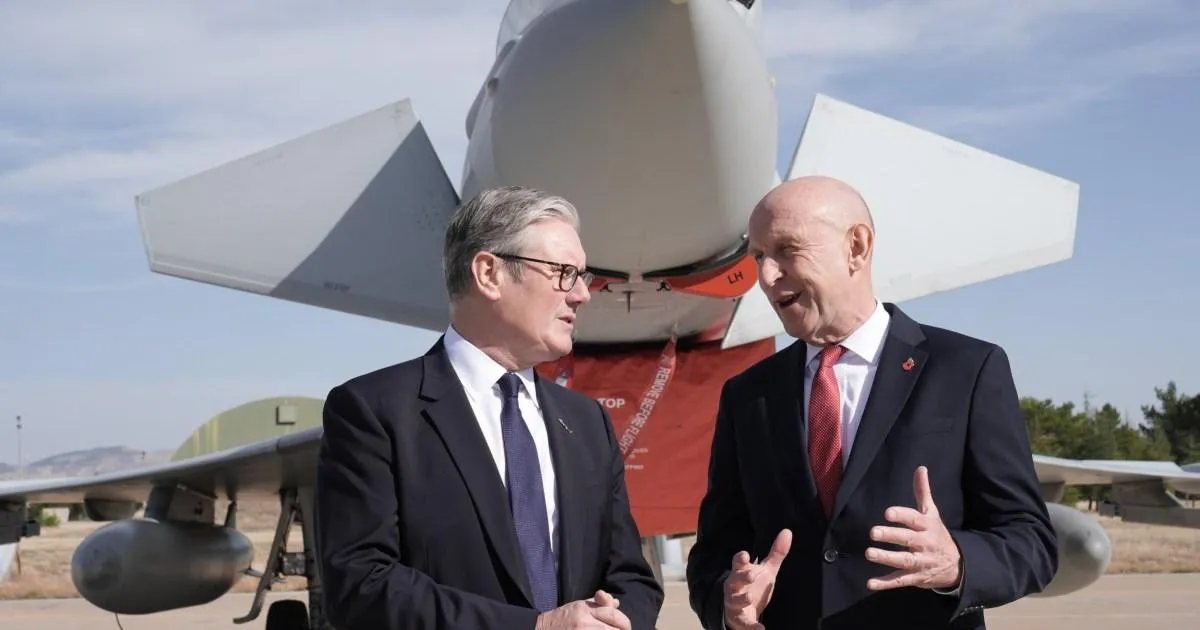
The recent resignation of Defence Secretary John Healey marks a watershed moment for the Labour government, shaking the very foundations of Sir Keir Starmer’s premiership. Just days before this political earthquake, the Prime Minister stood at a weapons factory in Swindon, solemnly declaring that his primary duty is to ensure the safety of the British people. This mantra—that national security is the bedrock of his leadership—has been a constant refrain throughout his tenure. However, these words now ring hollow, transformed from a statement of purpose into a vulnerability. When a senior cabinet minister walks away, it is always a headache for a leader, but when the Defence Secretary exits citing a failure to protect the realm, it becomes something far more ominous: a direct threat to the Prime Minister’s legitimacy.
At the heart of this crisis is the unpublished Defence Investment Plan (DIP), a document that should have been the blueprint for Britain’s security in an increasingly volatile world. In his scathing resignation letter, Healey makes a chilling assessment: the government’s current trajectory falls drastically short of what is required. He warned that he was being forced into positions that would inherently weaken the readiness of our Armed Forces. By stripping back budgets and failing to provide necessary resources, Healey argues that the Prime Minister and the Treasury are fundamentally undermining the country’s safety. For a Prime Minister who has staked his entire reputation on being a “safe pair of hands,” the accusation that his own internal policy decisions are the source of national insecurity is as damning as it gets in Westminster.
The timing of this departure is particularly poisonous for Starmer. While the government has weathered recent ministerial resignations following local election losses, those exits were framed as personal grievances or disagreements over internal party management. Healey’s departure is categorically different. He has bypassed the usual political posturing and attacked the core competence and judgment of the Prime Minister. By suggesting that the government is either unable or unwilling to prioritize the nation’s survival in the face of rising global threats, Healey has effectively transformed a policy disagreement into a question of national fitness for office. It is an extraordinary indictment that elevates the resignation from a political news story to a debate about the stability of the state itself.
What makes this blow so difficult for No. 10 to deflect is the impeccable reputation of the man holding the dagger. John Healey is not a fringe politician; he is widely regarded as a man of integrity, esteemed by colleagues across the political divide. Even figures from the opposition benches—who usually seize any opportunity to attack the government—have felt compelled to describe him as an “honourable man.” Because Healey has distanced himself from the typical ambition seen in leadership coups, pointing to a sincere, desperate concern for national security, his words carry a weight that Starmer’s spin doctors simply cannot minimize. He has framed his exit not as a career move, but as a moral imperative to alert the public to what he perceives as a profound failure of leadership.
The political fallout suggests that Starmer’s grip on power has been irreparably loosened. While previous scandals might have been survivable as routine parliamentary drama, the charge that the Prime Minister is failing in his primary oath of office is the kind of allegation that lingers, festering in the public consciousness. Speculation is already mounting about what this means for the future of the Labour Party and who might be waiting in the wings to replace him. Although Healey has claimed he does not wish to lead, the void created by his departure invites others to step forward, fueled by the narrative that the government is drifting without a compass in a dangerous world. The perception of Starmer as a decisive, security-conscious leader has effectively vanished overnight.
Ultimately, this saga highlights the fragile nature of political authority when it is challenged by those who know the truth from the inside. Starmer’s previous rhetoric regarding his “duty to keep the country safe” now serves as a haunting reminder of the standards he set for himself—standards that his own Defence Secretary has testified he can no longer meet. As the dust settles, the Prime Minister finds himself in an unenviable position: he is not only fighting to regain the confidence of his party and the public, but he is forced to rebut the most damaging accusation any leader can face: that he has become a liability to the nation he swore to protect. In the cold, hard theatre of Westminster, that is a verdict from which few manage to recover.