

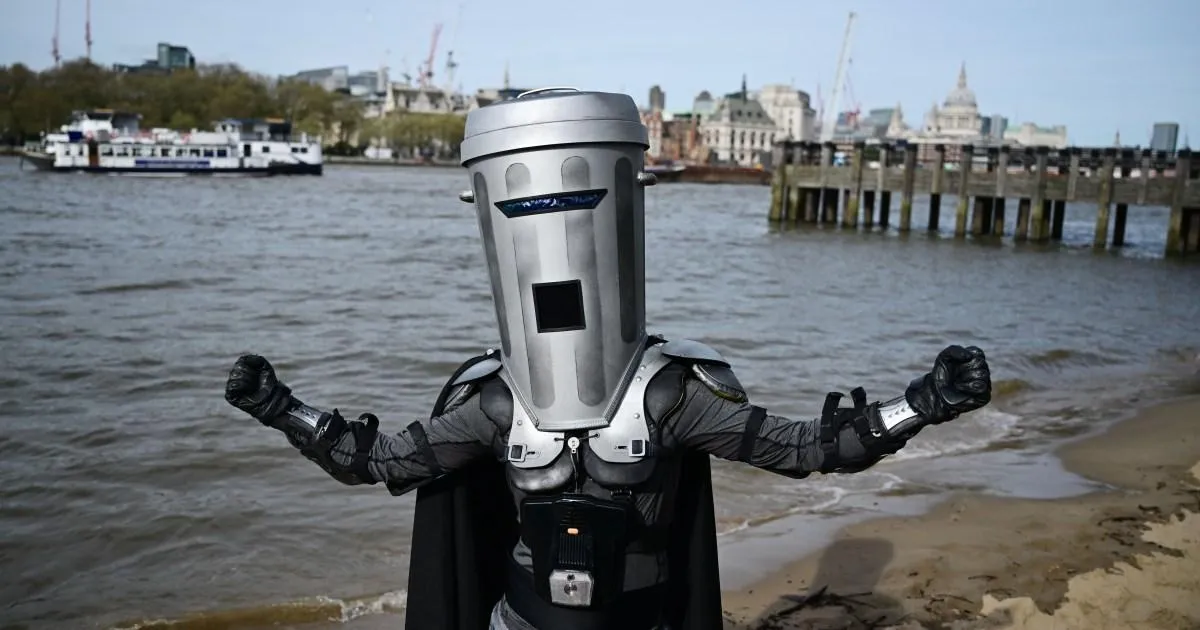
Election nights are supposed to follow a predictable script: the winner smiles, thanks the voters, promises to work hard, and disappears into the machinery of Westminster. But the Clacton by-election tore up that script the moment the results were read out. The man who was supposed to be the story, Nigel Farage, had won the seat, but he was not there. Instead, standing in front of the cameras, silver helmet gleaming and cape arranged just so, was Count Binface—a self-described “intergalactic space warrior and leader of the Recyclons from planet Sigma IX”—delivering the speech of a lifetime. He had just won 26.9 per cent of the vote, almost 10,000 ballots, the best result of his entire strange political career. Farage may have reclaimed a parliamentary seat, but the Count stole the night. His victory speech was classic Binface: he called himself “the winning candidate… of the candidates who bothered to turn for the results,” a dig at Farage’s absence that drew laughter and cheers. In a by-election triggered by Farage’s resignation over an undeclared £5 million “gift,” five of his biggest rivals had pulled out within hours, leaving the intergalactic warrior as the unlikely main opposition. The result was not just a punchline. It was a 26.9 per cent explosion of protest, irony, and genuine affection for a man who has spent years treating elections as performance art. The Count, for his part, was suitably pleased. He told reporters he was “over the moon” and added, ominously, that he was “just getting started.” If that is true, British politics had better brace itself for more laser-focussed, Ceefax-worshipping absurdity.
Behind the mask is Jon Harvey, a stand-up comedian and author, born in Croydon and a devoted Crystal Palace supporter. He has spent much of his career inside the machinery of political comedy, working on shows like The Thick of It, Have I Got News for You, and Time Trumpet, for the BBC and beyond. He has also presented on Times Radio, giving him a foot in both the silly and the serious worlds. In 2019, the New Yorker named one of his jokes among the “Jokes of the Year”—a Succession-style parody called Recession that recast Boris Johnson’s family as a clan of squabbling power-brokers. That kind of satire is exactly what Count Binface represents. The character may claim to be an “intergalactic space warrior,” but the man steering the ship is a sharp political observer who understands that sometimes the only way to talk about politics is to make it ridiculous. On his official website, Harvey writes that his alter ego “stood against Theresa May in 2017 and went viral (in a non-Covid way).” That parenthetical, deeply 2020s joke is typical of the Binface sensibility: he is never just absurd; he is absurd with a point. He knows that voters feel disconnected from a political class that often seems to speak another language. He also knows that laughter can be a bridge, not just a barrier. By speaking the language of lasers, love, and long-lost BBC services, he creates a space where people can laugh at the system while still taking part in it. He is not a politician pretending to be funny; he is a comedian who uses political machinery as his stage. That is no small feat, and it helps explain why a clowning space warrior has slowly become a fixture of British elections rather than a one-week wonder.
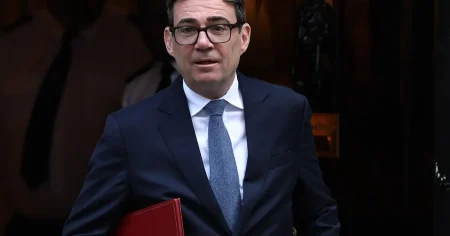
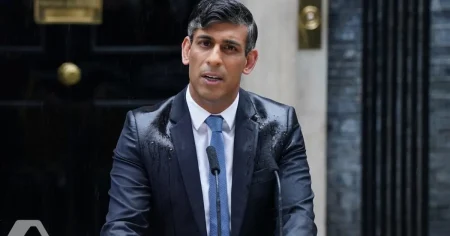
Count Binface’s electoral history reads like a roadmap of modern British political absurdity, and it is a map he has followed with extraordinary dedication. He first surfaced as a challenger to Theresa May in 2017, then turned his attention to Boris Johnson’s seat in Uxbridge and South Ruislip, a constituency Johnson had represented since 2015. In 2019, under his new and legally safer name, Binface won just 69 votes in the general election, finishing behind the newly revived Lord Buckethead, who took 125. It was a humbling start, but Binface has never been a quitter. He ran for London mayor in 2021, collecting more than 24,000 votes—a serious number for a candidate whose platform was more about jokes than policy. In the 2023 Uxbridge by-election he picked up 190 votes, but that was enough to finish ahead of Piers Corbyn, UKIP, and the Official Monster Raving Loony Party, a triumph of the surreal over the merely eccentric. He then stood in the 2024 general election against Rishi Sunak, earning 308 votes, and later appeared in a Makerfield by-election against Andy Burnham, where he managed 95. None of these results would trouble any political party headquarters, but together they tell a story of commitment. Binface does not simply show up to be laughed at; he shows up to make a point, to remind people that elections can be accessible, funny, and even enjoyable. Each campaign, no matter how small, added another layer to the persona, another media clip, another moment of weird connection with voters who felt invisible. By the time he arrived in Clacton, he was no longer a novelty. He was a veteran political campaigner with a spacesuit, a manifesto, and an uncanny ability to capture the mood of voters who feel ignored by the mainstream parties.
The Clacton by-election was a perfect storm for a candidate built on absurdity. It was triggered when Nigel Farage resigned from Reform UK over an investigation into a £5 million “gift” he had not declared—a scandal that felt both serious and faintly ridiculous, exactly the mix that Binface thrives on. Within hours, the Count threw his metal hat into the ring. Then came an even more remarkable development: five of his biggest rivals pulled out, leaving the intergalactic space warrior as the leading opposition to Farage. What followed was a campaign unlike any other in the constituency’s history. Binface gave interviews, posed for pictures, and made media appearances that treated the by-election as both a real contest and a prolonged comedy sketch. His manifesto for Clacton was, as expected, outlandish: demands for justice and lasers, a call for the return of Lovejoy, and a pledge to bring back Ceefax. On paper, it was nonsense. But there was method in it. The references to Lovejoy and Ceefax were not just nostalgia; they were pointed commentary on a political media that can feel as dated and inaccessible as a pre-internet teletext service. And the voters responded. When the results were declared, more than 26 per cent of the ballots cast in Clacton went to a man who claims to come from another planet. Some were certainly protest votes, a way to tell the political class exactly what they thought of it. Others were expressions of pure joy, a celebration of the fact that voting can be fun. Either way, the message was unmistakable: in a democracy where people feel abandoned, even a space warrior looks like a viable alternative.
To understand Count Binface, you need to know about the strange fate of Lord Buckethead. Before 2018, Harvey’s character was known by that name, and the name had a history far older than his own. Lord Buckethead first appeared in Hyperspace, a 1984 science-fiction comedy made by American filmmaker Todd Durham as a Star Wars parody. A few years later, a version of the character—not played by Harvey—began standing in UK general elections, first in 1987 and again in 1992. That version was played by Mike Lee, who ran the company that distributed the film in the UK under the title Gremloids. At the time, this appears to have been an approved use of the character, a strange alliance between cinema and politics. But nothing lasts forever in the world of intellectual property. After Harvey’s unofficial portrayal of Lord Buckethead went viral in 2017, a legal dispute erupted. As the Count puts it, he had “an unfortunate battle on the planet Copyright” in 2018, and “an elderly American human film producer” took his Twitter account. It is perhaps the most on-brand legal case in political history. Rather than surrender, Harvey chose a creative escape: he upgraded. He reimagined his character as Count Binface, a “new and improved” space warrior, and carried on as if a name change was simply another absurd twist in an absurd career. In 2019, he stood against Boris Johnson in this new form, and a newly approved Lord Buckethead materialised to run against him. The two masked figures faced off on the same ballot paper, a legal and comedic standoff that could only happen in British politics. It was a reminder that even our jokes need lawyers, and that power, no matter how strange, always demands a legal address.
The deeper meaning of the Clacton result is not really about one man in a silver helmet. It is about the health of democracy and the role of humour in holding power to account. Count Binface belongs to a long British tradition of protest candidates who use laughter as a weapon. From Screaming Lord Sutch and the Monster Raving Loony Party to generations of satirical candidates, the underlying idea has always been the same: if you can make people laugh, you can make them think. Binface has mastered that art. He has turned election campaigns into performance pieces, and in doing so he has given voters a way to participate in politics without feeling stupid or naive. He shows up. He stands in front of the cameras. He says things that are simultaneously ridiculous and profound. And when the real winner of an election cannot be bothered to attend the count, Binface is there, ready to declare himself the winner of everyone who actually showed up. In an age of political disengagement, that matters. Nearly ten thousand people in Clacton marked their ballots for a man from planet Sigma IX. They were not necessarily demanding the return of Ceefax, although it is a good policy. They were demanding something more basic: to be seen, to be entertained, and to have their vote feel like more than a tick box. Count Binface offers them that. He has said he is “just getting started,” and that is both a promise and a threat. The British political establishment, already struggling to keep up with the pace of events, now faces the prospect of a satirical space warrior with momentum, a manifesto, and a growing army of voters who are happy to laugh all the way to the ballot box. In a democracy, that may be exactly what we need: a reminder that the people in charge are not as serious as they think, and that the joke, in the end, is on anyone who takes themselves too seriously.