

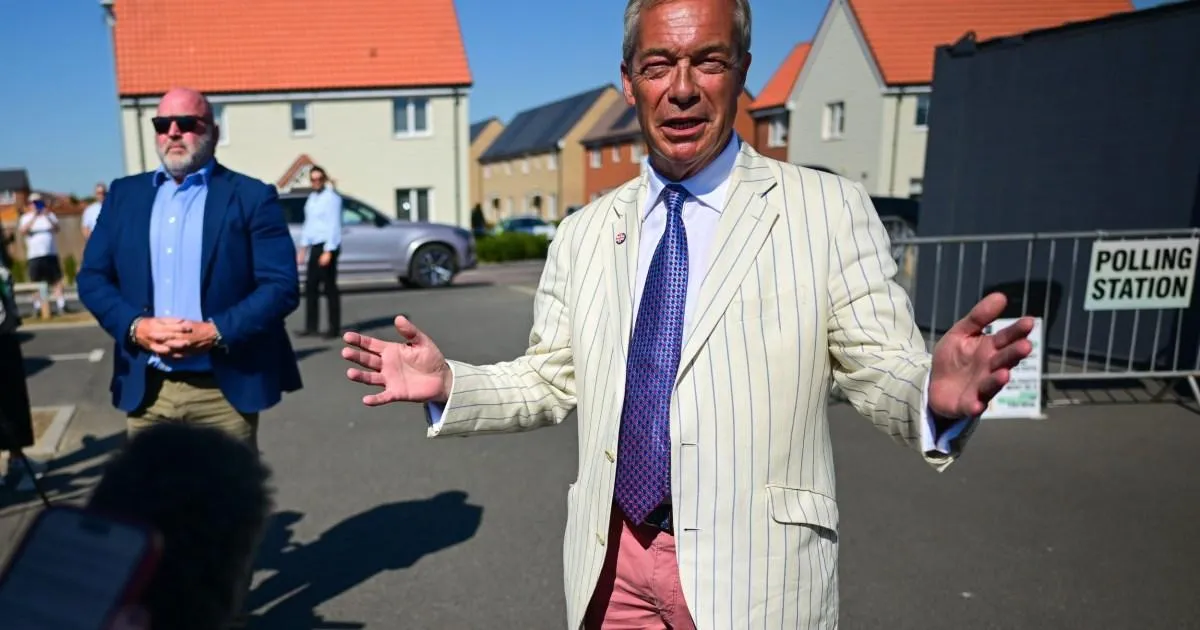
Nigel Farage’s Clacton Victory: A Political Comeback and Its Complications
In a stunning display of electoral dominance, Nigel Farage has secured his position as Member of Parliament for Clacton with a commanding victory that has sent ripples through British politics. The Reform UK leader captured an impressive 63.3% of the vote in Thursday’s by-election, defeating what was truly one of the most unusual fields in modern political history—a record-breaking lineup of thirty-four novelty and fringe candidates that turned this contest into something of a political spectacle. What makes this victoryparticularly noteworthy is not just the margin of Farage’s win, but the runner-up’s identity: Count Binface, the satirical character with a plunger on his head, managed to secure 26.9% of the vote, making him by far the most successful novelty candidate Britain has ever seen. This unusual electoral outcome means Farage will now return to the House of Commons when Parliament reconvenes from its summer recess next month, but his path forward is anything but smooth, with multiple controversies and investigations looming over his triumphant return to Westminster.
A Controversial Figure Under Investigation
Immediately upon his return to the Palace of Westminster, Farage faces the resumption of an investigation that could potentially threaten his freshly won seat. The Parliamentary Standards Commissioner, Daniel Greenberg, is examining whether Farage failed to properly declare a £5 million “gift” he received before the 2024 general election from a British cryptocurrency billionaire who currently resides in Thailand. The commissioner’s investigation is narrowly focused on whether Farage broke parliamentary rules by not formally registering this money as a donation connected to his political activities—not whether accepting the funds was itself inappropriate. However, the sheer scale of this sum, which dwarfs what most of his constituents will earn in their entire lifetimes, creates an uncomfortable narrative for a politician who has positioned himself as a champion of ordinary working people. Additionally, questions have emerged about support allegedly provided to Reform by George Cottrell, a convicted fraudster nicknamed “Posh George,” who reportedly supplied security and social media personnel for Farage without proper declaration to parliamentary authorities.
Farage’s Gambit and Its Potential Consequences
Farage has been remarkably candid about his decision to trigger this by-election, openly admitting that he forced the contest specifically because of these damaging stories and allegations. His reasoning was straightforward: the people of Clacton should serve as the ultimate judge of whether he has done anything wrong. This gamble paid off spectacularly in electoral terms, with voters delivering a resounding endorsement of their MP. However, the now-restarted investigation could provide those same voters with another opportunity to render judgment sooner than anyone might expect. If Greenberg determines that Farage breached parliamentary rules, a complex procedural process begins. The commissioner would send his findings to the Commons select committee on standards, which would determine the appropriate punishment. Should that punishment include a suspension from the House of Commons lasting at least ten sitting days, a recall petition would automatically be triggered in Clacton. If at least ten percent of registered voters in the constituency sign that petition, Farage would lose his seat, forcing yet another by-election in what has become one of Britain’s most politically contested constituencies.
The Mechanics of a Potential Recall
Understanding the technical details of this process reveals just how precarious Farage’s position could become. The recall petition mechanism is designed to give constituents a voice when their MP faces serious sanctions, and the threshold of ten percent of voters is deliberately set at a level that is achievable but not trivial. In Clacton, with its roughly 70,000 registered voters, this would require approximately 7,000 signatures—a significant but far from impossible number given the intense political interest in this constituency. Should this scenario unfold, Farage would be free to stand in any subsequent by-election, and it’s highly likely that the major political parties, which largely sat out this most recent contest, would field candidates in an attempt to unseat him. The Reform leader’s comfort with this situation speaks to his confidence in his personal popularity and his belief that his constituents support him despite the ongoing controversies. Yet the potential for embarrassment and disruption remains significant, creating an atmosphere of uncertainty around his political future that even his landslide victory cannot fully dispel.
Comparing the Numbers
The electoral mathematics of this by-election deserve closer examination, as they reveal both the strength of Farage’s support and the peculiar nature of this particular contest. Farage secured 22,239 votes, representing a 63.3% share of the total ballots cast. Interestingly, this number actually exceeded his general election performance last summer, when he won with 21,225 votes, despite fewer voters participating in this by-election. Count Binface, his closest challenger, secured 9,455 votes with a 23.93% share—an extraordinary result for a novelty candidate that speaks to either genuine anti-Farage sentiment or the British public’s enduring love of political satire. Beyond these two candidates, the field collapsed dramatically, with all 32 remaining candidates failing to secure more than 500 votes apiece and subsequently losing their deposits by falling below the five percent vote share threshold. This distribution of votes paints a picture of a constituency that is strongly committed to Farage, but also contains a significant minority expressing their discontent through unconventional means, turning this by-election into a referendum on both the Reform leader and the nature of modern British political engagement.
Farage’s Promises and Challenges Ahead
Throughout his campaign, Farage emphasized national issues rather than purely local concerns, focusing heavily on Reform’s flagship policies regarding illegal immigration, taxation, and what he describes as “dodgy” businesses. When pressed by Metro to outline his specific commitments to Clacton constituents, he returned to these broader themes, suggesting his appeal rests more on his national profile and political agenda than on constituency-specific achievements. This approach has drawn criticism, with questions raised about how much time he actually spends in his constituency and whether he adequately represents local interests. Notably, reports indicate that Farage does not hold in-person surgeries where constituents can raise concerns directly, citing safety considerations, though his spokesperson maintains that he conducts such meetings online. In a campaign video released before the vote, Farage sought to demonstrate his local engagement by highlighting his donations to community causes, his participation in a Remembrance Day parade in nearby Walton-on-the-Naze, and his efforts to promote Clacton as a tourist destination—including his attempts to help a furniture store called Codgers following a devastating fire. These local touches, while modest, presumably helped reassure voters that their MP maintains some connection to their daily lives and concerns.
The Road Ahead for Clacton and Farage
The peculiar circumstances surrounding this by-election and its aftermath raise fundamental questions about accountability, trust, and representation in British politics, particularly regarding politicians who maintain high profiles while serving constituents who may see them more as symbols than as dedicated representatives. Farage’s victory, while personally and politically significant, does not resolve these underlying tensions. The looming investigation into his financial declarations, the questions about undeclared support from controversial figures, and the unusual nature of his electoral mandate all contribute to an atmosphere of uncertainty. For the people of Clacton, the return of their MP to Westminster represents an opportunity for him to deliver on his promises, but also carries the risk of another disruptive campaign should the investigation yield unfavorable results. Farage has demonstrated remarkable political resilience throughout his career, surviving numerous controversies and political setbacks, but the combination of a suspended investigation, a potentially skeptical electorate, and a constituency that has shown a willingness to express its opinions through both serious and satirical candidates, creates a uniquely challenging environment. The coming months will reveal whether this latest chapter in Farage’s political career represents a new beginning or merely a prelude to further controversy.