
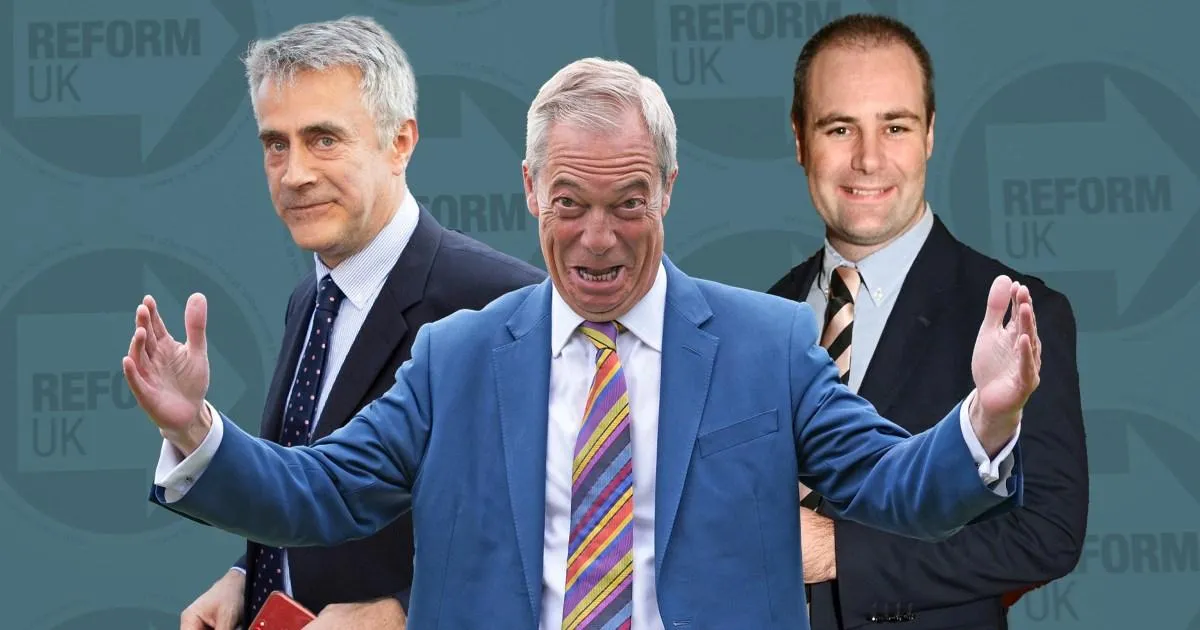
The landscape of British political financing has undergone a seismic shift, thrusting Reform UK into the spotlight with its recent influx of high-profile wealth. Official data from the Electoral Commission revealed that in the first three months of 2026, the party secured a staggering £7 million in donations from two cryptocurrency billionaires: Christopher Harborne and Ben Delo. To put this into perspective, this single party’s intake from just these two men eclipsed the total donations received by the Conservatives and Labour combined during the same period. This financial windfall effectively grants Reform UK a massive megaphone, raising inevitable questions about the influence of private capital in our democratic processes and how such enormous sums reshape the playing field of national politics.
The donors behind these figures are high-stakes players in the volatile world of digital currency. Christopher Harborne, currently ranked among Britain’s wealthiest individuals with a fortune estimated at over £18 billion, has become a fixture in Reform’s funding history; he previously set a record for individual party donations with a £9 million gift. His business interests, deeply rooted in the crypto giant Tether, have kept him under scrutiny, especially as his financial relationship with Nigel Farage continues to be the subject of a parliamentary investigation regarding transparency. Joining him is Ben Delo, a co-founder of the BitMEX trading platform. Delo’s path to this level of political influence has been unconventional, involving a high-profile guilty plea in the US for failing to implement anti-money laundering protocols, followed by a presidential pardon.
The scale of these donations has reignited a fierce debate regarding fairness and the “rigging” of political discourse. Olly Buston, a representative from the campaign group Clean Up Westminster, pointedly remarked that when a handful of billionaires can pour millions into the coffers of a specific movement, the average citizen is left feeling alienated from the system. The idea that a single person’s financial clout can translate into a disproportionately “louder voice” in our democracy is a sentiment shared by many, regardless of their political stripes. While the Conservatives and Labour continue to receive significant support from their own established donors, the sheer volume of cash flowing into Reform UK creates a unique challenge to the traditional balance of power that has defined Westminster for decades.
This trend toward crypto-funded politics stands in direct opposition to the government’s recent strategic pivot. Prime Minister Sir Keir Starmer has signaled a clear intent to ban cryptocurrency donations altogether, citing concerns over foreign financial interference and the need to sanitize the electoral landscape. This initiative is a response to recommendations from formal reviews into democratic integrity, specifically targeting the potential for hidden influence via digital assets. It is a thorny issue: Reform UK remains the only major party to have actively courted and accepted crypto-derived funds, positioning itself as a vanguard for the industry while the mainstream establishment tries to erect walls against it.
Nigel Farage’s own proximity to the cryptocurrency world adds another layer of complexity to these developments. Farage, who has become a leading parliamentary advocate for digital assets, is not merely an observer but a stakeholder, holding shares in British-linked bitcoin ventures. His efforts to promote the sector, combined with his reliance on the financial support of crypto magnates, make him a polarizing figure—seen by some as a visionary embracing the future of finance, and by others as a symptom of a political system becoming increasingly beholden to wealthy digital conglomerates. His involvement highlights the growing overlap between disruptive financial technologies and disruptive political movements.
Ultimately, as we navigate this era of political volatility, the numbers themselves serve as a blunt instrument of change. With total donations to UK parties surging by over 200% compared to previous years, the race for funding has entered a new, more aggressive phase. Whether or not these donations will eventually be constrained by new legislative bans remains to be seen, but for now, the influence of Harborne and Delo is undeniable. The saga of Reform UK’s funding serves as a vital reminder that our democracy is currently grappling with a fundamental question: how much should personal wealth influence the direction of our national policy, and where exactly should we, as a society, draw the line?