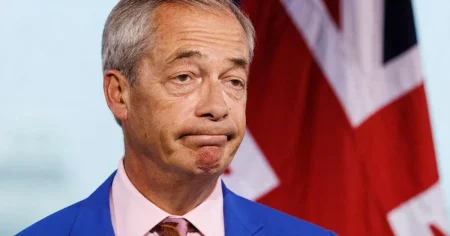
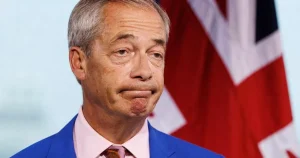


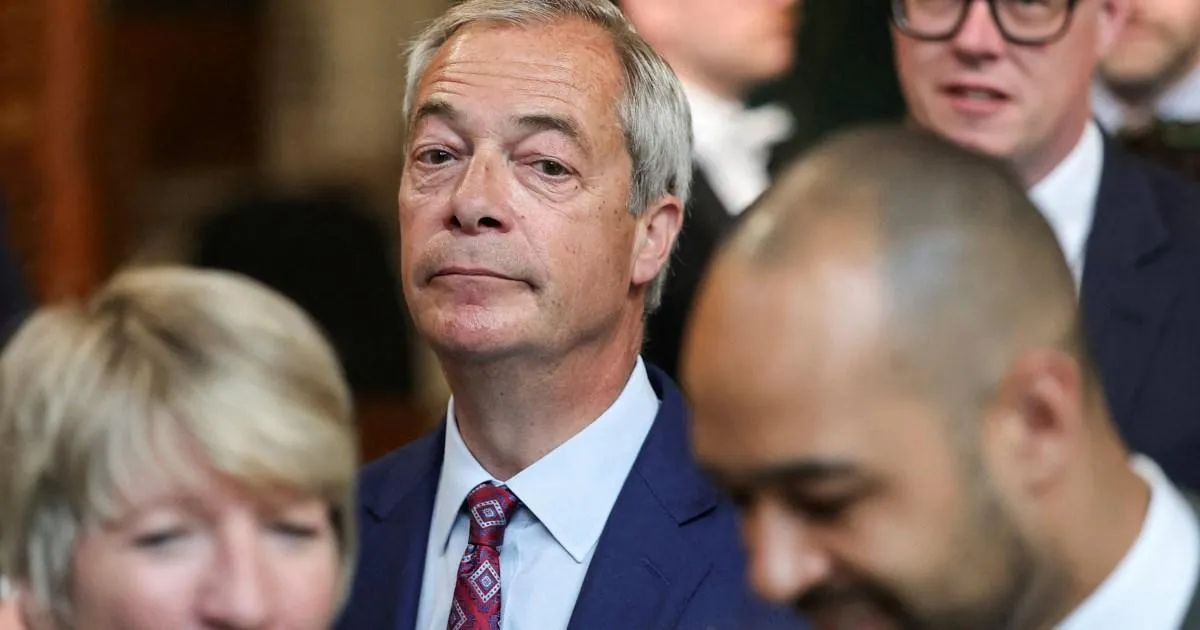
Nigel Farage, the leader of Reform UK, has found himself at the center of a growing controversy regarding his attendance record in the House of Commons. Recent parliamentary data reveals that Farage has missed an astonishing 77 consecutive votes, marking an 11-week period of total assembly silence. His last recorded vote took place on March 18, when he opposed a motion regarding higher education fee limits. Since then, he has been notably absent from critical parliamentary sessions, including debates on the King’s Speech and sensitive motions involving Prime Minister Keir Starmer. For a man who holds a significant office in the legislature, these months of inactivity have raised eyebrows among both political rivals and disillusioned voters.
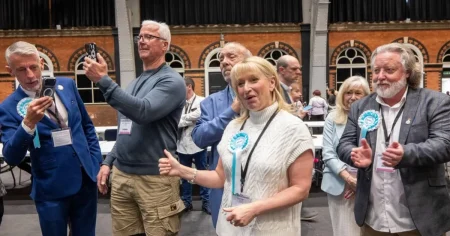
When questioned about this prolonged absence, Farage has staunchly defended his schedule, citing the exhaustion and demands of running a national campaign ahead of the May 7 local elections. According to the Reform leader, his commitment to traveling the country to rally support for his party makes it physically impossible to maintain the same parliamentary presence as his peers. He draws a sharp distinction between himself and other party leaders, arguing that while figures like Sir Keir Starmer and Kemi Badenoch may find it easier to duck into the voting lobby, his strategy demands a more “boots-on-the-ground” approach that keeps him far from the Westminster halls for extended periods.
However, this justification has not been met with universal approval, particularly when compared to the habits of his fellow party heads. Other political leaders have managed to balance their campaigns with their parliamentary obligations rather seamlessly. For instance, in the exact timeframe that Farage has steered his party toward total parliamentary absence, Sir Ed Davey, the leader of the Liberal Democrats, has participated in 34 votes while simultaneously overseeing a successful local election campaign that saw his party gain 155 councillors. This stark contrast suggests that voters might be less concerned with the “necessity” of skipping work and more concerned with the ability to multitask in a rigorous political environment.
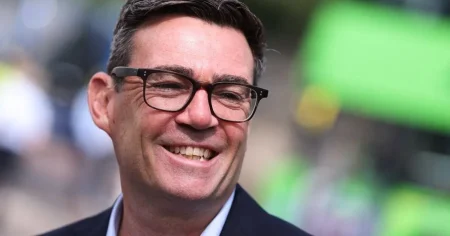
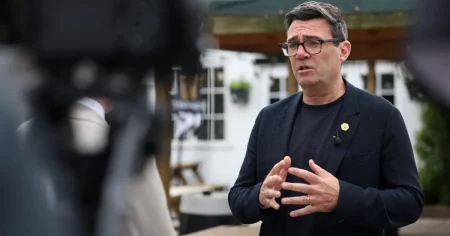
The critique of Farage’s performance extends beyond his voting record; his lack of participation in formal parliamentary discourse is equally stark. It has been nearly ten weeks since he last stood up to contribute to a debate, with his last appearance being at Prime Minister’s Questions in late March. Instead of engaging in the legislative heavy lifting expected of an MP, his energy seems squarely fixed on upcoming by-elections, such as the high-stakes battle in Makerfield. His focus, however, has recently veered into the controversial, as seen when he posted an AI-generated image depicting migrants endorsing Labour candidate Andy Burnham. The stunt earned an immediate and biting rebuke from Burnham, who questioned whether Farage’s campaign tactics were signs of desperation.
This clash between Farage and his political opponents has also reignited scrutiny over his personal finances. Burnham’s sharp retort—suggesting Farage should spend his “crypto millions” on something other than misinformation—alludes to a reported £5 million gift Farage received from crypto billionaire Christopher Harborne. While Farage maintains that this was a private donation for security and a retrospective reward for his Brexit efforts, it is currently under the microscope of Parliament’s official standards watchdog. The brewing resentment surrounding this financial arrangement, paired with his absenteeism, has painted a picture of a politician who increasingly operates apart from the traditional rules that govern his peers and his institution.
Ultimately, this pattern of behavior is not entirely new for the Reform leader. His current record draws uncomfortable parallels to his tenure as an MEP, where he was criticized for having one of the worst voting records in the entire European Parliament. During his time in Brussels, he managed to show up for fewer than half of the required votes, trailing almost every other representative. As he nears three months of silence in the House of Commons, questions are mounting: is this a calculated strategy to distance himself from the “Westminster bubble,” or is it a failure to fulfill the fundamental duties of his office? For now, Farage remains undeterred, betting that his external campaigning will resonate more with his base than the routine rhythm of parliamentary voting.