

Here is a summary and humanization of the provided content, expanded into a six-paragraph narrative.
—
Nick Wilson’s life is a testament to resilience, a journey that has taken him from the frontlines of global conflict to the frontlines of a very different kind of campaign—one for accessibility and understanding on the streets of modern Britain. After 14 years of dedicated service in the British Army, with tours in Northern Ireland, Kosovo, Iraq, and Afghanistan, his body and mind bore the heavy scars of duty. A spinal injury and the invisible wounds of PTSD led to a medical discharge, leaving him to navigate a new, unexpected reality. The physical toll was immense, with prolapsed discs in his spine causing nerve pain that he describes as a constant, unrelenting presence, “every minute of every day.” Beyond the physical pain, a more profound challenge loomed: a future that he knew would likely involve paralysis. This was the backdrop against which he began to redefine his identity and purpose.
The initial struggle to adapt to a changing body was made even more difficult by the practical barriers he encountered. Even though he could still stand for short periods, he was turned down for a wheelchair by the authorities—a decision that highlights a frustrating and often rigid system. He needed £1,500 to buy a second-hand chair himself, turning to online fundraising out of desperation. This experience was a rude awakening. It shattered his assumptions about how far society had truly come in terms of disability support. “That’s where I came across accessibility,” he reflected, “I naively thought that we were a lot further ahead. You know, it was 2023 after all. It was a smack in the face. It really was a wake-up call. Massively.” This personal struggle sparked a moment of clarity, revealing a world he was only beginning to understand and a systemic failure he felt compelled to address.
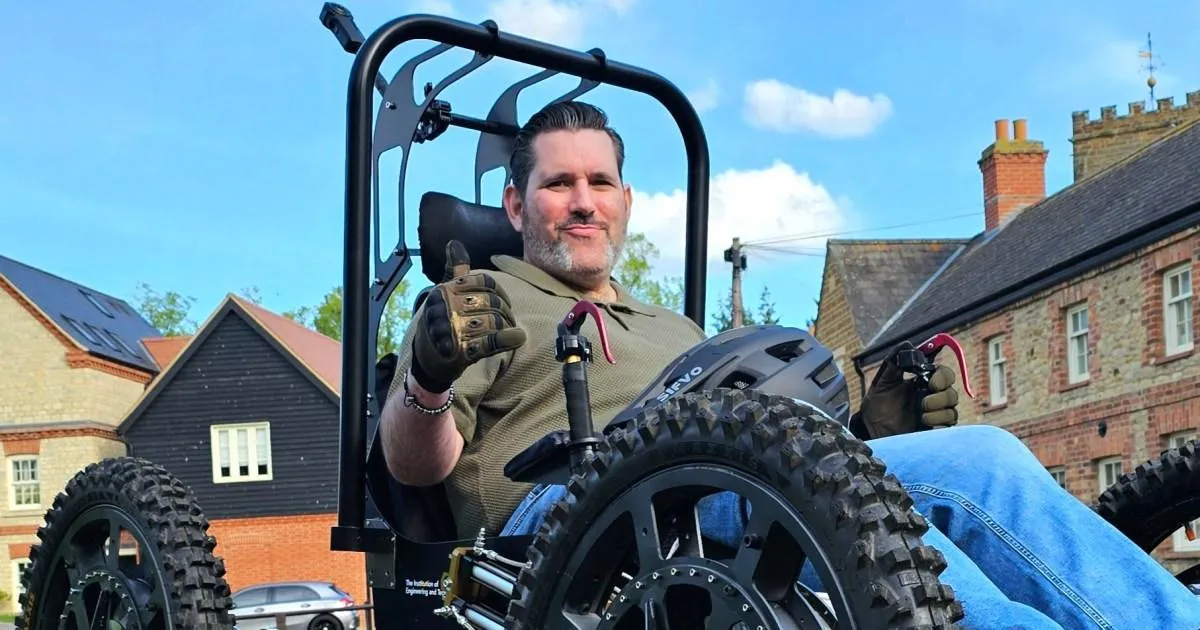
Rather than withdrawing, Wilson took action, creating a social media presence under the banner of “The Disabled Adventurer.” His mission was simple yet powerful: to help able-bodied people understand what daily life is like for a wheelchair user. What began as a personal project quickly grew into a significant platform. He started by creating a challenging off-road course designed to simulate the physical obstacles wheelchair users face. At a music festival, he offered attendees the chance to navigate this course in an all-terrain wheelchair, steering them through grass, dirt, and uneven terrain. The response was eye-opening. People were shocked by the physical effort required, and as they struggled along the track, they began to grasp the reality of his world. Wilson’s initiative was not just about empathy, though; it was about education in its most direct, experiential form, and it resonated with millions, with his videos and challenges regularly reaching a combined audience of two million people each month.
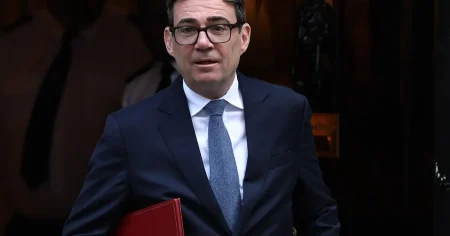
Now, with his platform firmly established, Wilson has set his sights on those in power, challenging them to walk a mile in his wheels—or more accurately, to push a few meters. He has publicly invited prime ministers to try his specially designed off-road wheelchair. Andy Burnham, the Mayor of Manchester, has become the third political leader to receive this invitation. Wilson’s reasons for targeting Burnham are rooted in respect and a belief that the Mayor might be receptive. “I just think, with Andy Burnham, I get the opinion he’s more down to earth,” he explained. “He’s kept up doing his videos on socials, which I have all respect for him for doing that.” There is also a powerful piece of history that makes Burnham a particularly apt target: in 1998, long before his current role, a video emerged of a young Burnham being wheeled around London’s Wembley Stadium in a wheelchair in a bid to understand the difficulties faced by disabled supporters.
The existence of that 1998 clip is a compelling link to the past, and Wilson sees it as the perfect foundation for a new conversation. “I think it’s a great opportunity – 28 years later, especially now he’s PM, to redo it,” Wilson said, referencing Burnham’s prominent position. “But to do it with someone who’s got lived experience, come and experience what I do now.” For Wilson, the challenge isn’t just about a photo opportunity; it’s about creating a direct, unfiltered experience of the everyday obstacles and frustrations he and millions of others face. He wants to move beyond anecdotes and statistics to show politicians, in real-time, the uneven pavements, the cars blocking dropped curbs, and the sheer physical exertion required to navigate a world not designed for them.
Ultimately, Nick Wilson’s campaign is driven by a profound desire for genuine change. He emphasizes that accessibility is not a one-size-fits-all solution; it is a highly personal, subjective experience that cannot be understood from a policy paper or a committee meeting. By inviting Prime Ministers and public figures to physically grapple with these challenges, he is creating a visceral form of advocacy that has the power to shift perspectives and, hopefully, influence policy. His story is not one of victimhood, but of dogged, creative determination, born from service and personal hardship. He has taken his own “smack in the face” from an inaccessible world and turned it into a powerful movement, with one clear goal: to make leaders truly see the world through his eyes, one challenging, eye-opening push at a time.