

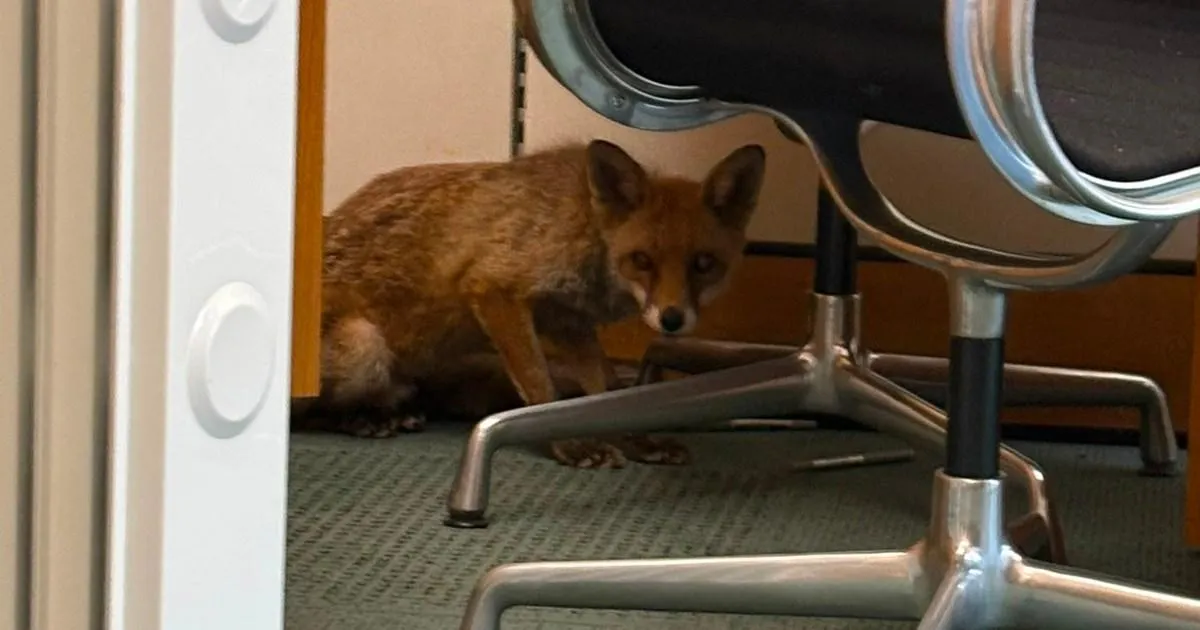
In the hallowed, centuries-old corridors of British power, where weighty decisions are made and the fate of the nation is debated, an entirely unexpected and rather furry intruder recently decided to make an unscheduled appearance. The scene was set in the parliamentary office of George Freeman, the Conservative MP for Mid Norfolk, who, on a seemingly ordinary Monday morning, was the recipient of a shock that would ruffle feathers far beyond the usual political squabbles. It was not a call from a furious constituent, a headteacher demanding a policy reversal, or a lobbying scandal that caused the commotion. Instead, it was a four-legged, bush-tailed visitor who had apparently decided that the paperwork within the MP’s office was the perfect place to conduct its own personal scavenging mission. The MP, no doubt expecting a quiet day preparing for the week’s legislative agenda, was met with the sight of a fox, its reddish fur a stark contrast against the formal, wood-paneled confines of the office.
The unsolicited visitor, as it turns out, was remarkably nonchalant about its lot in life. It seemed entirely unperturbed by the fact that it had breached one of the most fortified and symbolic buildings in the United Kingdom. For a few moments, the encounter was a stalemate of mutual surprise, with the MP and the fox engaged in a curious and unlikely staring contest. As Mr. Freeman later recounted, the moment was less of a Rockzam and more of a farce. The initial fear of a political fixing was quickly replaced by the sheer absurdity of the situation. The scene was completely different from what you might imagine a political thriller to be. Here, in the center of the country’s governance, the only thing being turned over was not sensitive information, but rather the possibility of a snack. The fox appeared to be an innocent, albeit highly intelligent, office intruder, clearly having found its way in from the city’s outside world, likely drawn by the warmth and the promise of an easy meal amidst the famous London greenery and bins.
After the initial shock died down, the priority became the safe, humane, and discreet removal of the unwelcome guest. Mr. Freeman’s staff, demonstrating a calm and efficiency rarely seen in the corporate world, promptly initiated a sort of “wildlife containment” protocol. They very carefully secured the animal, ensuring it was “watered & relaxed as much as possible” before the experts were called. The operation was a far cry from the high-stakes evacuation that such a situation might have triggered in a more, let’s say, fortressed. Parliament’s procedures, it seems, were naturally aligned to handle even a furry intruder. The chosen mode of operation was to do everything to minimize the stress on the fox, which signaled not only a sense of British civilians but also a deep respect for the animal. The vet or animal experts arrived, sedated or carefully guided the fox out, and it was released into the relative greenery of Victoria Tower Gardens, only a stone’s throw from the hub of British democracy.
This unexpected event, which could feel like a taste from a snow day in the office, quickly caught the attention of the public and the social media sphere. It was a fascinating dish of whimsy amid long, discourse-heavy debates. The MP, in his radio to the public on X, wasn’t just recounting the incident of the morning; he was offering a brief escape from the grim world of politics. The natural charisma of the fox, a creature of the city, gave people a moment of shared, commentary-free joy. It also served as a reminder of the fine line that exists between the wild environment and the most civilized of human constructions. For the politically weary, it was a metaphor for the real. The creatures of the city, is unaware of the strict protocols of parliament, deciding to drop in. Perhaps it was just there for the mortgage, a chance to lie down in an office, ignoring the human affairs that dominate the world.
The story becomes even more whimsical when one considers the thread of common space that is the historical presence of pests, specifically mice, in Westminster. In the aftermath of the Fox’s visit, Labour’s Dr. Zubir Ahmed, MP, joked about the fox’s potential use: could it help with rodents? He cheekily suggested the fox “could have a ball in PCH ground floor,” referring to the notoriously pest-ridden Portcullis House, the parliamentary building. The officials, it seems, had a bigger problem than one rogue fox. Statistics reveal that in the last year alone, there were 222 recorded mouse-related actions in the Parliamentary Estate. The figure is a marked increase from the previous year, and they also counted 13 rat-related actions. The thought of the Fox, known as a natural hunter, finding a plentiful source of prey in the corridors of power is nothing short of poetic. It points to a paradox: Westminster, the center of governance, has a growing furry tenant population, and perhaps a quick-witted solution to the this problem was staring them right in the beady eyes.
In an extra twist, high political circles, a “fox” had already been a part of the Cabinet. The comment: “It isn’t the first time a Fox has found its way into a Westminster Cabinet,” successfully points out the funniest parallel. Dr. Liam Fox, the former Conservative Party member, has held some of the highest offices in the land. The story, then, becomes a blend of physical and political riddles. The sight of a fox in an office, momentarily out of its natural habitat, is a light-hearted reminder that a political environment is highly unpredictable. The fact that it escaped no harm and was released into lush gardens feels like a lesson in finding and the human morality. The event in the end is nothing more than a fleeting, yet charming, intrusion into the world on Monday. It was, at its core, a day in the office for a Conservative MP, but for the rest of us, it was a perfect mental escape, a reminder that democracy can be a cat and charming, and even in the grand halls of state, you never know what will walk through the door next.