



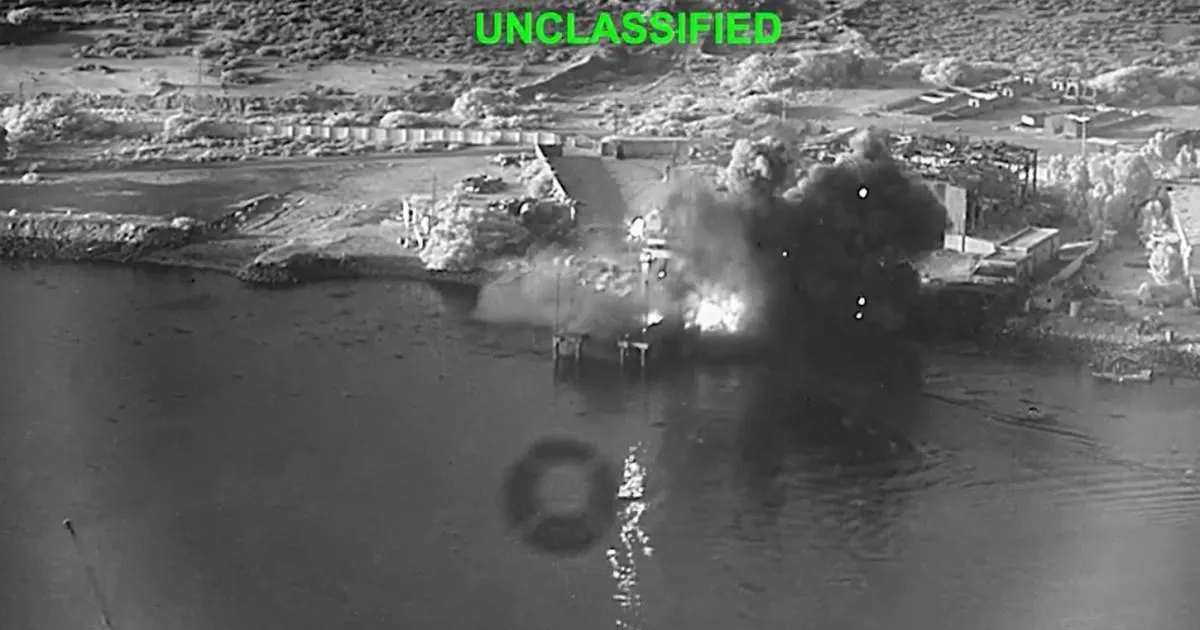
The tension in the Middle East reached a new, technological threshold this past weekend when the United States military carried out a series of strikes against Iranian naval infrastructure. In a move that signals a significant shift in modern warfare, U.S. Central Command (CENTCOM) confirmed the use of “kamikaze” uncrewed surface vessels (USVs) to target a submarine and ship maintenance facility at the Bandar Abbas Naval Base. This operation, which took place on July 12, resulted in severe damage to the facility and marked the first time the American military has deployed drone boats as offensive, strike-capable weapons in an active combat theater.
For years, the Strait of Hormuz has been a geopolitical pressure cooker, serving as the primary artery for a massive portion of the world’s global oil supply. Recent hostilities have seen this vital waterway transform into a stage for a high-stakes standoff between Washington and Tehran. With President Donald Trump publicly suggesting that the U.S. might begin levying transit fees on vessels passing through the Strait—a direct challenge to Iran’s long-standing influence over the region—the atmosphere has grown increasingly volatile. These drone strikes are not isolated incidents but rather the latest escalation in a wider, ongoing effort to curb Iranian influence in these critical international waters.
The technical implications of this strike cannot be overstated. By utilizing the Saronic Corsair drone boats, the U.S. Navy is demonstrating a rapid transition from testing autonomous maritime equipment to integrating them directly into the front lines of conflict. CENTCOM’s official statement noted that these “one-way attack surface drones” were effective in degrading Iran’s operational capacity to threaten commercial shipping. By hitting the maintenance infrastructure at Bandar Abbas, the U.S. is aiming to disrupt the logistical backbone that Iran relies on to maintain its fleet, effectively trying to neutralize a threat before it can even leave the harbor.
Beyond the tactical destruction, the use of these uncrewed systems highlights the evolving nature of the U.S. Navy’s maritime strategy. We are witnessing a clear pivot toward remote and autonomous naval warfare, where the risk to human personnel is minimized by placing robotic hardware in the line of fire. Just last month, this technology proved its versatility when a Saronic Corsair USV was deployed to rescue the crew of a downed U.S. Army AH-64 Apache helicopter in the Gulf of Oman. That mission, which successfully recovered personnel amid active hostilities, provided the first public evidence of the drone’s utility in search-and-rescue, now followed by its baptism by fire in an offensive role.
However, the rapid deployment of this technology raises complex questions about the future of maritime security. While military leaders view the Corsair drones as a cost-effective and low-risk method to protect global commerce, such advancements often trigger an arms race among rival nations, each looking to develop counter-measures or similar platforms. As the U.S. scales up its fleet of uncrewed vessels, the Persian Gulf becomes an increasingly automated environment, where rapid-fire, autonomous decisions could have profound and lasting diplomatic consequences in a region where miscalculations have historically led to total war.
As we look ahead, the strike on Bandar Abbas serves as a stark reminder that the nature of confrontation is moving away from traditional fleet-on-fleet engagements toward surgical, autonomous strikes. The world is watching to see how Iran responds to this shift in tactics, especially as rhetoric continues to sharpen regarding the security of the Strait of Hormuz. With national security concerns continuing to mount—from reported plots against high-ranking leaders to the ongoing classification of various organizations as existential threats—one thing remains certain: the integration of sea-based drones has fundamentally altered the calculus of international conflict. The quiet, robotic intervention of the past weekend is unlikely to be the last, signaling a new, digital chapter in an age-old struggle for control of the seas.