


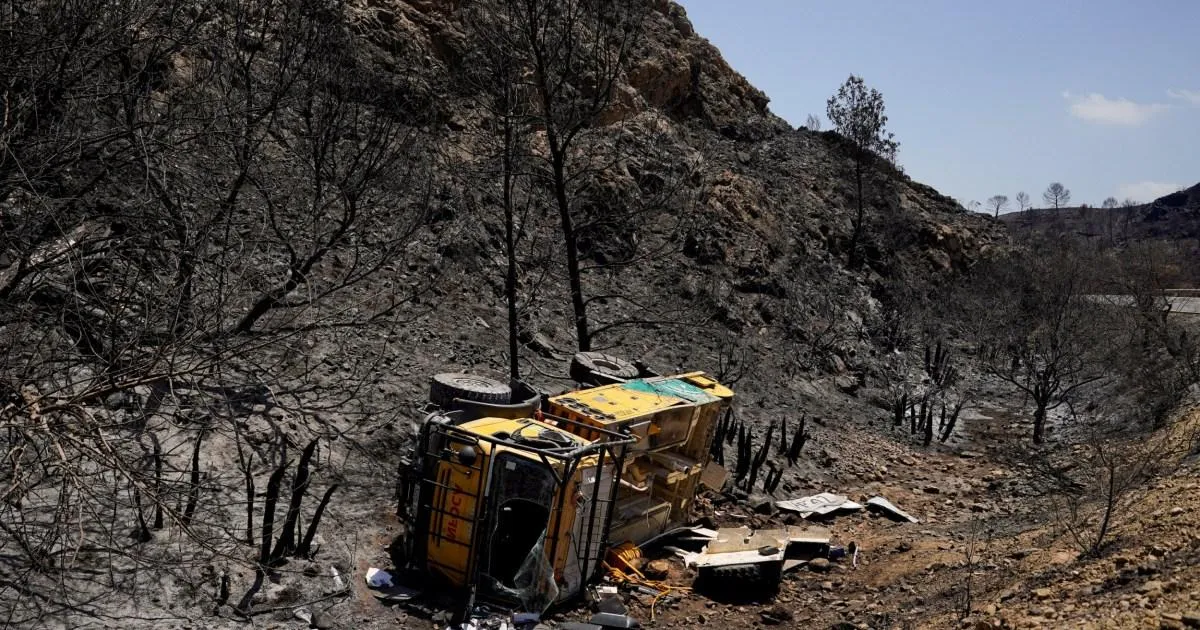
The landscape of Almería, Spain, once a sun-drenched sanctuary for those seeking a peaceful retirement, has been transformed into a harrowing scene of tragedy. Following a relentless heatwave that gripped much of Western Europe, a devastating wildfire tore through the region near the village of Bedar last week. As the smoke clears, the true scale of the loss has emerged: thirteen individuals lost their lives, among them seven British nationals, alongside victims from Belgium, France, the United States, and Spain. These lives, which included everything from expatriates beginning a new chapter in the sun to long-term residents, were extinguished in a disaster that the local authorities are now framing as a direct consequence of an unfolding climate emergency.
The circumstances surrounding the tragedy are heartbreakingly chaotic. As the fire advanced at an terrifying pace—reaching speeds of up to 20 kilometers per hour—many residents found themselves in an impossible position. In a desperate attempt to escape the encroaching inferno, a group of friends, including the wife of 70-year-old Malcolm Timbrell, abandoned their vehicles to flee on foot through the rugged terrain. Tragically, they were attempting to outrun a wall of fire moving far faster than any human could sustain. Mr. Timbrell’s harrowing account captures the raw grief of the incident; having turned back at the last moment to retrieve his cats, he witnessed his wife and friends attempt to outrun the flames, a decision he feared—and later confirmed—would prove fatal.
Amidst the devastation, there have been rare glimmers of hope. A, 93-year-old British woman, initially pulled from the scene with severe burns, fought for her life in a hospital for days before tragically succumbing to her injuries. However, the intuition of the Civil Guard provided a miraculous reprieve for two other British hikers. Despite having cleared the area during their initial search, the officers felt an inexplicable pull to return to the charred landscape. As dusk settled, they discovered the pair alive; though they had suffered significant burns, they were found in time to receive life-saving medical care. Sergeant Pedro Barre, who led the search, credited the persistence of his team, emphasizing that in such catastrophic conditions, experience teaches you to “give it one last try.”
The identification process for the victims was long and agonizing, requiring biological samples from grieving families to provide closure. The final count—eight women and five men—underscores the indiscriminate nature of the blaze, which forced the proactive evacuation of nearly 1,500 people from eleven distinct areas. The fire, characterized by its erratic speed and ferocity, serves as a grim reflection of the increasingly hostile summers now defining Southern Europe. With heatwaves becoming more frequent and temperatures frequently soaring past 40C, the incident has reignited urgent conversations about climate adaptation and the vulnerability of those living in regions susceptible to such explosive wildfires.
Looking back, the tragedy joins a dark chapter in Spanish history, coming second only to the 1979 Lloret de Mar fire in terms of total fatalities. For the expatriate community, many of whom documented their move to Spain through media outlets like “A Place in the Sun,” the loss has been particularly profound, drawing tributes from public figures and neighbors alike. The stories of those who gathered in their final moments, and the desperate, split-second decisions they were forced to make, serve as a potent reminder of the fragility of life when faced with the overwhelming power of a rapidly changing climate.
As the authorities and the international community process this heartbreak, the focus has shifted toward finding answers and preventing further loss. The regional government is grappling with the reality that what was once an occasional hazard has become a seasonal threat of massive proportions. For the survivors and the families of the victims, the aftermath of the Bedar fire is not merely a news headline, but a life-altering rupture. As the recovery continues and the investigation into the fire’s origins draws to a close, the tragedy remains a somber warning that in an era of extreme weather, the landscape we choose for our golden years may, without warning, become a place of profound sorrow.