
At the recent St. Petersburg International Economic Forum, often referred to as “Putin’s Davos,” a chilling 25-year roadmap for Russia’s future was unveiled by two influential Kremlin allies: Konstantin Malofeev and Alexander Dugin. Their document, titled “Russia 2050,” presents a stark, uncompromising vision for the country that centers not on economic prosperity or diplomacy, but on the pursuit of total ideological victory, even at the cost of nuclear escalation. By sketching out three potential pathways for the nation—ranging from a catastrophic collapse to a militant dominance—these figures seek to frame the current conflict in Ukraine as a permanent, existential battle that Russia must prepare to wage for decades to come, regardless of the human or global stability cost.
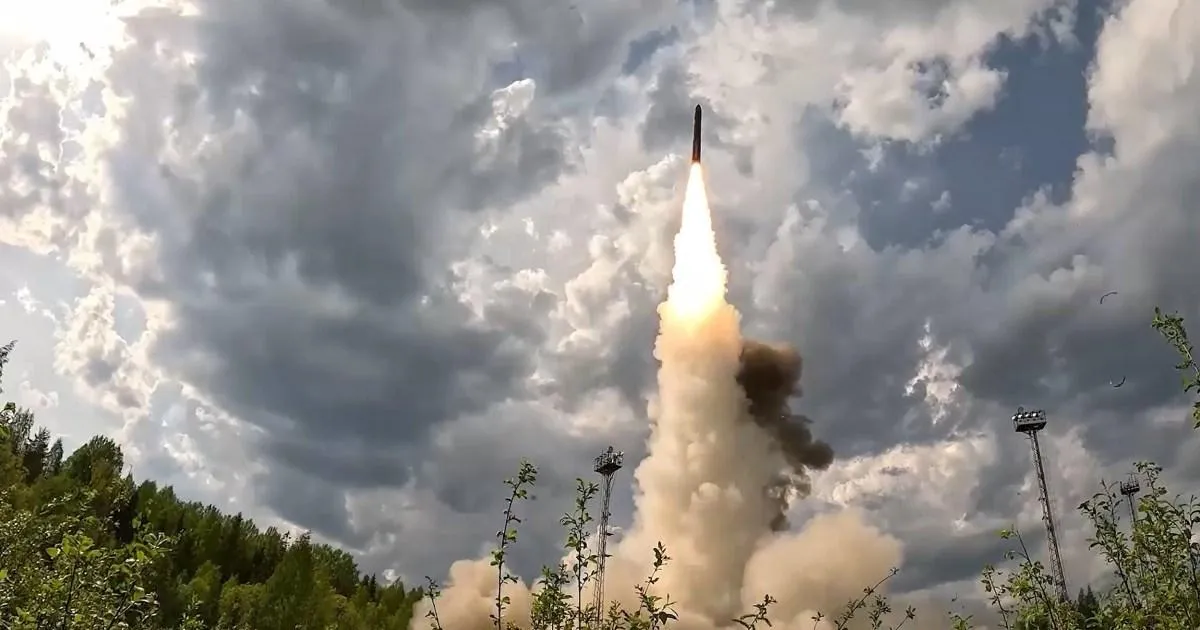
The “good” outcome envisioned by Malofeev, the founder of the pro-Kremlin media network Tsargrad, is particularly alarming in its scope and disregard for international norms. He describes a future where Russia secures a definitive ideological and military triumph, which explicitly includes the annexation of major Ukrainian cities like Kyiv, Odesa, and Kharkiv, and the ultimate disintegration of the European Union. Central to this vision is the calculated use of nuclear weapons, which he frames as a strategic necessity rather than a last resort. For proponents of this worldview, peace is not a negotiated settlement but an imposition of Russian will, achieved through the total subjugation of neighboring sovereign states and the dismantling of the current Western-led global architecture.
In contrast, the “bad” scenario presented in the report is framed as a cautionary tale designed to provoke fear and mobilize the Russian public: the defeat of Russia in Ukraine leading to its eventual “colonization” by outside powers. Positioned between these two extremes is a “status quo” middle ground, which suggests a future defined by a cold, grinding struggle for dominance between Russia, the U.S., and China. In this middle scenario, the report predicts that the world remains on a knife-edge, with the inevitable threat of nuclear conflict looming over the next decade. It is a bleak assessment that leaves no room for moderate diplomacy or a “return to normal,” effectively trapping the Russian narrative in a cycle of permanent mobilization.
To understand the weight of these words, one must recognize the influence of the men behind the report. Both Malofeev and Dugin are deeply embedded in the Russian nationalist establishment, having spent years aggressively advocating for the annexation of Crimea and the destabilization of Ukraine. Their rhetoric is not merely a theoretical exercise; Dugin confirmed that their roadmap has already been presented directly to the Russian Ministry of Defense. Despite facing heavy international sanctions from the UK, the US, and the EU, these men continue to act as key ideological architects for the Kremlin, pushing an agenda that demands a total cultural and economic pivot toward a perpetual state of warfare.
The forum itself served as a stage for a fractured Russian elite. On one side are the hawks—like Dugin, whose own life has been scarred by the war—who argue that there is no space for “peaceful” living, urging the population to abandon summer vacations and domestic comfort to focus entirely on victory. On the other side, a growing contingent of pragmatists within the economic sector are quietly attempting to communicate the devastating long-term costs of the ongoing conflict, suggesting that Russia’s future might be better served by a peace deal rather than global isolation. This internal clash highlights a deepening divide between those who believe the state must transform into a fortress and those who realize the economic toll of such a path is becoming increasingly unsustainable.
As the conference unfolded, the fragility of this grand 2050 vision was underscored by the reality of the war itself, punctuated by Ukrainian drone strikes on Russian infrastructure in St. Petersburg. While Vladimir Putin insists that Russia has no intention of expanding its hostilities toward NATO, the rhetoric of his close ideological allies suggests otherwise. For Dugin, the conflict in Ukraine is a binary choice: a total victory or an endless, destructive stalemate that could easily spiral into a global conflagration with the West. Ultimately, this 25-year roadmap serves as a warning of what the most extreme voices in Moscow are striving for: a future where the mask of a “peaceful nation” is completely discarded, replaced by a permanent posture of war against the West.