


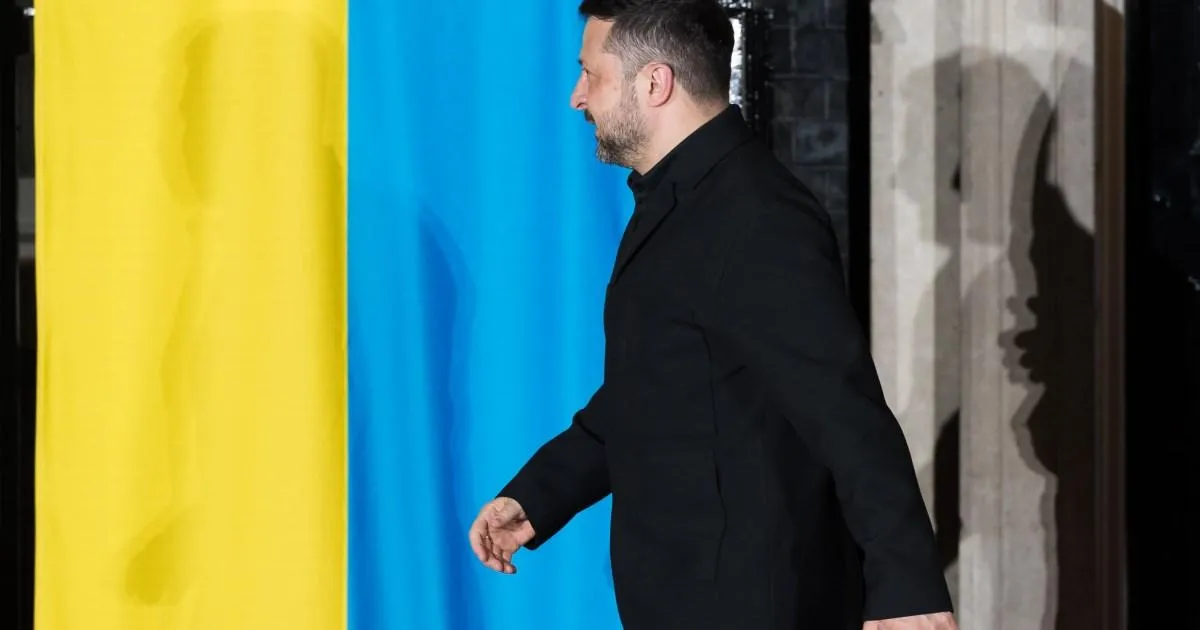
In a recent diplomatic visit to London, Ukrainian President Volodymyr Zelenskyy addressed a growing friction point between his nation and the British political party Reform UK. Following meetings with Prime Minister Keir Starmer, French President Emmanuel Macron, and German Chancellor Friedrich Merz, Zelenskyy urged Reform members to reconsider their recent decision to remove Ukrainian flags from outside town halls they control. The party has been replacing these symbols with local banners, citing a national policy that prioritizes English-specific identity. While the move has sparked localized controversy—most notably in Warwickshire—Zelenskyy’s approach remained one of measured diplomacy rather than outright condemnation.
Zelenskyy’s core message was a reminder of the fragility of international alliances, warning that “small mistakes can break big friendships.” Speaking to The Guardian, he expressed profound sensitivity to the current global climate, where political gestures carry significant weight. He urged members of the party to move past the decision and return to the table for meaningful dialogue, emphasizing that open communication is the best way to rectify what he views as a misguided policy. For a leader managing the existential pressure of a war, the sight of abandoned flags is more than just a decor change; it is a sign of shifting geopolitical winds that he hopes to mitigate through conversation.
Beyond the local flag controversy, the President utilized his platform in London to underscore the intrinsic link between Ukrainian defense and British security. He stressed that Western support is not merely a matter of altruism or shared values, but a fundamental requirement for the stability of Europe. By framing the conflict as a direct security interest for the UK, Zelenskyy challenged the isolationist leanings that occasionally pop up in British domestic politics. He maintains that the bond between Ukraine and the UK is a strategic necessity, one that transcends minor political disputes or the decorative choices of local government offices.
The President’s visit was also marked by a symbolic push toward deeper royal ties, as he revealed plans to invite King Charles III for a state visit to Ukraine this year. This comes on the heels of a private, closed-door audience between the two, which served as a bolster to morale following intense diplomatic turbulence involving former U.S. leadership. By strengthening these personal and symbolic links, Zelenskyy is carefully curating an image of Ukraine as a state that stands shoulder-to-shoulder with the United Kingdom, ensuring that long-term political shifts do not erode the foundational support his country receives from the British public and its institutions.
During his candid discussions, Zelenskyy also shed light on the clandestine history of early, failed peace efforts, revealing that former Chelsea FC owner Roman Abramovich once acted as a back-channel mediator between Kyiv and Moscow. Zelenskyy recounted telling Abramovich that negotiations were fundamentally stalled by Russia’s refusal to vacate occupied territories, particularly in the Donbas. The President remains steadfast that territorial integrity is not a bargaining chip for victory, even while keeping the door open for high-level meetings. This historical context highlights the massive gulf that remains between the two nations, even as the global community continues to push for a resolution.
As the diplomatic maneuvers continue, the grim reality of the ongoing war serves as a backdrop that makes the flag disputes and political chatter feel vastly inconsequential. Even as world leaders met to call for an immediate ceasefire, Russian drone strikes continued to claim lives at bus stops and threaten the safety of critical nuclear infrastructure. The contrast between these high-level summits and the daily atrocities in Ukraine is a stark reminder of the mission for the Ukrainian leadership. Whether navigating the complexities of local British council policy or managing the heavy burden of global diplomacy, Zelenskyy remains focused on the singular, overarching goal of ensuring his nation’s survival and future freedom.