
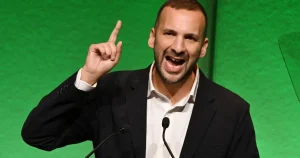

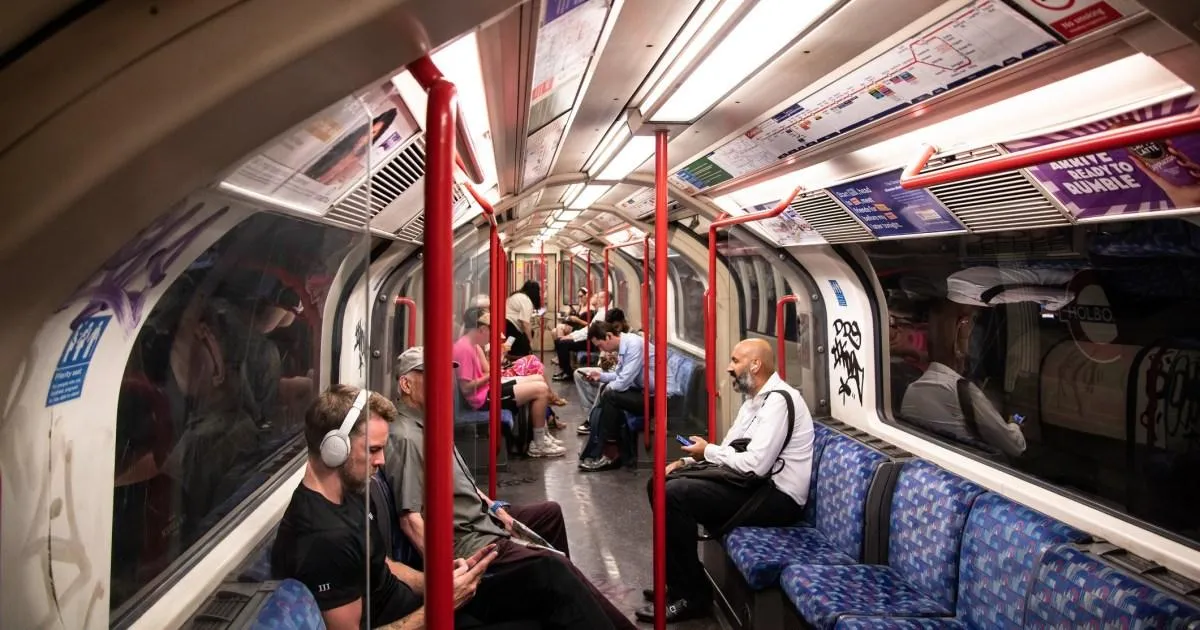
For millions of Londoners, the daily commute on the Tube is a mundane necessity, a rhythmic part of city life that rarely prompts thoughts of danger. However, a harrowing account from Micky Steeds, a former London Underground vents worker, has cast a long shadow over the safety of the subterranean network. Steeds, who spent years cleaning debris from the dark, confined channels beneath platforms, discovered that the “dust” he was tasked with managing was far more than mere grit. It was a potent cocktail of hazardous materials, including arsenic, chromium, and, most alarmingly, asbestos. His revelations have not only exposed a breakdown in safety protocols but have sounded an urgent alarm for the millions of unsuspecting passengers breathing in the air of the city’s busiest stations.
Steeds’ professional journey took a dark turn when he witnessed, and was allegedly forced to participate in, unsafe working practices. Between 2020 and 2023, he repeatedly sounded the whistle on the improper management of hazardous waste, claiming that he and his colleagues were frequently denied adequate respiratory protection. His frustrations grew as he spent nearly two years cleaning asbestos-heavy wiring without proper training, only to later be issued a belated course on how not to disturb the material—a chilling case of closing the barn door long after the horse had bolted. Perhaps最も distressing were his claims that hazardous waste wasn’t disposed of according to strict regulations, but rather dumped on tracks or thrown into general waste skips to save time and effort.
When Steeds raised these concerns with management, the response was not concern or investigation, but a stubborn insistence that “everything was fine.” The pressure on him intensified as he was forced to choose between his conscience and his career, culminating in an ultimatum to either return to work in conditions he deemed life-threatening or face termination. Ultimately, Steeds lost his job, triggering a legal battle that dominated his life for months. His courage, however, was vindicated at an employment tribunal, which ruled that London Underground’s actions were an “unfair and unjustifiable ultimatum.” The panel agreed that Steeds’ complaints were “genuine and reasonable,” highlighting a systemic failure to protect both staff and the public from the long-term, irreversible health risks posed by contaminated air.
The danger of asbestos cannot be overstated. As a known carcinogen, it remains silent and invisible until it is disturbed, turning into microscopic fibres that, once inhaled, lodge deep within the lungs. The medical consequences—ranging from chronic lung disease to fatal mesothelioma—are often diagnosed decades after initial exposure. Steeds argues that with every train that barrels through a station, this toxic dust is kicked up into the air, creating a swirling cloud that passengers inhale without a second thought. For a man who has seen the reality of the dust-choked tunnels, the risk is so palpable that he now avoids the Underground entirely, choosing instead to travel by bus, unable to reconcile the network’s official “safety” narrative with the reality he witnessed on the tracks.
The tribunal’s findings serve as a stark indictment of the culture within London Underground, suggesting that workers who speak out are frequently treated as troublemakers rather than essential guardians of public safety. The legal panel noted that the improper disposal of hazardous materials could potentially give rise to both civil and criminal liability, pointing to a blatant disregard for the very regulations designed to safeguard the city. While experts and legal representatives view the tribunal’s decision as a vital lesson for employers on the treatment of whistleblowers, the company remains defiant. They continue to insist that strict controls are in place and that the network remains safe, a stance that stands in direct opposition to the evidence brought to light by one man’s persistence.
Ultimately, Micky Steeds’ story is a call for transparency. It forces us to ask what we are really breathing when we stand on those tiled platforms, waiting for our ride home. While legal battles and corporate press releases continue to clash, the emotional human cost remains the central focus. Steeds is not looking for fame; he is looking for accountability, wanting the public to be aware of an invisible, long-term threat that he believes is being shielded by bureaucratic denial. Whether these concerns trigger a broader overhaul of safety policies on the Underground remains to be seen, but for now, the warning has moved from the shadows of the vents to the forefront of the public conversation, leaving many to wonder if the price of our daily commute is higher than the fare.