



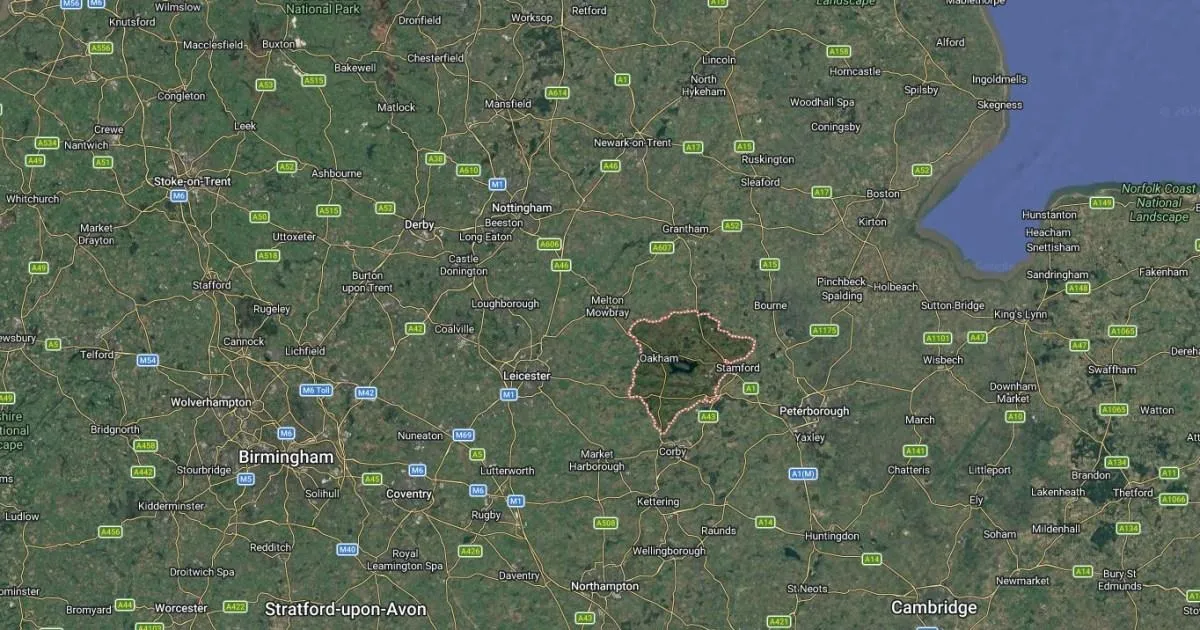
The prospect of profound administrative change often triggers a deep sense of loss, particularly when that change threatens to dismantle an identity forged over centuries. Rutland, England’s smallest county, currently stands at the heart of this tension as it faces a sweeping government reorganization. For many, this is not merely a bureaucratic adjustment of local authority boundaries; it is the potential erasure of a distinct, historic home. The government’s plan, aimed at streamlining governance across England, would see the abolition of the Rutland County Council and the integration of the area into a much larger, centralized local authority encompassing parts of Leicestershire.
At the core of this seismic shift is the government’s push for administrative efficiency. Ministers are redesigning the map of local governance to achieve economies of scale, setting a target for councils to serve populations of approximately 500,000 residents. From the perspective of Whitehall, this structure is deemed necessary to drive economic development and effectively “rebalance” wealth and opportunity throughout the nation. Steve Reed, the Local Government Secretary, has framed these reforms as a essential move toward devolution, aiming to shift power away from central government desks and into the hands of modernized, larger regional bodies. However, for a community like Rutland, which houses just 41,000 people, this logic directly clashes with the realities of its small-scale, localized governance.
The backlash from the local community has been swift and fervent. For the people of Rutland, this is far from a simple question of administrative convenience; it is a battle to preserve their heritage. Local Conservative MP Alicia Kearns has been a vocal advocate for the community, highlighting the indignity of a decision that residents never consented to. The fear is palpable: the risk is not just the loss of a council, but the potential disappearance of Rutland’s ceremonial status entirely. To the residents, the threat is concrete, manifesting as the potential removal of the road signs that delineate their home—a symbolic, physical stripping away of an identity that has endured through centuries of history.
This is not the first time Rutland has had to fight for its existence. The county’s history is defined by resilience, having previously survived a stint as part of Leicestershire after the 1974 reforms, only to reclaim its status as a unitary authority in 1995 through persistent, grassroots campaigning. This current struggle echoes that earlier battle, reminding the public that Rutland’s identity is not a static relic but a living, breathing community that has actively chosen its independence in the past. The current “Save Rutland” petition, boasting over 7,000 signatures, serves as a testament to the fact that for many, this small county remains a source of pride that they are unwilling to abandon to the stroke of a bureaucrat’s pen.
The implications of this move extend far beyond one small county. The overhaul is part of a nationwide strategy that aims to dissolve 134 districts across England, replacing them with massive, unified authorities tasked with delivering all essential local services. While the government argues that this centralization will create more robust, sustainable administrative units, critics argue it risks alienating residents from their own local representatives. The concern is that in the pursuit of “500,000-resident units,” the specific needs, cultural nuances, and localized concerns of smaller communities will be drowned out by the noise of larger, more impersonal administrative entities.
Ultimately, this debate highlights the perennial friction between centralized government efficiency and the human desire for local belonging. While ministers look at maps and demographics, residents look at their traditions, their town centers, and their sense of place. Whether Rutland remains an independent entity or is swallowed by a regional authority remains to be seen, but the fight has solidified one thing: residents do not view their county as an expendable line on a chart. It is a home, a history, and a community, and its people are demonstrating that some things, in the eyes of those who belong to them, are simply not up for negotiation.