

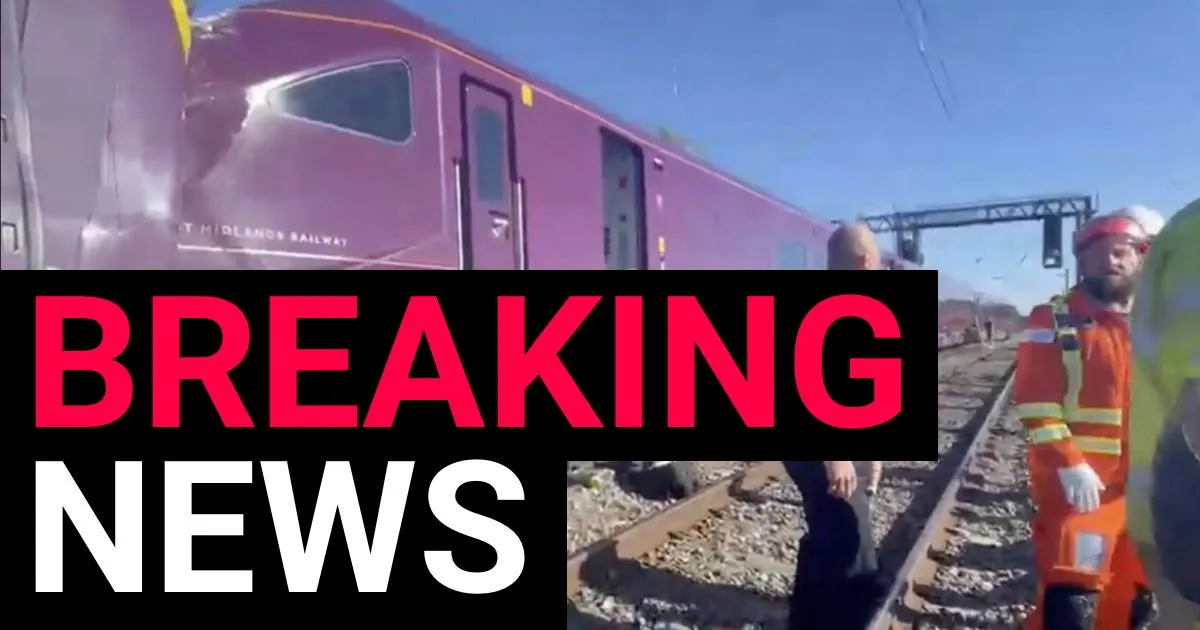
The quiet evening commute turned into a scene of sudden, terrifying chaos near Elstow, Bedford, as two East Midlands Railway trains were involved in a significant collision. The incident, which unfolded around 5:12 p.m., involved the 4:40 p.m. service from Corby to London St Pancras and the 3:50 p.m. service from Nottingham to the capital, leaving commuters and staff in immediate peril. With carriages derailed and the sudden force of the impact bringing the rhythmic hum of the railway to an abrupt, screeching halt, the primary focus quickly shifted to the safety of those trapped within the twisted metal of the trains.
The atmosphere on board was described by survivors as one of absolute shock, stripped of any prior warning or defensive maneuvering. Dr. Pete Knapp, one of the passengers, recounted the harrowing moment the train simply stopped instantly, noting that there was no sound of horns or the sensation of braking. Instead, there was only the jarring, violent impact of the collision. While he managed to escape with injuries to his legs and back, his account painted a sobering picture of the scene, confirming that others had not been as fortunate, and that emergency medical intervention was desperately needed.
In response to the tragedy, a massive emergency mobilization was triggered, with over 30 vehicles—including police, fire services, and an air ambulance—descending upon the rural area. The primary objective was the evacuation of passengers from the damaged carriages onto the tracks, leading them to safety while paramedics worked under immense pressure to stabilize the injured. Health Secretary James Murray and Transport Secretary Heidi Alexander both issued statements confirming that a number of people had sustained injuries, while publicly thanking the tireless first responders who arrived on-site to navigate the dangerous, debris-strewn environment.
The shockwaves of the crash were felt far beyond the tracks, as families of commuters experienced the agonizing wait for news. Authorities issued an urgent plea to the public to stay away from the site, emphasizing that unnecessary traffic was hindering the life-saving work of rescue crews. Despite the growing anxiety, officials worked to coordinate transport for the survivors, moving them away from the immediate danger zone of the rail line to nearby roads, where they could be processed and reunited with loved ones or received into the care of medical facilities.
For the rail network, the aftermath has been total paralysis. National Rail confirmed that services between London St Pancras and major hubs including Corby, Leicester, Nottingham, and Sheffield have been suspended for the remainder of the day. The infrastructure, still reeling from the impact, remains restricted as investigators arrive to determine the cause of the disaster. As the sun sets on Bedford, the silence that has replaced the bustle of the commute is heavy with uncertainty; for the passengers and the railway families involved, life has been irrevocably altered by a Tuesday evening that began as a routine journey home.
Both the RMT and ASLEF unions have expressed their profound concern, acknowledging the serious trauma inflicted upon both passengers and the on-board staff. As the rescue phase transitions into an investigation, the hearts of the community remain with those in the hospital and the transport workers who suddenly found themselves at the center of a nightmare. The incident serves as a stark reminder of the fragility of our daily routines and the vital, courageous role of our emergency services. For now, the rail lines remain empty, a quiet testament to a day that will be remembered for the courage shown in the face of sudden, unexpected disaster.