

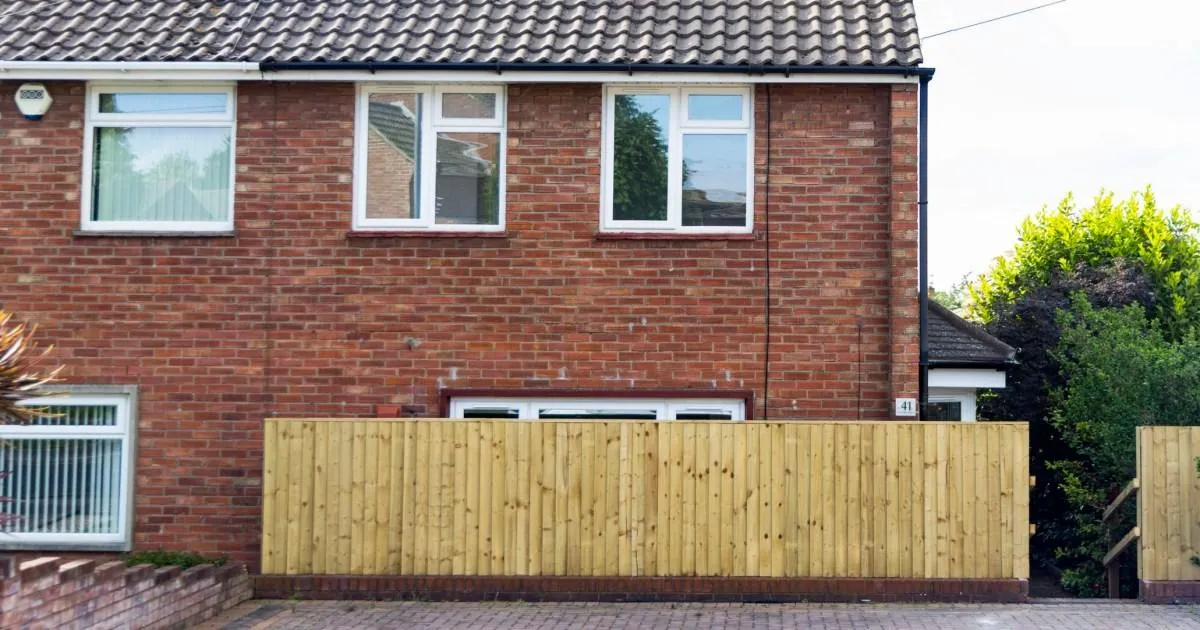
In a triumph of common sense over bureaucratic absurdity, a property in Lockleaze, Bristol, has finally been liberated from a fence that had become the laughingstock of the internet. The barrier was originally installed just inches from the home’s main downstairs window, essentially turning a once-bright living area into a dark, claustrophobic box. Locals and social media users alike were baffled by the decision, mocking the structure as a visual eyesore that was as impractical as it was hideous. It stood as a glaring example of “health and safety gone mad,” leaving residents scratching their heads and asking how such a blatantly obstructive design ever made it off the drawing board.
The local council, Bristol City Council, had initially defended the construction, claiming the panels were a necessary precaution to address a “significant drop” between the driveway and the side of the house. From their perspective, the primary concern was mitigating a physical hazard, but in their rigid adherence to safety protocols, they completely overlooked the human element. By prioritizing a standard safety barrier over the basic quality of life for the occupant, the council inadvertently created a social media sensation, with thousands of users weighing in to express their disbelief and questioning if anyone involved in the project possessed even a shred of practical judgment.
Neighbors, many of whom have lived through similar council projects, were quick to voice their frustration, noting that the fence effectively strangled the natural light that the room desperately needed. One local builder, baffled by the installation, remarked that the logic behind the fence was entirely elusive, highlighting the disconnect between the planning office and the reality of living in the home. The general consensus on the street was one of collective exhaustion; residents felt that while safety is undeniably important, the implementation was a lesson in how “common sense” can sometimes be sacrificed at the altar of rigid procedure.
The mounting public pressure, amplified by the relentless mockery online, clearly struck a nerve at the town hall. As images of the dark, looming panels continued to circulate, the decision was eventually made to cut losses and replace the structure. Workers arrived to dismantle the controversial barrier, admitting during the process that the original installation was indeed hideous. It became clear that the viral nature of the story—which highlighted how ridiculous the structure looked from every angle—forced the council to acknowledge that, while the “drop” near the house was a real safety concern, the chosen solution was a failure.
In place of the oppressive wooden slabs, the council has now installed sleek black metal railings. This change represents a rare, albeit belated, admission of error. The new railing provides the necessary safety requirements to protect against the drop in the driveway without choking the visual space of the home. For the occupant, who had been subjected to living in near-total darkness, the change is transformative. The sunlight has returned, the window is no longer a restricted aperture, and the house has regained the simple dignity of looking like a residential property rather than a construction hazard zone.
Ultimately, the saga of the Lockleaze fence serves as a poignant reminder that even the most well-intentioned safety regulations can become instruments of frustration when they lack a human touch. While the council’s core defense remained that they were acting out of duty, they were ultimately forced to pivot once the absurdity of their work was broadcast to the world. It is a win for the residents, a victory for the preservation of natural light, and perhaps a warning to authorities everywhere: if a safety measure looks so “stupid” that it becomes a global joke, it is time to go back to the drafting board and listen to the neighbors.