
The devastating chain of events that began with a tragic wrong-way collision on the A66 has unleashed a major police operation, leading to a wave of arrests and a community grappling with profound loss and unease. Cleveland Police have confirmed that seven more men have been taken into custody, bringing the total number of arrests to 24. This operation, which has fractured a suspected organised crime network, is a direct response to the catastrophic incident that claimed the lives of two police officers and five young men in the early hours of August 22nd. The sheer scale of the arrests, occurring in the days and weeks following the crash, underscores the intense determination of law enforcement to dismantle the criminal elements they believe are connected to a web of serious violence and intimidation threatening the region.
The most recent wave of arrests, made on Thursday night, demonstrates the aggressive, multi-pronged approach being taken by police. Four men, aged 35, 25, 40, and 21, were detained after their vehicle was stopped by officers on Kingsley Road in Grangetown at around 10:30 PM. The vehicle was found to contain class A drugs, and a Mercedes car was seized as evidence. These four men are currently being held in custody for questioning on serious charges that paint a picture of escalating criminality: criminal damage with intent to endanger life, arson, and possession with intent to supply class A drugs. The specifics of these charges are chilling, linking them to two separate incidents that terrorised local residents. The arson charge relates to a caravan that was deliberately set alight on Atlee Road in Middlesbrough, while the charge of criminal damage with intent to endanger life is connected to a suspected ramming of a garden wall in nearby Steele Crescent. These are not minor offences; they are violent acts designed to intimidate and cause serious harm, and the police response has been swift and decisive.
In a parallel development, a further three men arrested in connection with the wider investigation have been released on conditional bail. A 23-year-old man, arrested on suspicion of threats to kill, a 42-year-old man held on suspicion of threats to kill and possession of criminal property, and a 30-year-old man arrested on suspicion of possession of criminal property, all had their bail conditions set after questioning. Their arrests led to another significant seizure, this time of £15,000 in cash, highlighting the financial underpinnings of the suspected criminal activities. The sheer volume of arrests—a mix of custodial detentions, charges, and bails—illustrates the complexity of the web police are untangling. It is a full-scale crackdown, and the message from the top of the force is clear: this is just the beginning.
Assistant Chief Constable Wayne Fox has framed this dramatic escalation as a deliberate and strategic move against those who threaten the safety of the community. His statement, released publicly, strikes a tone of resolute commitment. ‘This robust approach demonstrates our commitment and determination to pursue those who we believe are intent on causing serious violence and harm to our communities,’ he said, adding that their pursuit would not waver. He urged residents to come forward with information, emphasising that the police cannot do this alone. The public, he suggests, are the eyes and ears of the force. This appeal for community support is crucial, as it signals a long-term campaign to root out organised crime, using this tragedy as a catalyst for substantial and lasting change in the region’s safety.
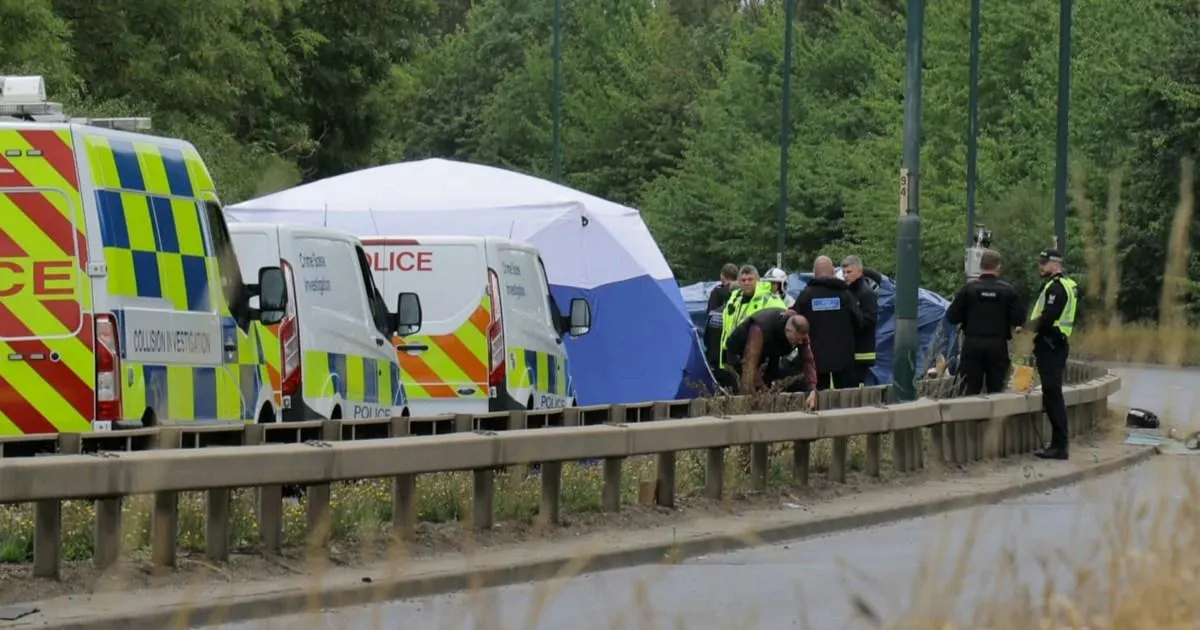
The backdrop to these arrests is the heartbreaking tragedy that first brought these issues to the forefront. The crash itself occurred after police had initiated a pursuit of a Volkswagen Passat that was being driven the wrong way down the dual carriageway near Middlesbrough. The pursued vehicle collided head-on with a marked armed response vehicle carrying PC Matthew Blades, 37, and PC Tom Clough, 38. The two officers were killed instantly, leaving a force and a community in mourning. The five passengers in the Volkswagen, identified as Cole Robert Worthy, 17, Theo Rae, 17, Makai Saddington, 18, Michael Robert Cahill, 23, and Jacob Matusiak, 23, also all died at the scene. The incident sent shockwaves through the country, prompting widespread tributes and a fundraiser that raised a significant sum for the families of the fallen officers. However, as the investigation has deepened, it has become clear this was not just a terrible accident but potentially the culmination of a series of dangerous and criminal behaviours.
Adding another layer of intrigue and sorrow, Cleveland Police have confirmed that they are not linking a separate, horrific house fire that killed a seven-year-old girl and her aunt to the A66 crash. This clarification, which came on the same day as the latest arrests, was likely issued to prevent speculation, but it also highlights the intense pressure the region is under. A series of recent incidents in the Middlesbrough and County Durham area, beginning with the fatal crash, has led to hundreds of extra police officers being drafted in for support. The Police and Crime Commissioner for Cleveland described the past week as ‘the most tragic’ in the area’s history. This official statement encapsulates the mood of a community in shock, dealing not only with the grief of the crash but also the palpable fear created by the suspected organised crime that may have been behind it.
The wider national conversation has also been ignited by the crash, particularly concerning the glamorisation of dangerous driving on social media. In the wake of the incident, it was discovered that an account belonging to one of the deceased Volkswagen passengers had shared videos of reckless driving in the past. This revelation prompted MPs, led by Dame Caroline Dinenage, chair of the Culture, Media and Sport Committee, to write to social media giants including TikTok, Snapchat, YouTube, and Meta. The letters express deep concern about readily accessible content that glorifies dangerous driving, which many believe can influence young people. The timing is significant, as it follows a near-identical wrong-way crash in Ireland a week earlier, in which five teenagers were killed. This broader context of reckless behaviour and the allure of online notoriety presents a complex challenge for authorities, who are now fighting on multiple fronts: on the streets against organised criminals, and online against the promotion of deadly behaviour. The investigation continues, and the mandatory referral to the Independent Office for Police Conduct (IOPC) will independently scrutinise the actions of the police in the moments before the crash, ensuring accountability on all sides. For now, the families of the victims, the people of Middlesbrough, and the officers on the front line can only hope that this wave of mass arrests marks the start of a restorative process, bringing a measure of justice from a deeply senseless tragedy.