


The tragic death of 18-year-old Henry Nowak has ignited a firestorm of grief, anger, and social unrest across the United Kingdom, turning a local tragedy into a national flashpoint for tensions regarding police conduct and communal safety. Following the sentencing of Vickrum Digwa for Henry’s brutal murder, the public’s frustration reached a boiling point—not only because of the loss of a young life, but because of the harrowing bodycam footage that emerged from the scene. In the video, officers are seen handcuffing Henry as he lay dying from a fatal stab wound, a sight that moved onlookers to label his treatment as inhumane. This act of indifference has served as a catalyst for a series of protests, beginning with violent clashes in Southampton where participants used the streets as a battlefield, leading to multiple arrests for disorder.
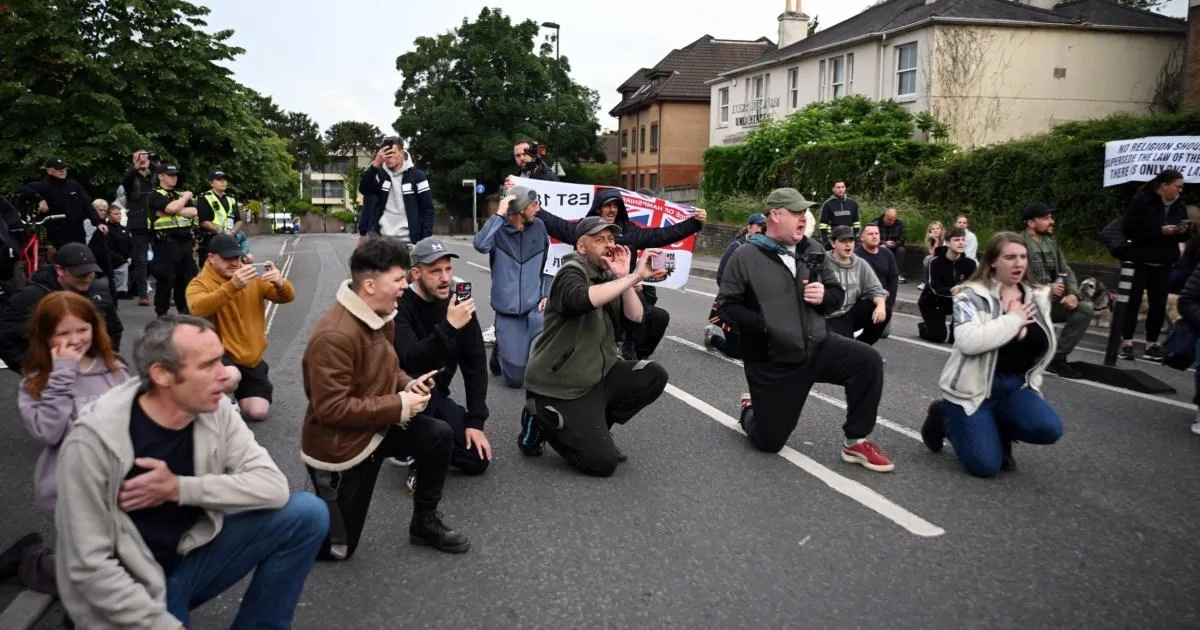
In a poignant attempt to channel this raw energy into something more constructive, a crowd gathered outside the Portswood Police Station for a peaceful vigil. It was a somber, emotional scene characterized by songs, speeches, and a solemn three-minute silence observed in honor of the teenager. However, the atmosphere remained heavy with defiance. Participants knelt in the street—a gesture echoing global movements against police injustice—and chanted slogans aimed at the authorities. Despite the organizers’ desperate pleas for the crowd to remain calm and reject the violence that characterized previous nights, there was an unmistakable undercurrent of skepticism toward the state. Many in the crowd openly raised their hands when asked who no longer trusted the government, signaling a profound rupture in the relationship between the community and those sworn to protect them.
The sentiment among the speakers was one of deep-seated betrayal. One woman, identified as Mandy, spoke for many when she described the agony of watching the footage, equating the treatment of Henry to that of a “piece of meat.” Her speech was a scathing indictment of the local police force, calling for a total systemic upheaval rather than superficial reform. Her frustration extended to the highest levels of government, with her blunt rhetoric directed at Prime Minister Keir Starmer echoing the disillusionment felt by many in the crowd. This vocal public outcry underscores a broader, bubbling resentment: citizens who feel ignored, gaslit, and treated with disregard are no longer willing to wait for the system to correct itself, opting instead for loud, public confrontation.
While the story of Henry Nowak is a local tragedy that has shaken a community to its core, the ramifications have spilled over into a much wider, national crisis for the British Sikh community. The perpetrator, Digwa, used a ceremonial knife associated with his faith to commit the act, and his subsequent lies about being the victim of a racist attack have had devastating consequences for innocent Sikhs throughout the UK. Figures like Dabinderjit Singh of the Sikh Federation have highlighted a terrifying trend: since the sentencing, there has been a sharp, daily rise in assaults against Sikhs. From children and pensioners to doctors and gym-goers, members of the community are being targeted simply for their identity, with threats—some as vile as vowing to hang people by their turbans—now becoming a terrifying, everyday reality.
The situation has created a complex web of overlapping anxieties. The Sikh community is grappling with the dual trauma of the murderer’s actions and the xenophobic backlash that has followed in his wake. Leaders have pointed out the sickening irony that this rise in violence against Sikhs coincides with the anniversary of the 1984 Golden Temple massacre, a historical trauma that emphasizes how quickly hatred can manifest into physical harm. There is a palpable fear that the current climate of “real anger” following the release of the bodycam footage is being weaponized by bad actors to justify attacks on an entire demographic, leading to a climate of fear where Sikhs are now afraid to simply walk in the park or go to the grocery store.
As the nation watches these events unfold, the central fear remains the potential for further loss of life. When protests become riots and local anger morphs into widespread community victimization, the social fabric of the country is stretched to its limits. The tragedy of Henry Nowak serves as a devastating reminder of how quickly small failures in empathy—such as the way a dying victim is treated—can snowball into systemic distrust and communal violence. Unless there is a transparent reckoning with both the conduct of the police and the rise in retaliatory hate crimes, the country risks sliding further into a state of division, where the quest for justice for one young man inadvertently fuels the suffering of thousands of others.