

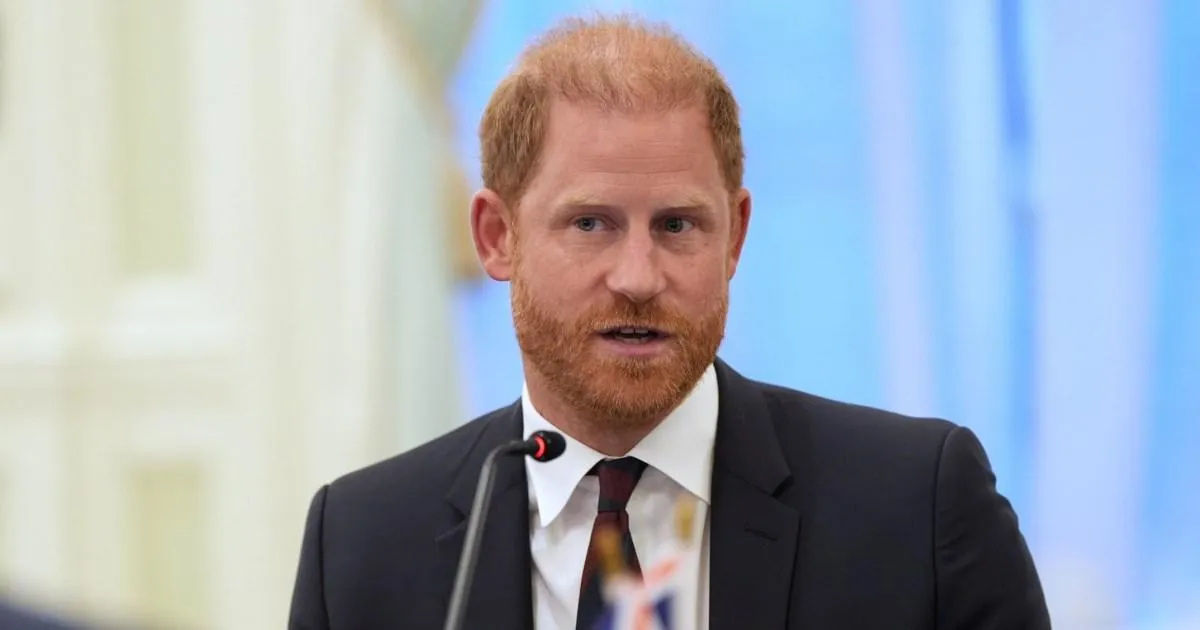
For Prince Harry, the long shadow of a courtroom defeat has now taken a very concrete form. Alongside six other well-known figures, he has been ordered to pay more than £9.5 million to the publisher of the Daily Mail as the first installment of legal costs arising from their failed High Court case. The ruling is a sobering punctuation mark on a legal battle that began with bold accusations and ended with a decisive dismissal. For the Duke of Sussex, Baroness Doreen Lawrence, Sir Elton John, David Furnish, Sadie Frost, Liz Hurley, and Sir Simon Hughes, the human weight of this moment is enormous. They did not merely lose a lawsuit; they now face a substantial financial burden, one that will likely grow as further hearings determine the full amount they owe. The judgment, delivered by Mr Justice Nicklin, requires the group to pay £9,544,355 by August 28 as an initial contribution toward the publisher’s costs. It is a stark reminder that legal courage, however sincerely felt, can come with an extraordinarily high price tag. For Harry, who has spent years fighting battles against parts of the British press, this is another chapter in a deeply complicated relationship with the media—one full of conviction, resentment, and now, costly setbacks. The scene of him leaving the Royal Courts of Justice in London earlier this year felt heavy with significance, and this latest development only deepens that sense of unresolved struggle.
The case itself revolved around serious allegations against Associated Newspapers Limited, the publisher of both the Daily Mail and the Mail on Sunday. The seven claimants accused the company of unlawful information-gathering, a broad term that encompasses allegations of intrusive behavior and questionable journalistic practices. ANL, however, denied the claims with equal vigor, and the dispute was played out over an 11-week trial in London earlier this year. Such a trial is an enormous undertaking, both emotionally and financially, and for the claimants, the stakes were not merely personal but also symbolic. They framed their lawsuit as a stand against media misconduct, a fight for privacy and dignity in an age where tabloid culture often feels unchecked. For Prince Harry, in particular, this battle was deeply intertwined with his own life story—his grief over his mother’s death, his frustration with press intrusion, and his determination to protect his own family from what he has described as a hostile media environment. Baroness Lawrence, too, has a history with press treatment that gives her involvement a profound resonance, as a campaigner for justice and accountability. Yet all of that narrative power could not save the case once it reached the courtroom. Mr Justice Nicklin dismissed all the claims in a ruling on July 7, a decision that must have landed with crushing force. For the group, it was not just a legal defeat but a public validation of the publisher’s position, at least in the eyes of the court.
The subsequent costs hearing, which lasted two days, was always going to be painful. The court was told that ANL’s total costs exceeded £34 million, a staggering figure that highlights how expensive modern media litigation can become. When a case collapses in this manner, the losing side is typically expected to contribute to the winner’s legal expenses, and in this instance, the bill was always going to be enormous. ANL asked for an interim payment of more than £9.9 million, while the claimants’ lawyers argued that the interim payment should be just over £7.9 million. The judge settled on a middle figure of £9,544,355, which by any measure is a life-changing sum for most people, though perhaps less so for billionaires and celebrities. Still, the human impact cannot be reduced to numbers alone. Having to write a check of this size, even for someone like Sir Elton John, carries a sting, especially after months of intense litigation and the emotional investment that comes with it. The deadline of August 28 gives the group little time to arrange such a significant payment, and the judge made clear that they had been warned about this timeline. He noted that they had been on notice since the hearing that this would be the date for payment on account. In other words, this was not a surprise; it was a consequence they were expected to prepare for, and now the reality has arrived.
One of the most legally significant aspects of the ruling is the judge’s decision that ANL’s costs should be determined on an indemnity basis, which is more favorable to the publisher in terms of how much it can recover. To understand why this matters, it helps to know the difference between standard costs and indemnity costs. In most cases, the losing party pays costs on the standard basis, which means the winner can only recover expenses that are proportionate to the matters at issue. Indemnity costs are rarer and more punishing: they allow the winner to recover a fuller range of costs, as long as they are reasonable, without the same strict proportionality test. This means ANL is in a stronger position to recoup a larger portion of its massive £34 million outlay. During the July hearing, ANL argued that the group should pay costs on this stricter basis, and the judge agreed, except where orders had already been made. For the seven claimants, this is a double blow. Their lawyers, led by Nicholas Bacon KC, had warned that this could be very significant and might leave them without enough insurance cover. In written submissions, Bacon said that the group’s exposure could be substantial and that the difference between standard and indemnity costs was not merely academic. It could mean the difference between walking away financially bruised and walking away financially devastated. The warning was stark, and now it appears to have been vindicated. The full costs will be determined at further hearings, but the writing is on the wall: this legal saga is far from over, and the financial fallout may continue for some time.
Adding a strange layer of poignancy to this news is the fact that it comes just days after it was revealed that Prince Harry and his wife, Meghan Markle, plan to return to the UK for an extended period. More than six years ago, the couple relocated to California with their two children, Archie and Lilibet, amid the so-called Megxit crisis as they stepped back from royal duties. Their move to the United States was framed as a bid for freedom, independence, and a quieter life away from the relentless glare of the British press. But now, according to reports, they are set to jet back to Britain later this month to live in a non-royal residence outside London. Their children will start a new school in September, a detail that brings the story down to earth in a deeply human way. For all the headlines about royal feuds and media wars, at the center of it are two parents trying to make decisions for their family. Returning to the UK, even temporarily, must feel loaded with complicated emotions. It was, after all, the country they chose to leave, and the media environment there has been a source of anguish for Harry for years. Yet life is never simple, and the decision to return suggests a desire to reconnect, or at least to navigate a different path. The timing of this news, so close to the cost ruling, creates an almost surreal juxtaposition: a man who has sought to escape the British press now finds himself owing millions to one of its most powerful publishers, while simultaneously preparing to move his family back to British soil.
In the end, this story is about more than legal technicalities or celebrity finances. It is about the uneasy relationship between power, privacy, and the press. The seven individuals who brought this case did so because they believed they had been wronged, and they had the resources and determination to demand answers in a courtroom. That they lost does not necessarily mean their concerns were without foundation; it means they could not prove them to the standard required in such a complex and hard-fought trial. For Prince Harry, this will be seen by supporters as another example of a system protecting the establishment, while critics will see it as a humbling rejection of a celebrity-led campaign against the media. The truth, as always, is more nuanced. Legal battles are unpredictable, and costs rulings are unforgiving. The group now faces a substantial financial penalty, but they also face the more intangible burden of public judgment. For Harry and Meghan, though, there are personal milestones ahead: a new school year, a new residence, and an attempt to redefine life in Britain. Whether this chapter will bring closure or more conflict remains to be seen. What is certain is that the bill must be paid, the hearings will continue, and the story will keep evolving. For now, the duke and his fellow claimants must absorb the blow, regroup, and decide what comes next. The courtroom doors may have closed on this case, but the human consequences are only beginning to unfold.