


Paragraph 1: The Bittersweet Return to a Distant Shore
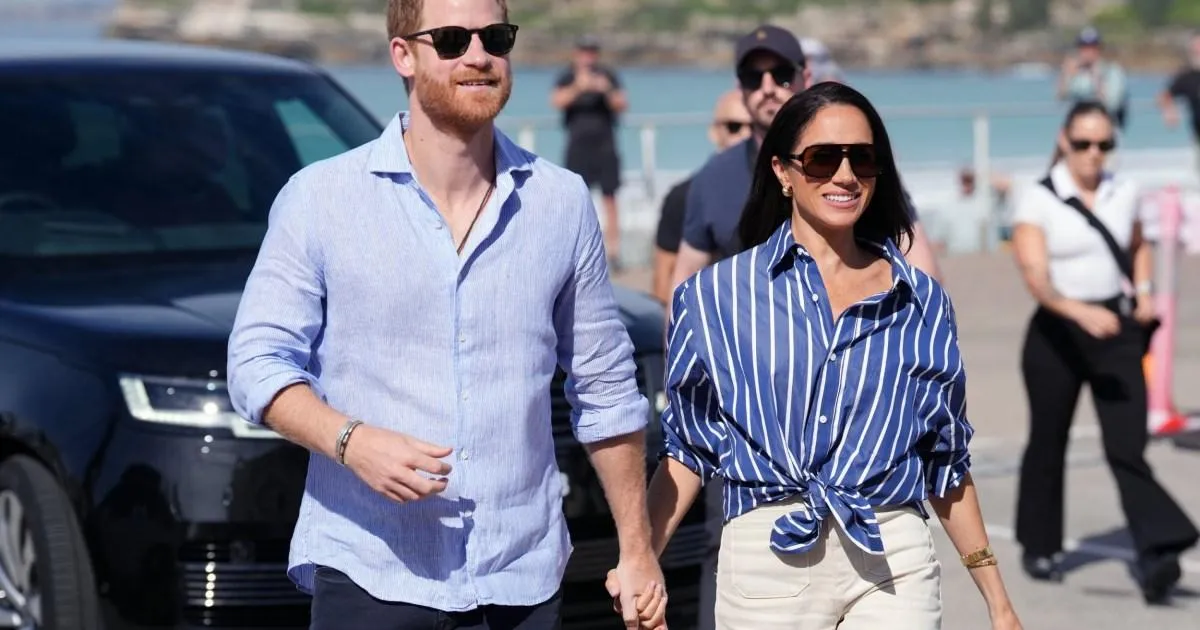
The image is a poignant one: the Duke and Duchess of Sussex, beaming against the golden sands of Bondi Beach, a portrait of sun-kissed freedom that defined their early royal years. Yet, as Prince Harry prepares to trade the perpetual California summer for the grey, familiar skies of the United Kingdom, that image feels like a relic from another lifetime—a sepia-toned memory of a time before the world turned. After six long years away, a period that has transformed their lives, reshaped their family, and hardened the hearts of the British public, the return is not a story of joyful reunion but of tense, uncertain homecoming. The Australian warmth of their past excursions is diametrically opposed to the frosty reception awaiting them now, as royal expert Duncan Larcombe unequivocally asserts that there is “no hope” for a reconciliation between Harry and his elder brother, William. This is not merely a return to a country; it is an uneasy return to a family that has been torn apart by bitter accusations, public confessions, and a chasm of silence that has only widened with the Atlantic distance. Harry is coming home to a nation that has seemingly voted him out of its collective heart, and to a brother who remains entrenched behind a wall of wounded pride, waiting for an apology that may never come. The homecoming is steeped in melancholy, a prodigal son returning not to a feast of celebration, but to a tribunal of public opinion where the jury has already reached its verdict.
Paragraph 2: The Paper Trail of Shattered Trust and Public Grievance
The crumbling of the fraternal bond was not a sudden seismic event but a slow, devastating erosion driven by a deluge of public revelations. The Oprah Winfrey interview, the ghostwritten memoir Spare, and the lucrative Netflix docuseries collectively served as a dangerous, cathartic confession booth for the Sussexes, allowing them to air decades of hidden grievances, perceived slights, and explosive allegations that painted the inner sanctum of the Firm in a deeply unflattering light. From Harry’s perspective, this was a matter of survival—a desperate, visceral need to reclaim his own narrative from the relentless, often cruel, British tabloid machine that had demonized his wife and, in his view, continue to orchestrate his public downfall. However, from William’s vantage point, these acts were not liberation but betrayal. Every private conversation, every petty squabble, every moment of vulnerability was turned into lucrative content designed, whether intentionally or not, to delegitimize the future king and his consort. The Spare revelations—the physical scuffle between the brothers, the scathing private exchanges regarding Catherine, the deep-seated jealousy over the crown—were not just gossip; they were nuclear warheads detonated in the drawing rooms of Windsor. Larcombe’s assertion that William feels “owed an apology” underscores a fundamental truth: the Prince of Wales cannot envision a path forward that doesn’t begin with an acknowledgment of the devastating damage inflicted by these very public airings. It is a standoff born of two irreconcilable worldviews, where one brother sought healing through exposure and the other seeks it through silence.
Paragraph 3: The Fall from Grace and the Invisible Bubble of Montecito
The consequences of this public feud are starkly reflected in the shifting sands of public popularity. Once the most beloved royals, often ranking close to the late Queen herself, Harry and Meghan now find themselves languishing at the bottom of the polls, barely above Prince Andrew—a man exiled for an entirely different set of circumstances. The phrase “Markle sparkle” has morphed into a bitter punchline; the couple’s 2018 wedding was once heralded as a modern, diverse fairytale, yet now stands as a poignant marker of how far the fairytale has curdled into tragedy. Larcombe predicts a rude awakening upon their arrival, noting that they likely have no comprehension of the sheer depth of their unpopularity. Living in the affluent, insulated bubble of Montecito, surrounded by celebrity neighbors, a loyal inner circle, and the echo chambers of American media, they have been shielded from the raw, visceral disdain brewing back home. The harsh reality of being booed at events, the cold shoulders from former friends, and the merciless headlines will hit them with the force of a tsunami. They are returning with a triumphant narrative of their own resilience, but the British public sees a couple who cashed in on their royal heritage while simultaneously denigrating it. This disconnect between the couple’s perceived reality and the actual national sentiment is a tragedy waiting to unfold, a confrontation with a mirror that reflects a deeply unflattering image they have yet to see.
Paragraph 4: The King’s Tentative Olive Branch and the Impenetrable Wall of Fraternal Pride
Amidst the ruins, there is a flicker of hope regarding King Charles, but it is a fragile, guttering flame. The reported private meeting at Highgrove House last month suggests a thaw in the frosty relationship between father and son, with Larcombe noting that the King is “probably cautiously optimistic” about the family’s move back across the Atlantic. For Charles, this represents a chance to see his grandchildren, Archie and Lilibet, to perhaps rebuild a semblance of paternal connection that has been strained for years. He is a grandfather first, a king second, and the opportunity to have a normal, familial dinner with his youngest son is undoubtedly a profound lure. However, this tentative reconciliation with Harry puts Charles in an impossible position, caught between a son who has publicly wounded the monarchy and a first-born son who struggles with his father’s perceived leniency. William remains the immovable object in this conflict; his wounded pride, his protective fury over his wife and children, and his deeply entrenched belief in the sanctity of the institution against external attack makes any negotiation feel like surrender. Harry has stated the ball is in the Royal Court’s court, demanding they reach out. William feels utterly the opposite, believing an apology from his brother and sister-in-law is the only currency that can buy a resolution. It is a tragic stalemate where both men wait for the other to blink, their shared history and brotherhood now buried beneath a mountain of pride, hurt, and unresolved fury.
Paragraph 5: The Silent Hope of Archie and Lilibet, and the Question of Heritage
If there is any silver lining to this complex web of betrayal and coldness, it lies in the innocent faces of Prince Archie and Princess Lilibet. Born in the shadow of the American dream, these children have known nothing but the sun-drenched, gated security of their Montecito home, shielded not only from the paparazzi but also from the rich, often difficult, heritage that flows through their veins. Mr. Larcombe’s hope that they will finally have the opportunity to meet their cousins—George, Charlotte, and Louis—and build relationships with the rest of the Royal Family is a sentiment that resonates deeply. This return offers them the chance to understand where they truly come from, to walk the ancient halls of Balmoral, to see the changing of the guard, and to feel the weight of their surname beyond the confines of their American bubble. They have been starved of a cultural birthright, kept at a distance from a family that, despite its dysfunction, is their history. Yet, this opportunity is interwoven with risk. They will be stepping into a world of intense media scrutiny, a world that devoured their parents’ mental health. The challenge will be to embrace their British roots without being crushed by the very institution that caused their parents so much pain. It is the eternal dilemma of the royal offspring—the privilege and the poison are inextricably linked.
Paragraph 6: The Inescapable Spotlight and the Indelible Silence
Despite the public’s desire to see the Sussexes tucked away in a Cotswolds cottage, living a quiet, penance-filled existence, Larcombe astutely points out that such a scenario is virtually impossible. Harry remains a prominent public figure, and his commitments to the Invictus Games and the WellChild charity demand a visible, active presence. He cannot hide, and one suspects he does not want to. The move back to the UK is not a retreat into anonymity but a deliberate repositioning of his public life, complete with all its inherent contradictions. The tragedy is that the very platform that allows Harry to champion his causes is the same platform that will continue to challenge his brother’s authority. The spotlight will follow them, documenting every awkward interaction, every missed handshake, every clone of a smile. The question remains whether the future holds a moment of public grace—a shared event, a candid photograph—that could offer a hint of thaw, or whether the silence between the brothers will remain the loudest commentary on the state of the monarchy. In the end, this story is profoundly human. It is a tale of two brothers who lost their mother to the very system they serve, and who now cannot find their way back to each other because of the shadows she left behind. The return to Britain is a return to the crucible, and whether they emerge reforged or further reduced to ashes is a story that will define the monarchy for a generation to come.