


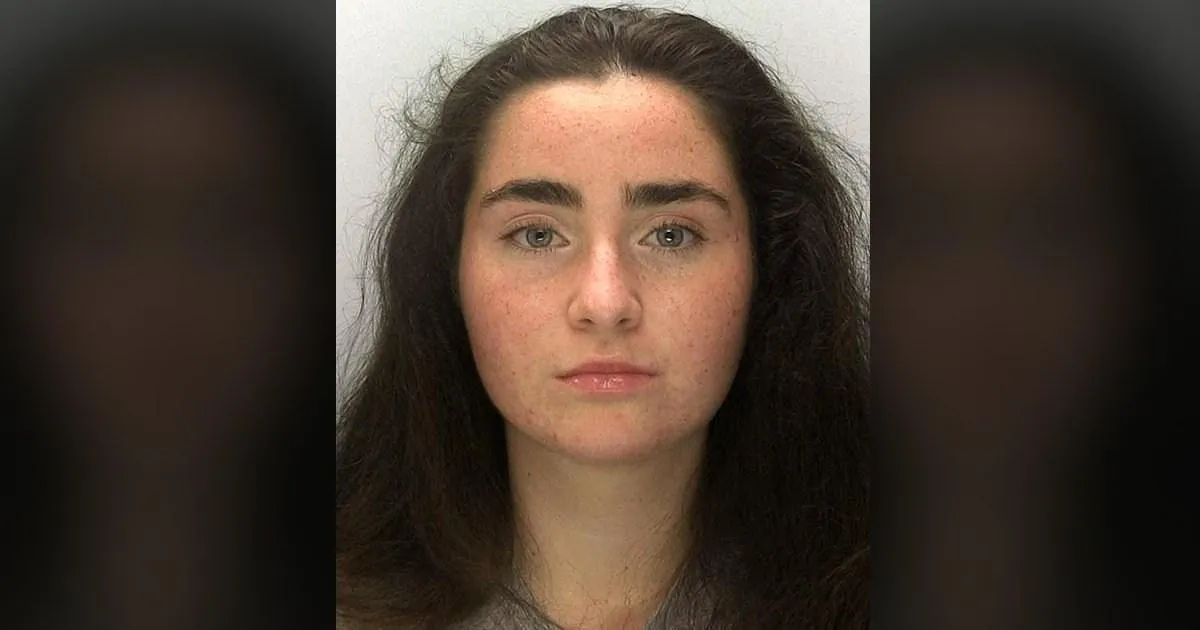
The tragic loss of life caused by 21-year-old Liberty Mitchell serves as a harrowing reminder of how quickly a life can be upended by youthful recklessness. Only weeks after obtaining her driver’s license, Mitchell, who was working as a cleaner at the time, made a series of fatal decisions while traveling between job sites. In a display of extreme impatience and arrogance, she attempted to overtake three vehicles simultaneously on the wrong side of the road. While driving her Mini Cooper at speeds reaching nearly 100mph in a 60mph zone, she clipped one of the cars, triggering a devastating multi-vehicle pile-up that claimed the lives of two innocent people and left others with life-altering injuries.
The human cost of this incident is immeasurable. The collision stole the life of Octavian Codreanu, a taxi driver simply doing his job, and Moyra Whelan, a schoolteacher who was en route to a wedding. The survivors, including Nicola Cooper, have been left to grapple with the crushing weight of survivor’s guilt and the indelible trauma of witnessing such a violent event. Moyra’s sister, Katy-Louise, captured the profound sorrow of the families involved, describing the death of her sibling as the dimming of the world’s light. For the families, the realization that such a vibrant life was extinguished by an act of senseless aggression is a wound that may never truly heal.
Evidence brought to light during the legal proceedings revealed a troubling pattern of behavior that went far beyond mere inexperience. Investigators uncovered that Mitchell had previously filmed herself speeding behind the wheel, proudly sharing the footage on social media. This behavior demonstrated a complete lack of regard for the safety of others and a disturbing disconnect from the reality of the danger she was creating. While her defense team attempted to frame her actions as the result of simple naivety, the court saw something far more dangerous: a young driver acting with total disregard for law and human life.
Initially sentenced to six years and eight months in February, the verdict sparked significant public and legal concern that the punishment did not fit the severity of the crime. Attorney General Ellie Reeves KC MP intervened, referring the case to the Court of Appeal under the “Unduly Lenient Sentence” scheme. Ms. Reeves emphasized that the sheer recklessness of the act had devastated multiple families and that a sterner message needed to be sent regarding dangerous driving. The court’s willingness to re-examine the case highlights the justice system’s commitment to providing a measure of accountability for victims who were subjected to such profound loss.
Ultimately, the Court of Appeal decided to increase Mitchell’s prison sentence to nine years and three months. Presiding judges noted that at the time of the crash, Mitchell suffered from the “common teenage delusion” of invulnerability, believing she was free to disregard safety protocols without consequence. By confirming the harsher sentence, the court aimed to acknowledge the gravity of two lives lost and the physical and emotional scars left on the survivors. The ruling stands as a stern warning against the dangerous intersection of social media vanity, lack of experience, and extreme speeding on public roads.
This tragedy remains a stark lesson for all drivers, particularly the young and inexperienced. It is a sobering account of how a momentary lapse in judgment—or in this case, a blatant disregard for traffic laws—can result in a permanent, hollow silence in the lives of those left behind. As Mitchell begins her extended time in prison, the families of Mr. Codreanu and Ms. Whelan are left to navigate a world that feels significantly darker. While the increased sentence serves to validate their pain, it cannot, of course, replace the people they lost, serving only as a grim testimonial to the high price of reckless, high-speed driving.