



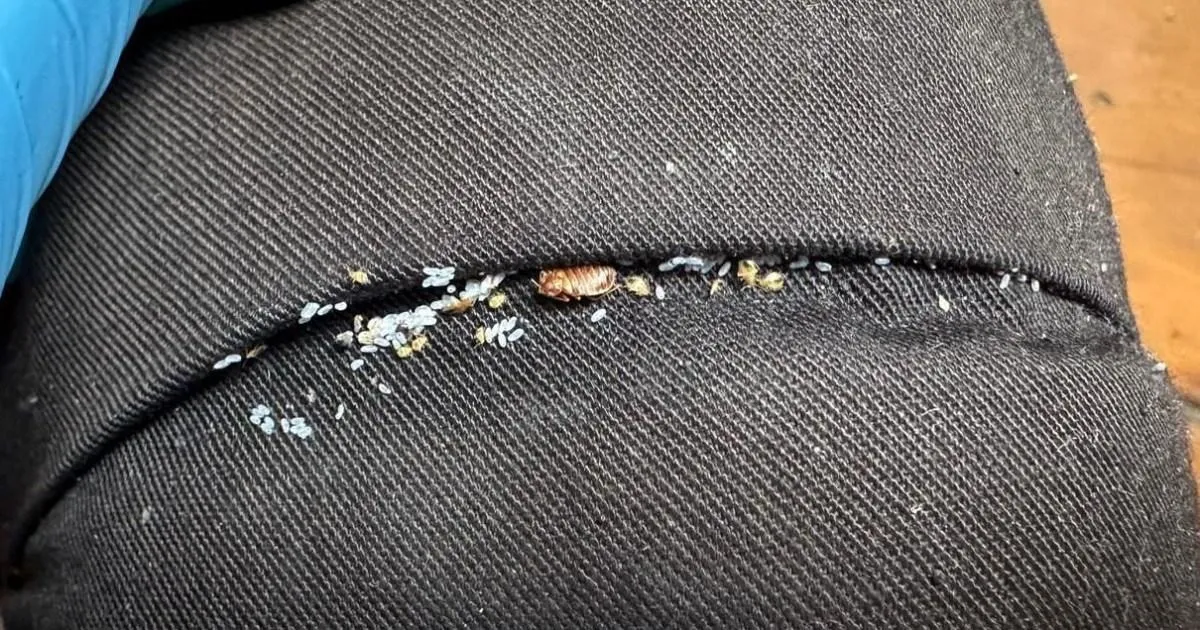
The United Kingdom is currently grappling with a persistent and uncomfortable surge in bedbug infestations, a crisis that has become increasingly difficult for residents and local authorities to manage. These small, blood-feeding parasites, which typically make their homes in mattresses and the hidden crevices of our sleeping spaces, are staging a comeback of sorts. Data collected from across the pest control industry shows a sharp spike in cases throughout 2026, with some areas reporting infestation levels not seen since before the pandemic. For those waking up with unexplained bites, the situation is not just a nuisance—it is an exhausting, stressful reality that is spreading rapidly across the country.
The data paint a stark picture of how quickly this problem is escalating. In one London borough alone, the number of reported bedbug cases in the first half of 2026 was 40% higher than the same period the previous year, and 50% higher than in 2024. June 2026 marked a particularly grim milestone, with the council dealing with more cases in that single month than at any point in the post-Covid era. This is not just a local issue contained to the capital; across the UK, pest control professionals report they are being flooded with frantic calls for help. Companies, such as ThermoPest, are seeing their service requests double, suggesting that the problem has truly reached a national scale.
At the heart of this struggle is a troubling biological development: bedbugs are becoming increasingly resistant to the chemicals once used to reliably eradicate them. Experts like Professor Chow-Yang Lee, a renowned authority on these pests, argue that this chemical resistance is the primary driver behind the surge. Many commonly used insecticides, particularly those in the pyrethroid category, are now failing to do their job. When a treatment falls short, it doesn’t just leave the bugs behind; it creates a “survival of the fittest” scenario. The weaker insects die off, while the strongest, most resistant survivors remain to breed and pass on their immunity to future generations.
This evolutionary resilience is being unintentionally fueled by human intervention, specifically through the rise of ineffective DIY treatments. As the cost-of-living crisis bites, many families are understandably trying to avoid the high costs of professional pest control. Unfortunately, relying on shop-bought sprays, aerosols, or foggers often backfires in the worst way possible. These partial treatments rarely eliminate an infestation entirely, and by leaving the most resistant bugs to thrive, they inadvertently harden the population against future conventional treatments. Pest controllers report horror stories of applying chemicals only to witness the bugs showing no reaction, highlighting just how ineffective these standard “quick fixes” have become.
London, with its high population density, transient tourist economy, and vast rental sector, finds itself as the epicenter of this struggle. The sheer volume of comings and goings in the city provides a perfect environment for these hitchhiking pests to travel between homes and hotels. Dr. Matthew Davies, a technical expert in the field, notes that the problem is compounded by a shrinking market of available insecticides, which limits the tools professionals have in their arsenal. However, he remains hopeful that the situation is far from a “doomsday scenario,” provided that we change our approach to how we fight them.
The path forward requires moving away from an over-reliance on chemicals alone. Experts are now advocating for an “integrated” strategy, which combines several methods to ensure total eradication. This means using heat treatments—which are often more successful at penetrating the hidden spots where bedbugs thrive—alongside professional steam cleaning, monitoring, and precise chemical applications. The rise in bedbug infestations is undoubtedly a frustrating and challenging chapter for many UK households, but by abandoning ineffective DIY shortcuts and opting for comprehensive, expert-led solutions, we can better defend our homes from these resilient invaders.