


Paragraph 1: The Endless Nightmare of Michael Giltinane
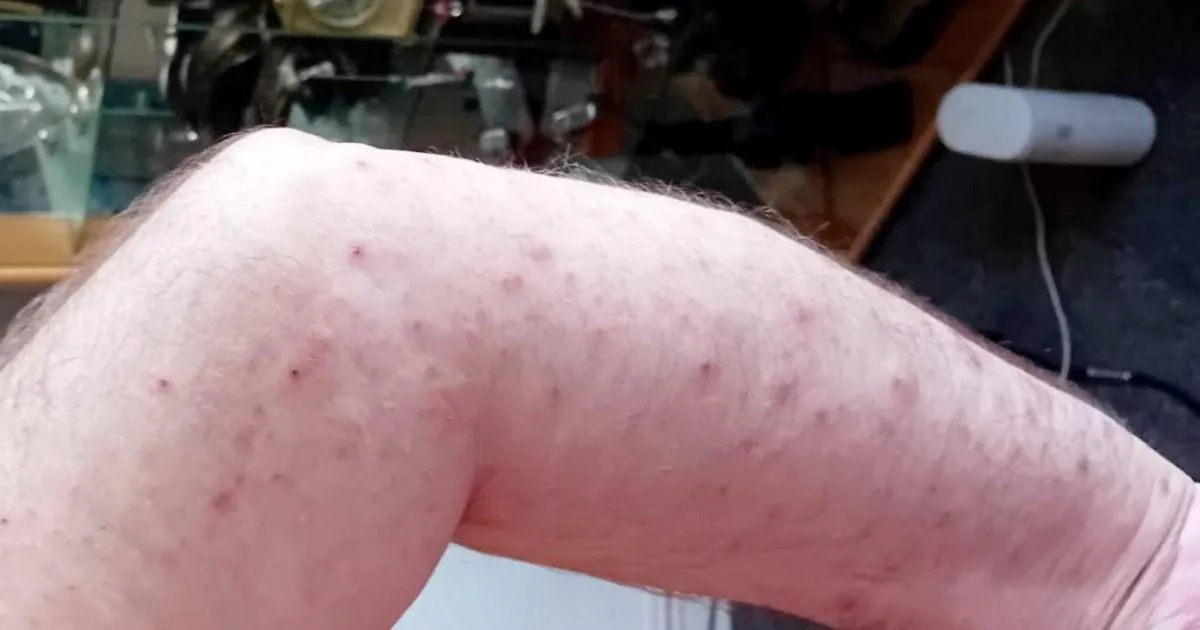
For Michael Giltinane, the night no longer brings rest, comfort, or the simple, unthinking luxury of closing his eyes without fear. The 63-year-old social housing tenant in Greenwich, south-east London, wakes up each morning to a fresh constellation of angry, itching bites scattered across his body—dozens of new marks appearing overnight, joining the hundreds that have come before them. He has stopped counting the exact number, but he estimates that over the years, he has been bitten more than a thousand times by bedbugs that have made his home their battlefield. Despite six separate visits from pest control professionals, the insects have persisted, returning with a vengeance around six months ago after a previous infestation that lasted nearly two years. The situation has become so dire that Michael no longer sleeps in any meaningful sense. He lies in bed, tense and hypervigilant, waiting for the telltale sensation of something crawling across his skin. As soon as he begins to drift off, that phantom feeling returns, and he is jolted back into a state of anxious wakefulness. The bites cover him from head to toe, even marking his face, leaving him bloodied, exhausted, and emotionally shattered. “As soon as I try to sleep again, I feel something crawling on me,” he says, his voice carrying the weight of sleepless nights and relentless torment. “It’s terrible. I’ve had nothing like this all my life.” The photographs of his body tell a story of a man under siege, his skin a map of red welts and scabs, a testament to a battle he cannot seem to win no matter how hard he tries.
Paragraph 2: A Home Turned Hostile and the Daily Fight for Dignity
Michael’s home, which should be a sanctuary, has become a place of hostility and dread. The bedbugs have infiltrated every corner of his life, forcing him to box up his clothing and belongings in a desperate attempt to contain the infestation. He cannot simply wear his favourite jumper or sit comfortably on his own sofa without wondering whether he is carrying the invisible hitchhikers with him. Every action, from getting dressed to sitting down for a meal, is now accompanied by a creeping awareness of the tiny creatures lurking in the seams of his mattress, the folds of his curtains, and the cracks in his floorboards. The physical toll is immense. The bites are not merely irritating; they are painful, raw, and slow to heal. Michael has been left bloodied from scratching, his skin broken in places, and the constant itching makes it impossible to concentrate on anything else. But the mental toll is arguably even worse. The feeling of being invaded in one’s own home, of being helpless against an unseen enemy that emerges under the cover of darkness, is deeply degrading. He feels isolated, ashamed, and misunderstood. He knows that bedbugs are not a sign of dirtiness, but he cannot shake the feeling that others might judge him. The sleeplessness has compounded his misery, leaving him irritable, forgetful, and drained of the energy he needs to cope with the everyday demands of life. His home, once a place of safety, now feels like a trap. He has tried everything he can think of, from washing his bedding at high temperatures to vacuuming relentlessly, but the bugs always seem to find a way to survive. He is trapped in a cycle of hope and disappointment, as each pest control visit brings a brief glimmer of relief, only for the bugs to return and prove that they are not ready to surrender.
Paragraph 3: The Hidden Burden of Illness, Anxiety, and a Family’s Plea
What makes Michael’s ordeal even more heartbreaking is that he does not face this battle alone in terms of his health. He lives with Type 2 diabetes, a condition that can make the healing of skin wounds slower and more complicated, and he also suffers from depression and anxiety. The bedbug infestation has exacerbated both his physical and mental health struggles, creating a vicious cycle. The lack of sleep worsens his depression, which in turn makes it harder for him to summon the energy to prepare his home for treatments. The anxiety of being bitten while he sleeps keeps him on edge, and the constant stress of the infestation has left him feeling hopeless and overwhelmed. His family has watched him deteriorate with growing alarm. They have seen the bites, heard the exhaustion in his voice, and witnessed the toll this is taking on his spirit. In their desperation, they have pleaded with the housing authorities to move Michael to a different home—anywhere that might offer him a fresh start, free from the biting insects that have tormented him for so long. But their pleas have been met with a flat refusal. They have been told that moving him is not possible, leaving the family feeling powerless and frustrated. They cannot understand how a man in his condition can be left to suffer in a home that has become uninhabitable. For Michael, the rejection feels like a betrayal. He has followed the rules, allowed pest control access, tried to prepare his home, and yet he is still being told that there is nothing more that can be done. The sense of abandonment is profound. He is not asking for special treatment; he is simply asking for a life without being eaten alive every night. But even that basic request seems to be beyond the reach of the system that is supposed to protect him.
Paragraph 4: The Council’s Response and the Impossible Complexity of Bedbugs
Greenwich Council, the authority responsible for Michael’s social housing, has responded with a carefully worded statement that acknowledges the distress caused by bedbugs while also explaining the inherent difficulties of eradicating them. A spokesperson for the council said that infestations of this type can be “extremely distressing” and that they understand the impact this can have on residents. However, they were quick to point out that treating bedbugs is “extremely difficult” and that success depends on a high level of cooperation from tenants. The council provides free pest control services for its social housing tenants, which is a valuable resource, but the process is not a simple one. For treatments to have the best chance of working, tenants must allow access to their home, and each room must be prepared in advance. Furniture needs to be moved away from walls, and possessions need to be packed safely in bin liners. Without this level of preparation and cooperation, the treatment cannot be effective. The council’s statement also included advice for all residents on how to prevent bedbugs from spreading, noting that these insects can travel on belongings. They urged residents not to place luggage on beds when returning from trips, to carefully check second-hand furniture before bringing it into their homes, and to remain vigilant for any signs of an infestation. Finally, they acknowledged that if a tenant wishes to move because of a pest control issue, they would need to discuss this with their tenancy officer so that an assessment can be made. While this response is procedurally correct, it offers little comfort to someone like Michael, who has already tried everything and is being told that the system has its limits. The council’s words, while empathetic on the surface, do not offer a solution to his immediate suffering.
Paragraph 5: The Broader Housing Crisis and the Invisible Plague Affecting the Vulnerable
Michael’s story is not just an isolated case of a pest infestation; it is a reflection of a much larger and more troubling issue that affects vulnerable people across the country. Bedbugs have become a growing problem in urban areas, thriving in the cracks and crevices of older buildings, spreading through shared walls, and hitching rides on public transport, luggage, and second-hand goods. For social housing tenants, the challenge is often compounded by the age and condition of the buildings, the density of housing, and the limited resources available for pest control. When one apartment is infested, the bugs can easily migrate to neighbouring units, turning a single problem into a building-wide crisis. The fact that Michael has had to endure six pest control visits and still finds himself covered in bites suggests that either the treatment is not being applied effectively, the preparation is not sufficient, or the source of the infestation lies outside his home. In any case, the burden is falling squarely on his shoulders. The council’s emphasis on tenant cooperation, while technically valid, can feel like a way of shifting blame onto the victim. It ignores the fact that a person suffering from depression and a chronic illness may not have the physical or emotional capacity to move heavy furniture and pack up their entire home on a regular basis. It also fails to address the underlying issue of housing quality and the need for more comprehensive, proactive measures to protect residents from infestations that are notoriously difficult to eliminate. Michael’s experience highlights the urgent need for a more compassionate and holistic approach to pest control in social housing—one that takes into account the whole person, their health, their mental state, and their living conditions, rather than simply ticking boxes and repeating the same treatment that has already failed multiple times.
Paragraph 6: A Plea for Compassion, Action, and the Simple Right to Sleep
At the heart of Michael’s story is a simple, universal desire: the desire to feel safe in one’s own bed. Sleep is a basic human need, a time for the body to heal and the mind to rest. Michael has been denied this fundamental comfort for far too long. He is not just fighting bedbugs; he is fighting for his dignity, his health, and his sanity. The photographs of his bitten body are not just shocking; they are a cry for help that should not be ignored. His family’s plea for a different home is not unreasonable; it is a desperate attempt to save a man they love from a living nightmare. While the council is right to point out the difficulty of treating bedbugs, it is also important to remember that difficulty is not the same as impossibility. With enough resources, coordination, and follow-up, infestations can be eradicated. But it requires a commitment to the resident, not just a commitment to the process. Michael deserves more than a generic statement and a list of preventive tips. He deserves a plan. He deserves to have his health taken into account, his mental state acknowledged, and his living situation treated as an emergency. His story should serve as a wake-up call to all of us about the hidden struggles that many people face in silence. It is easy to scroll past a headline about bedbugs, but for Michael, there is no scrolling away. He lives with the consequences every single day. As he continues to wake up covered in new bites, he does not want sympathy; he wants action. He wants someone to see him not as a case number, but as a human being who just wants a good night’s sleep. And in a society that prides itself on compassion, that is surely not too much to ask. Until then, Michael will keep fighting, keep hoping, and keep waking up to the same relentless nightmare, praying that one day soon, the crawling sensation on his skin will finally stop.