



For nearly three decades, the life of Patricia Lashley—a woman who was once a vibrant mother of seven—was frozen in the silence of an unsolved disappearance. In 1998, when Patricia was just 33 years old, she vanished from her flat on Hall Street in Dudley, leaving behind a void that no amount of time could truly fill. Known to those closest to her as “Pat” or “Jade,” she was a person of many chapters, moving through cities like London, Newcastle, and parts of Wales and Scotland. Along the way, she navigated not only different regions but also different identities, occasionally using the names Vanessa and Tricia, or the surname Bradford. To her family, however, she was simply the heart of their home, and her sudden absence marked the beginning of an agonizing wait for answers that felt like they might never come.
The mid-1990s saw Patricia settle into a new chapter of her life in Dudley, a time when she was a familiar face in the local community. She was known to frequent the No Limits club and various pubs throughout the area, living a life that connected her to many people across Dudley and Oldbury. Those who knew her then would remember a woman with a distinct presence, yet her social connections ultimately became the focal point of a decades-long police investigation. It has now been confirmed by authorities that Patricia and Trevor Dunkley, a man who would later become central to this investigation, knew each other during that period. For years, the circumstances surrounding their relationship and her ultimate fate remained a mystery, locked away in the memories of those who might have seen them together in the late nineties.
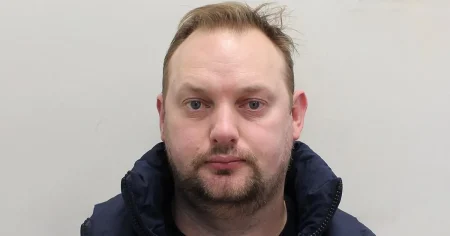
The stagnation of the case finally broke this week with a development that has sent ripples through the community and provided a somber milestone for her grieving family. The West Midlands Police have officially charged 66-year-old Trevor Dunkley with the murder of Patricia Lashley. As he remains in custody, awaiting an upcoming appearance at Wolverhampton Crown Court, the news serves as a stark reminder that time does not erase the gravity of a life taken too soon. While the charge is a significant legal step toward justice, it is also a reopening of old wounds for the seven children she left behind, who have spent thirty years wondering what truly happened behind the closed doors of that flat in 1998.
Detective Inspector Michelle Cordell, who is leading the inquiry, emphasized that while a suspect has been charged, the mission to uncover the full truth is far from over. The passage of twenty-six years presents a significant challenge for investigators, as memories fade and witnesses move on or pass away. Yet, the police are banking on the idea that there are still people living in the Dudley and Oldbury areas who hold pieces of this puzzle. Whether it was a brief conversation, a shared evening at a pub, or a passing acquaintance with either Patricia or Mr. Dunkley, the smallest, seemingly insignificant detail could be the key to finalizing this long-overdue chapter. The investigation is not just about a court date; it is about documenting the reality of Patricia’s final days.
In a heartfelt plea for community cooperation, Detective Inspector Cordell is urging anyone with information—even those who may have spoken to the police back in 1998—to come forward once more. The landscape of police technology and investigative techniques has transformed significantly since the late nineties, and information that seemed irrelevant or unreachable years ago might be vital today. The goal is to provide some form of closure for a family that has endured the exhaustion of a three-decade mystery. For the detectives, this is a race against time, not regarding the prosecution, but regarding the collective memory of a community that Patricia was once a part of before she simply, and tragically, stopped being seen.
Ultimately, the story of Patricia Lashley is a somber reminder of the human cost behind every “cold case.” Far beyond the police briefings and court dates, there is a mother whose life was interrupted and a family that has lived with a permanent question mark. By reaching out to the public, the police hope to reconstruct the narrative of her life in the time leading up to her disappearance, ensuring that the final record of her story is as complete as possible. As the legal process begins to unfold at Wolverhampton Crown Court, the hope remains that the truth will finally provide the Lashley family with the peace they have been denied for almost the entirety of the last thirty years.