


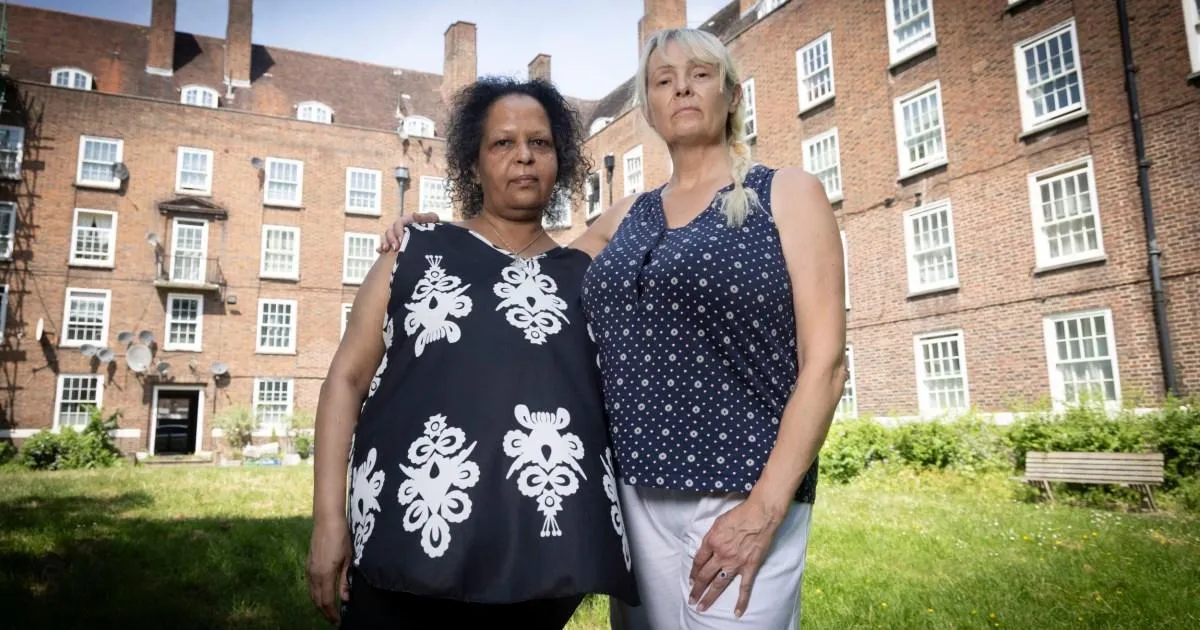
Living just a fifteen-minute stroll from the political heart of Westminster, the residents of Wedgwood House in Lambeth find themselves trapped in a different kind of crisis—one defined by spiraling utility costs and a lack of basic consumer power. Unlike most households that can switch providers or turn down a thermostat to trim their budgets, these tenants are tethered to a communal heat network. This centralised system, while intended as a sustainable way to warm 181 flats, has become a source of immense financial anxiety. With no individual boilers to control and no way to dial back their usage, residents have been forced to treat their radiators as uncontrollable expenses, often resorting to keeping them off entirely, even during the biting cold of winter, in a desperate attempt to curb their bills.
The situation turned from manageable to catastrophic in the wake of the war in Ukraine, which saw energy prices soar globally. Because these communal systems are classified as “service charges” rather than individual utility accounts, the residents of Wedgwood House found themselves falling into a regulatory loophole. Unlike millions of other Britons, they were not shielded by the national energy price cap. As costs spiked by as much as 350%, their weekly charges ballooned, leaving them with bills that effectively doubled their annual expectations. The resulting financial burden was immediate and brutal, pushing many families into crushing arrears and, for some, the terrifying reality of receiving formal eviction notices for debts they never had the power to prevent.
For a mother like Aida Haile, who has called Wedgwood House home for nearly two decades, the sudden hike was not just a bureaucratic inconvenience; it was a mental health crisis. Compelled to manage her household on Universal Credit, Aida saw her weekly costs surge from £20 to £70 with little to no explanation from the council. The psychological toll of receiving persistent eviction threats while struggling to provide for her teenage son left her in a state of constant panic, unable to sleep or eat properly. Despite eventually agreeing to a payment plan as global market prices stabilized, she remains caught in a cycle of debt where she feels she is constantly losing ground, unable to keep up with a system that feels designed to punish rather than support.
The story is mirrored by colleagues like Kirsty Oliveira, who initially suspected a clerical error when she saw her bill skyrocket by 350%. Even after restricting heat to only her son’s bedroom during the depths of winter, she was informed by the authorities that the charge was legally accurate. This realization—that they were being held responsible for an uncontrollable, inflated cost—is what sparked the community’s decision to fight back. Supported by the Public Interest Law Centre, the tenants of Wedgwood House are now staging a landmark legal challenge against Lambeth Council. In a significant victory for tenant rights, a judge has granted a judicial review, with legal expert Richard Clayton KC noting that the tenants’ arguments raise points of law of general public importance that deserve a day in court.
The plight of Wedgwood House is far from an isolated incident; it is a symptom of a much larger, systemic failure. An investigation by the Public Interest Law Centre and recent Freedom of Information requests have revealed that Lambeth Council issued over 800 eviction notices last year linked specifically to heat network debts. This suggests that thousands of people across London are living in the same “heat network trap,” where a well-intentioned green energy initiative has been weaponised by poor management and a lack of regulatory oversight. As the Social Market Foundation estimates that nearly 900,000 households across the UK—including one in every twelve social housing residents—rely on similar communal heating, the outcome of this case could set a vital precedent for the entire country.
While Lambeth Council maintains that legal action is a “last resort” and that they are working to establish repayment schemes with those in arrears, the residents of Wedgwood House remain disillusioned. They are not merely asking for payment plans; they are demanding transparency, accountability, and an end to a billing structure that renders them powerless in their own homes. By taking their stand to the high court, these tenants have turned a local housing struggle into a national conversation about the rights of social housing residents in an era of transition to green energy. For Aida, Kirsty, and their neighbors, the lawsuit is their only remaining lifeline against being forced out of the homes they have tended to for years, proving that even against the power of a local authority, solidarity and the law can provide a glimmer of hope.