
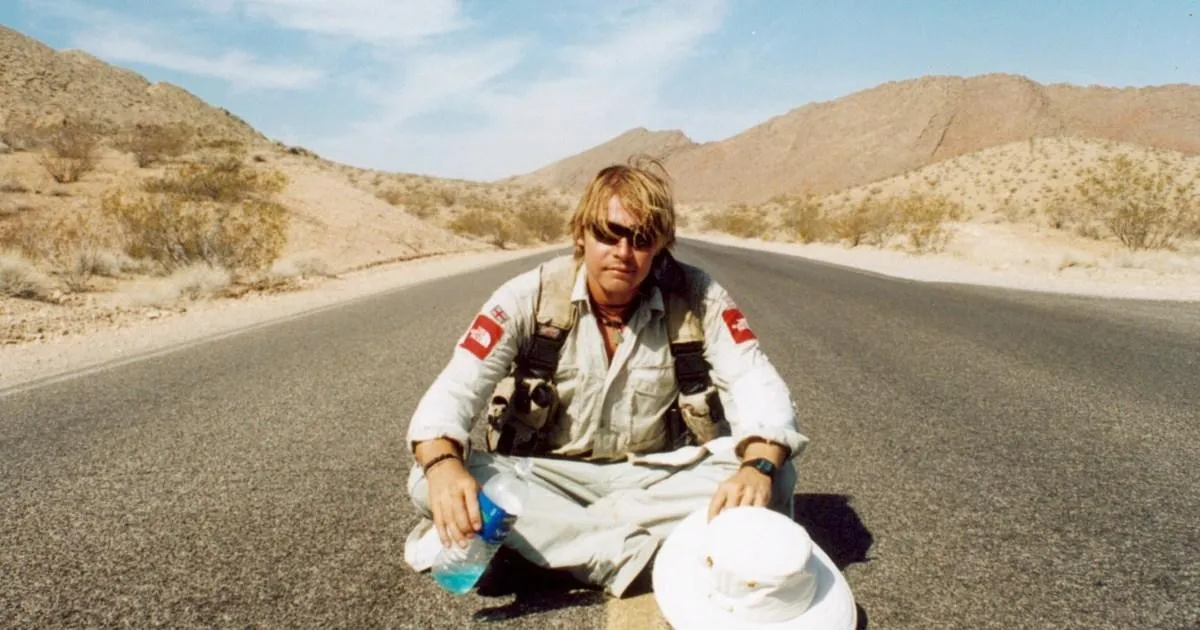
For nearly thirty years, Karl Bushby has lived a life defined by the horizon. A former paratrooper with a spirit as restless as the tides, he set out from Punta Arenas, Chile, in 1998 with a singular, audacious goal: to walk the entire globe without ever setting foot in a car, train, bus, or plane. What began as a defiant response to fellow soldiers who claimed his map-sketched dream was impossible has morphed into a three-decade epic. Now 57, Bushby finds himself in the final chapter of a 36,000-mile odyssey, currently navigating the complexities of European bureaucracy as he inches closer to his childhood home in Hull. His journey has been a masterclass in human perseverance, defined not just by the terrain he has covered, but by the immovable rules he set for himself at the start: no mechanized transport and no rest in the UK until the work is finished.
The final stretch, however, has proven to be the most frustrating. After trekking across continents, dodging bandits in the Darien Gap, navigating grueling visa hurdles, and even enduring stints in foreign prisons, Bushby is face-to-face with the English Channel. It is a mere 21-mile divide that feels less like a geographic feature and more like a locked door. Having been flatly denied permission to walk through the Eurotunnel for safety reasons, Bushby is now forced to consider the unthinkable: swimming. While he has crossed the frozen Bering Strait by foot and spent over a month swimming 170 miles across the Caspian Sea, he admits with a weary laugh that he is “not into the swim thing.” For a man who has conquered ice and desert, the prospect of the cold, unpredictable Channel is a logistical and physical hurdle he truly wishes he didn’t have to jump.
The irony of his predicament is not lost on him. French authorities are currently upholding a 2018 mandate that restricts swimming in the Channel, effectively barring him from completing his journey in the manner his self-imposed rules require. Bushby, ever the pragmatist, remains in dialogue with the French coastguard, refusing to indulge in anger. Instead, he leans into a quiet, seasoned disappointment. He has secured a support boat for October, a pivot that reflects his incredible ability to adapt when the world pushes back. He views the tunnel as a superior and safer option, yet he is prepared to dive into the frigid waters if necessary, a testament to the grit that has kept him moving forward since the late 90s when he first pinned his hopes to a map of the world.
To track Bushby’s path is to chart a life of immense hardship and improbable survival. He has been detained while crossing into Russia, spent 18 days in a Panamanian jail, and suffered the disheartening theft of his supplies on the cusp of entering Canada. These were not mere hiccups; they were structural challenges that added years to his projected timeline. Yet, every detention, every visa delay, and every stolen trailer served only to harden his resolve. He is a man who treats physical borders as inconveniences rather than ends. Whether he is traversing the Balkan states or managing his international status from a temporary base in Mexico, his focus has remained locked on that final, nostalgic destination: his home in Hull.
What makes Bushby’s story so deeply human is its total lack of convenience. In an age where the world is traversable with a tap on a smartphone, he has chosen the hard way—the slow, aching, visceral way. He has spent his mid-life years walking through war zones, across frozen seas, and through the endless administrative red tape of multiple nations, all to prove that human legs are still the primary means of measuring the globe. He is not doing this for fame or record-breaking acclaim, but for the completion of a vow. There is something profoundly touching about a man who has traveled 36,000 miles, only to find himself stopped by a narrow stretch of water and a administrative rulebook, waiting for permission to complete his trek.
As October approaches, Bushby prepares for the final leg. If the swimming permits remain blocked, he will continue to negotiate, holding onto the hope that someone in authority will see the historical weight of his journey and grant him passage through the tunnel. Until then, he keeps walking, keeping his rhythm on the European continent, focused on the ultimate prize: the moment he can finally lay down his pack in Hull. After thirty years of being a nomad, of being a curiosity, and of being a man driven by a promise to his younger self, Karl Bushby represents the rare, stubborn persistence of the human spirit. He isn’t just walking home; he is walking through history, one step—and perhaps one swim—at a time.