
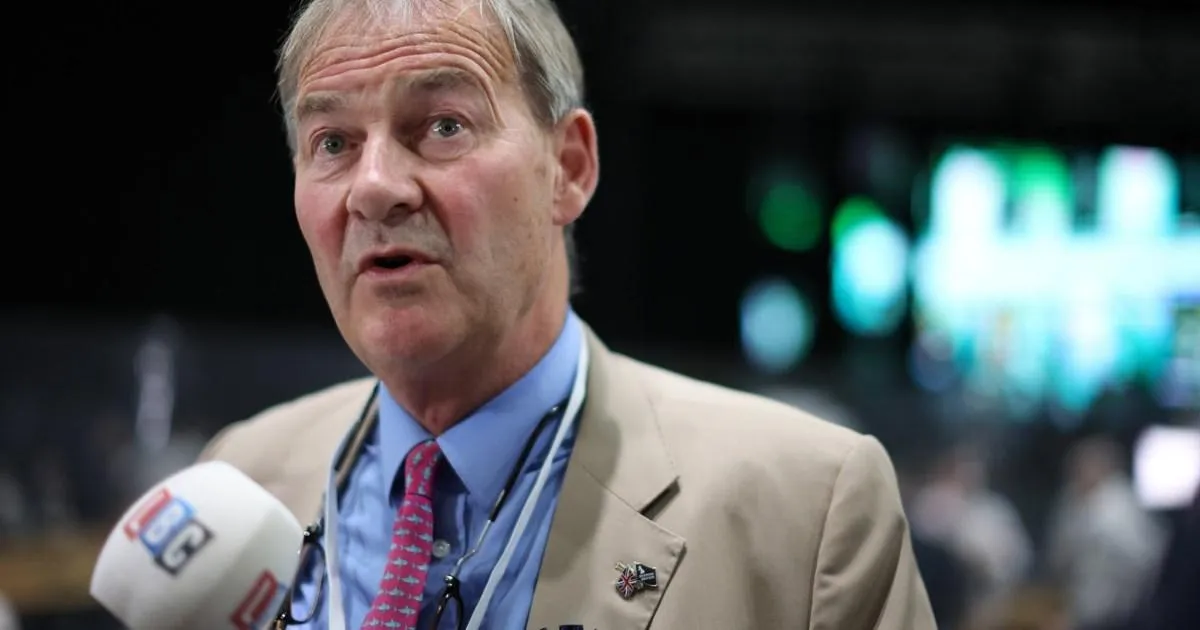
The tragic events at Dunblane Primary School stand as the darkest chapter in modern British history, a moment of profound heartbreak that shook the nation to its core. In March 1996, a gunman entered the school gymnasium and senselessly took the lives of 16 innocent children and their teacher, leaving a scar on the community that has never truly faded. This tragedy was not merely a statistic; it was a devastating ripple effect that shattered families and forever altered the lives of survivors. Yet, despite the undeniable weight of this sorrow, we recently witnessed a jarring disconnect when Rupert Lowe, the MP for Great Yarmouth and leader of the Restore Britain party, appeared on The Joe Rogan Experience and dismissively characterized the massacre as “just one murder.”
To hear such a monumental loss of life reduced to a single act of violence is both jarring and deeply painful for those who still carry the memory of that day. During his conversation with Joe Rogan regarding the UK’s stringent gun laws, Lowe seemed intent on framing the legislative response—specifically the banning of handguns—as an inconvenience to hobbyists, rather than a necessary societal shift born from unspeakable horror. When pressed by Rogan, Lowe doubled down on his inaccuracy, lamenting the loss of his father’s university-era pistols as if they carried equal weight to the 17 lives stolen by Thomas Hamilton’s rampage. This narrative choice, prioritizing the inconvenience of firearm ownership over the collective grief of a nation, reveals a troubling lack of empathy.
The backlash was immediate and rightfully sharp, led by those whose lives were permanently broken by the shooting. Jack Crozier, who lost his sister Emma in the attack, voiced a sentiment that resonated across the country: while Rupert Lowe was worried about his father’s gun collection, the families of Dunblane were left to mourn the children who never grew up. Crozier’s words serve as a stark moral compass, pointing out the vast chasm between the loss of a steel object and the loss of a human soul. For a public official to intentionally categorize the murder of 16 primary school children and their teacher as a solitary event is not just a factual error; it is a profound insult to the memories of the victims and the endurance of their surviving families.
The ripple effects of that day touched even those who became public figures, serving as a reminder that the tragedy was deeply personal for many within the local community. Andy Murray, the world-renowned tennis champion, was a pupil at Dunblane Primary during the shooting. As an eight-year-old child, he and his brother were forced to hide under a desk while violence unfolded in their school. Murray has spoken openly about the lasting psychological impact of realizing his friends had been killed, and the gut-wrenching realization that the perpetrator was a man his family knew through local youth clubs. His story highlights how the massacre wasn’t just a political talking point to be debated on a global podcast; it was a lived, traumatizing experience for an entire generation.
When leaders in government choose to use their platform to minimize or reinterpret historical atrocities, it forces the public to question the moral foundation of their representation. The constituents of Great Yarmouth and, indeed, the broader British public are now left to ponder whether a representative who fails to acknowledge the gravity of such a tragedy is truly fit to hold office. Public service requires a deep, unwavering respect for the history and the struggles of the people one serves. By sidelining the reality of Dunblane, Lowe has not only distorted the truth of the incident—which directly led to the Snowdrop Campaign and tighter gun regulations—but he has also failed to show the basic human decency required of a leader.
Ultimately, history cannot be rewritten to suit a specific political agenda. The events of that day in 1996 remain a testament to the fragility of life and the necessity of keeping our society safe from the harms of unchecked violence. To honor the victims of Dunblane, we must maintain an honest account of what happened, ensuring that the sacrifice of those young lives is never trivialized or forgotten. As the conversation moves forward, it serves as a sobering reminder that empathy should always be the prerequisite for policy-making. We must demand that those who walk the halls of power treat the wounds of the past with the solemnity and care they deserve, rather than dismissing them for the sake of a podcast soundbite.