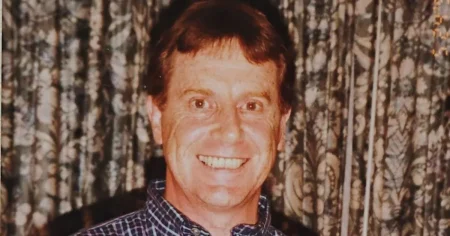



The tragic death of 18-year-old Henry Nowak in Southampton has evolved into a multi-layered legal and moral crisis that has deeply unsettled the public. Last December, Henry’s life was cut short when he was brutally stabbed by 23-year-old Vickrum Digwa. In the aftermath of the killing, Digwa attempted to manipulate the narrative by falsely claiming that he was the victim of a racially aggravated assault. This deceit led to a horrifying misstep by law enforcement; instead of rushing to aid a dying teenager, officers handcuffed Henry as he struggled for his very last breaths. The revelation that Digwa is now seeking to appeal his 21-year minimum life sentence—a term already deemed “unduly lenient” by the Solicitor General—has added a bitter layer of injustice to a community already reeling from the teenager’s senseless death.
The grief of Henry’s family has been compounded by the stark, painful contrast in how the police treated the killer versus the victim. Outside the courtroom, Henry’s father, Mark Nowak, spoke with heartbreaking clarity about the “unbearable” reality that his son, who was pleading for help as his life ebbed away, was instead subjected to the cold, clinical process of being formally arrested for assault. Mark Nowak described the scene as inhumane, noting that Henry was dragged across gravel and restrained while he was in critical condition. For the family, the fact that the last words Henry heard as he lay dying were his Miranda rights, rather than the sound of a first-aid kit being opened, remains an agonizing wound that refuses to heal.
This failure of duty has triggered a significant investigation by the Independent Office for Police Conduct (IOPC), which is currently scrutinizing the actions of two involved officers for potential gross misconduct. The investigation is not merely looking at the immediate failure to provide life-saving medical care, but is also examining allegations that officers dismissed Henry’s frantic claims that he had been stabbed. Furthermore, authorities are conducting a serious inquiry into whether systemic biases, specifically concerning race or religion, influenced the officers’ fatal decision-making process. Prime Minister Sir Keir Starmer has publicly acknowledged that the case raises “serious questions” about police conduct and the immediate responsibilities of officers when faced with emergency medical distress.
As the legal wheels turn, the focus has shifted toward the prison environment where Digwa is currently serving his sentence at HMP Frankland in Durham. Reports have emerged that the killer is living in a state of constant fear, leading him to request segregation from the general prison population. Apparently haunted by the violent death of child-killer Ian Huntley, who was attacked within the same facility earlier this year, Digwa is reportedly terrified that he will meet a similar fate. He allegedly refuses to leave his cell for anything other than his mandated daily exercise, wary of the environment and the other inmates around him, marking a stark shift in power from his behavior on the night of the murder.
The legal proceedings ahead promise to be contentious. While the Solicitor General Ellie Reeves has pushed for a harsher sentence, arguing that the original term did not reflect the gravity of the crime, the fact that Digwa is attempting to challenge his conviction entirely complicates the timeline. The Court of Appeal is now tasked with managing a high-stakes legal battle that touches on issues of public safety, police accountability, and the nature of justice in cases where the truth was initially obscured by the perpetrator’s calculated lies. Both the state’s desire to increase the punishment and the killer’s attempt to walk free have left the public questioning the efficacy and fairness of the current judicial process.
Ultimately, the case of Henry Nowak remains a haunting reminder of how quickly a situation can spiral into tragedy when human empathy is replaced by rigid, flawed bureaucracy. Every development—from the upcoming appeal hearing to the ongoing misconduct investigations—is watched closely by those who see Henry not just as a victim of a knife crime, but as a victim of a system that failed him in his final moments. Whether justice will truly be served remains an open question, but for the Nowak family, the path forward is marred by the memory of a night where, instead of protection, their son found only rejection and further harm from those sworn to serve the public.