



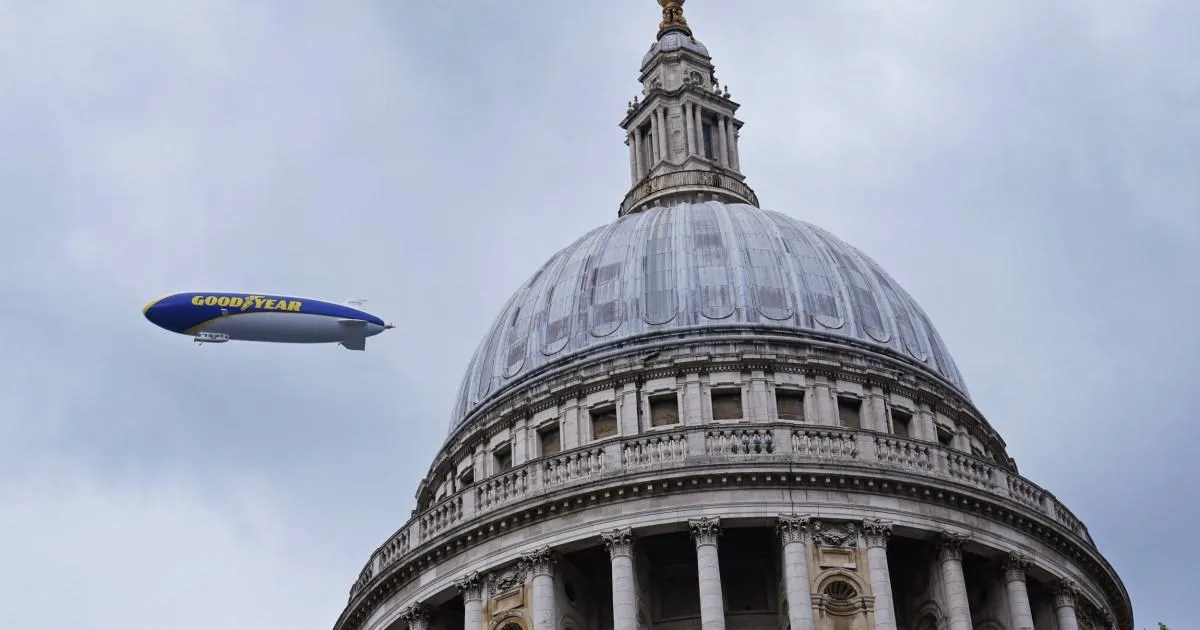
For the first time in four years, the iconic Goodyear Blimp has returned to grace the skies of the United Kingdom, marking a nostalgic and impressive sight for those on the ground. The massive semi-rigid Zeppelin NT, stretching over 75 metres in length and standing nearly 18 metres tall, made its journey across the English Channel from France earlier this morning. As it drifted gracefully toward the UK coastline, its sheer scale and distinctive silhouette turned heads, signaling a rare visit for an aircraft that has become a globally recognized symbol of aerial marketing.
For many office workers in Kent and Central London, the average workday was suddenly interrupted by the sight of the slow-moving giant gliding past their windows. Reaching a modest top speed of just 73 mph, the blimp offered a stark contrast to the rapid pace of city life, allowing observers enough time to stop, look up, and capture the moment. It has been a long time since the airship graced British airspace—the last notable sighting was in 2022—making its arrival over landmarks like St Paul’s Cathedral a particularly special occasion for photography enthusiasts and casual passersby alike.
The return of the Zeppelin prompted a wave of historical reflection among Londoners, with some lighthearted, albeit macabre, jokes referencing the city’s wartime past. The sight of a silent, hovering airship naturally conjured memories of the World War I era, when German Zeppelins conducted “silent” bombing raids over London. While those dark days resulted in tragic loss of life and significant infrastructure damage, the modern-day Goodyear Blimp serves a much friendlier, civilian purpose, proving just how much the perception of these magnificent aerial giants has evolved from instruments of war to symbols of brand prestige and wonder.
Beyond its brief return to London, the Goodyear Blimp carries a deep sense of history that dates back nearly a century. Since their inception in 1925, these airships have been much more than just floating advertisements; they were vital assets to the U.S. Navy during both World Wars, serving as essential observation platforms. Tasked with patrolling choppy waters and providing cover for maritime convoys, the blimps played a silent but critical role in coastal defense. Today, while they are better known for hovering over high-profile sporting events, that legacy of utility and endurance remains baked into their design.
Engineering-wise, the blimp is a marvel of physics that often defies common perception. While it might look heavy, the craft is surprisingly light once it takes to the air. Without its helium, the structure weighs over 9,072 kg, but once fully inflated and balanced with fuel and ballast, its “aerostatic weight” drops to a mere 45–90 kg. Flying at a cruising altitude between 1,000 and 1,500 feet, the blimp possesses an internal envelope of nearly 300,000 cubic feet of helium, creating a gentle, stable environment that allows it to drift through the skies with an elegance that modern jets simply cannot replicate.
Seeing the Goodyear Blimp once again provides a rare “slow-motion” moment in an otherwise hyper-connected world. Whether it is reflecting off the glass of a London skyscraper or providing a bird’s-eye view of the English countryside, the airship serves as a reminder of the beauty found in classic aviation. For those who managed to catch a glimpse, it was a refreshing break from the usual headlines, bringing a bit of wonder back to the daily grind. As the blimp continues its journey, it remains a testament to the enduring appeal of the airship, bridging the gap between the nostalgia of the past and the peaceful skies of today.