



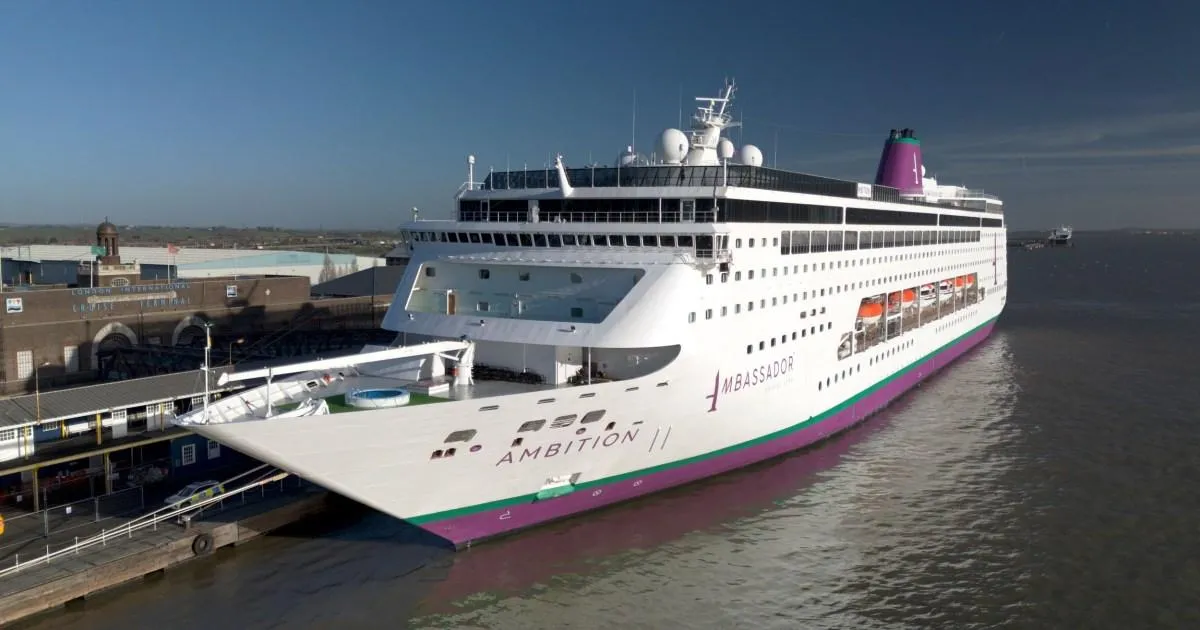
The North Sea is a cruel and indifferent expanse, a vast canvas of grey water and shifting skies that rarely offers comfort to those who traverse it. For the guests aboard the Ambassador Ambition, the morning had begun with the gentle hum of the ship’s engines as it carved its path from the historic port of Lerwick in the Shetland Islands towards the Scottish mainland and the city of Dundee. They were on a rather special journey—a two-week odyssey that had swept them through the windswept beauty of Iceland and the Faroe Islands, all in anticipation of a rare celestial phenomenon: a solar eclipse. The ship was a floating microcosm, a temporary village of around a thousand souls, all connected by a shared sense of wonder and the sheer luxury of an ocean voyage. Yet, the quiet rhythm of the sea was shattered on that crisp Friday morning, abruptly transforming a voyage of astronomical wonder into a devastating maritime tragedy. The idyllic promise of watching the heavens darken gave way to a grim, earthbound reality, as the vessel became the epicenter of a frantic search-and-rescue operation that would dominate the day and leave an indelible shadow over the remainder of the journey.
The alarm was raised at approximately 8:35 AM, veiled in the stark coordinates of the North Sea, roughly 36 to 40 nautical miles east of the Angus coastline near Arbroath and Anstruther. The initial report to HM Coastguard was not of a body in the water, but of an absence—a passenger who had been discovered “not where they were expected to be.” This subtle but chilling phrase triggered a massive response, a symphony of urgent machinery and coordinated manpower. The captain and crew of the Ambition immediately initiated stringent search-and-rescue protocols, a rigorous checklist born of maritime law and years of safety training. Meanwhile, the Coastguard deployed its aerial assets—helicopters roaring over the grey waves—alongside fixed-wing aircraft and a flotilla of lifeboats from nearby stations. The search grid was a methodical, heart-wrenching expansion of concentric circles across a body of water that is notoriously cold, choppy, and hostile. On board, the joy of the cruise was instantly replaced by a palpable, thick tension. Passengers were initially held in common areas, a quiet unease spreading through the lounges as they watched the crew move with hurried, serious purpose.
The human reality of the situation pressed down on the vessel. While the crew scoured the ship—checking cabins, stairwells, every nook and cranny where a person might be lost—the vastness of the ocean outside mocked their efforts. It was a haunting paradox: a state-of-the-art cruise liner, packed with over a thousand people enjoying the height of luxury, rendered powerless and utterly helpless against the sheer scale of the deep. The incident was a stark reminder of the nautical adage that the sea gives nothing up easily. As the hours ticked by, hope began to wane. The initial frantic energy of the rescue operation shifted into the grim, methodical quality of a recovery mission. The ship itself, having been turned over to authorities and operational control, continued its passage to Dundee, carrying a thousand silent passengers. Upon arrival at the port of Dundee, the ship endured a delay while police and emergency teams conducted their thorough investigations accessible to the shore, a surreal scene where a massive cruise liner, a symbol of luxury and leisure, sat alongside police vehicles and waiting ambulances.
For the passengers, the ordeal was a profound psychological shock, a stark reminder of the fragility of life even amidst the curated comfort of a luxury liner. They had boarded expecting horizons of blue ice and volcanic rock, to witness the majestic beauty of Iceland and engage in shore excursions, not to be faced with a missing companion. The initial confusion soon hardened into a shared, anxious solidarity. Passengers spoke in hushed tones, their conversations inevitably drifting back to the missing soul and the family who would be receiving the worst news imaginable. Many had been looking forward to cruising into Dundee, but the approach to the dock was overshadowed by a silent prayer for a miracle that by late afternoon seemed increasingly out of reach. The crew, while maintaining a professional facade, were visibly strained; the weight of the situation rested heavily on the captain, who had to balance the legal obligations of the emergency with the emotional well-being of the 1,000 people under his care into the ship’s loudspeakers.
As the ship finally arrived and berthed in Dundee, the atmosphere was surreal. Passengers were temporarily held on board—a brief but necessary lockdown to facilitate a thorough, final sweep of the vessel to rule out any chance the man might have simply been lost in the labyrinthine corridors of the ship. For many, this process was agonizing, a strange purgatory where they were forced to sit with their thoughts while the world outside buzzed with rescue vehicles and police tape. When they were finally cleared to disembark, the weight of the experience was evident in their faces. In poignant statements to the press, they expressed not anger or frustration at the delay, but a profound sense of sorrow and empathy. One woman spoke of the crew’s “professionalism and calm,” while another underscored the haunting emotional toll, stating that their “thoughts were entirely with the missing passenger’s loved ones.” Another reflected on the terrible dichotomy: the trip had been a “wonderful cruise,” now permanently overshadowed by a tragedy that could not be undone at the dockside.
Sadly, the grim conclusion arrived with the setting sun. In a terse update, Police Scotland confirmed that a body had been recovered from the North Sea, bringing the frantic search to a devastating close. Formal identification was still pending, but the family of the man had been notified, a notification that will forever fracture their lives in a way that no eclipse or cruise could ever compare to. The description of the events painted a stark picture: a ship, a sea, a man—and a chain of events that will be under investigation for months. Ambassador Cruise Line released a heartfelt statement extending their deepest sympathies and confirming their full cooperation with the Maritime and Coastguard Agency and the ongoing police inquiry. They cited “stringent search and rescue protocols” and committed to the “safety and wellbeing of all guests and crew,” yet no protocol can erase the profound sense of loss that now hung over the vessel. The logistical machine of the cruise line pushed forward—the next cruise had to depart, the turnaround at the port had to happen—but the human heart of the operation was broken.
The recovery brought a somber finality to a day that had begun with such promise. The passengers who disembarked carried with them a memory far more potent than any celestial sight. They had witnessed the stark polarity of existence: the breathtaking beauty of the natural world above, contrasted with the brutal indifference of the sea below. The eclipse, which had been the raison d’être for the trip, became a haunting metaphor—a sudden, chilling darkness that obscures the light forms an event no one onboard will ever forget. For the crew, the immediate priority was to support the grieving family and to assist the authorities, all while trying to restore some semblance of order for the remaining guests. The ship, which was slated to undergo a turnaround operation in Dundee, saw its schedule slightly delayed, a logistical footnote against the weight of the human loss. As the sun set on the North Sea, the cruise—once a symbol of leisure and discovery—had become a place of mourning, its ultimate destination not a tourist attraction, but the harsh, finality of an investigation.
This tragedy serves as a stark reminder of the fragility of life, even within the secure confines of a massive cruise liner. The ocean, which offers such magnificent vistas and therapeutic tranquility, holds a permanent capacity for danger and loss. The 1,000 passengers who boarded in anticipation of watching a celestial shadow will now carry with them a very different, human shadow—the memory of a voyage cut short by an unspeakable absence. For the crew, the protocols they executed were textbook, but the emotional toll of a missing guest is a burden that no training can fully prepare one for. The search and rescue operation, involving the Coastguard helicopter and lifeboats, was a testament to the coordinated maritime response that exists precisely for these moments, yet even the most efficient response cannot alter the resolve of the North Sea once it claims a life explanation, a resolution, or a happy ending. The cruise industry, which thrives on joy and escape, is also a high-risk environment where life and death hang by a thread; in a horrible instant, the routine of a sea day can become a nightmare.
As the Ambition sits in the port of Dundee, and the passengers disembark with heavy hearts, the world moves on, but for the family of the missing man, time has stood still. The search is over, but the questions remain—the intricate “how” and “why” that will haunt the police investigation. The passengers who departed with sunburn and souvenirs will leave with a hollow weight in their chests, a permanent alteration to their experience of cruising. The meticulously planned itinerary, the solar eclipse, the northern lights—all of it is now a backdrop to a far more profound drama. The mood is one of quiet reflection, of holding loved ones a little tighter. The community aboard the ship, despite being temporary and thrown together by chance, has bonded over a shared tragedy profound and deeply chilling, reminding everyone that even on a floating sanctuary amid the vast, unforgiving sea, life is precarious. The windswept islands and volcanic vistas they visited will fade in memory, replaced by the image of a helicopter hovering over a grey sea, searching for a figure that would eventually be found, but the story of the voyage will forever be one of profound, collective grief.