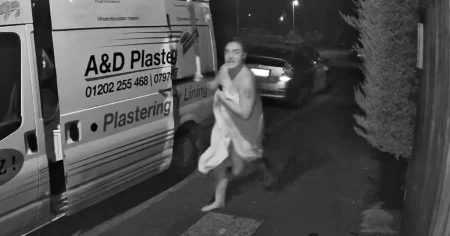



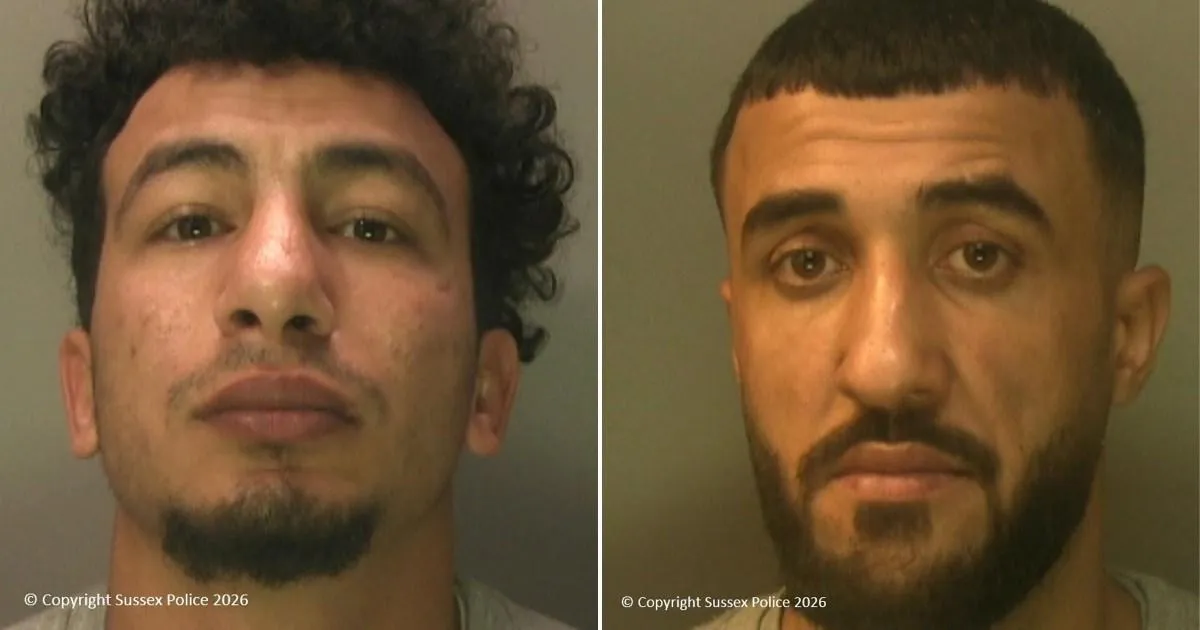
The sentencing of three men in Brighton serves as a harrowing reminder of the vulnerability women face when navigating public spaces, particularly in the aftermath of a night out. Ibrahim Alshafe, 26, Abdulla Ahmadi, 26, and Karin Al-Danasurt, 21, were recently handed a combined prison sentence exceeding 60 years for an act of pure, calculated cruelty. In the early hours of October 4, these three individuals identified a woman who had become separated from her friends and appeared incapacitated, rather than offering help or passing by, they chose to exploit her fragile state, turning a night of potential innocence into a lifelong nightmare for their victim.
The details of the assault that transpired behind a beach hut in Brighton are profoundly disturbing, reflecting a level of dehumanization that is difficult to process. As the victim was subjected to brutal physical and sexual violence, the attackers displayed a visceral lack of empathy, with evidence revealing she was kicked, spat upon, and physically throttled during the ordeal. Perhaps most agonizingly, the crime was compounded by the actions of Al-Danasurt, who chose to film the assault, turning the victim’s suffering into a perverse spectacle. This added layer of cold-blooded documentation highlights the “predatory and callous” nature of a crime that aimed not only to violate her body but to strip away her dignity entirely.
During the court proceedings at the Hove Trial Centre, the victim took the brave step of delivering an impact statement. Her words echoed through the courtroom, cutting through the legal jargon to expose the raw truth: her life, as she knew it, had been irrevocably fractured. To be violated in such a way is an invasion that transcends the physical; it is an assault on the soul. The judge, Christine Henson KC, did not mince words when addressing the defendants, labeling them as having treated their victim with total contempt. By participating in that attack, the three men abandoned any pretense of humanity, choosing instead to engage in an act of profound degradation that the legal system has now sought to punish with appropriate severity.
The sentences imposed by the court—21 years each for Alshafe and Ahmadi, and 18 years and six months for Al-Danasurt—reflect the gravity of a crime that has left an indelible scar on the victim and the community. By holding these men accountable for their actions, the justice system has delivered at least a measure of retribution, though it is clear that for the survivor, the road to healing remains long and arduous. Cases like these often force society to confront uncomfortable truths about the safety of women in our cities, proving that even in familiar, well-traveled spaces, the shadow of violence can manifest in the blink of an eye when predatory individuals decide to strike.
This case has resonated deeply across the UK, coming at a time when the conversation surrounding the epidemic of violence against women is reaching a critical inflection point. Media efforts, such as the “This Is Not Right” campaign launched by Metro in partnership with organizations like Women’s Aid, are essential in exposing the sheer magnitude of these crimes. These initiatives serve as a vital megaphone, ensuring that the stories of victims are not buried in the back pages of newspapers but are instead used to challenge the toxic environments and attitudes that allow such predatory behavior to take root. The goal is clear: to move from passive awareness to active change in how we safeguard one another.
Ultimately, we are left to grapple with the aftermath of a night in Brighton that changed everything. While the perpetrators will spend the next two decades behind bars, the victim must navigate a landscape of trauma that they forced upon her. As we reflect on this tragedy, it serves as a sobering mandate for a renewed collective commitment to eradicating the violence that continues to target women. We must continue to shine a light on these atrocities, listen to the survivors, and refuse to let the “predatory and callous” behavior of a few go unchallenged. It is a shared responsibility to ensure that no one else has to echo the devastating sentiment that their life was destroyed by a single, senseless night of violence.