


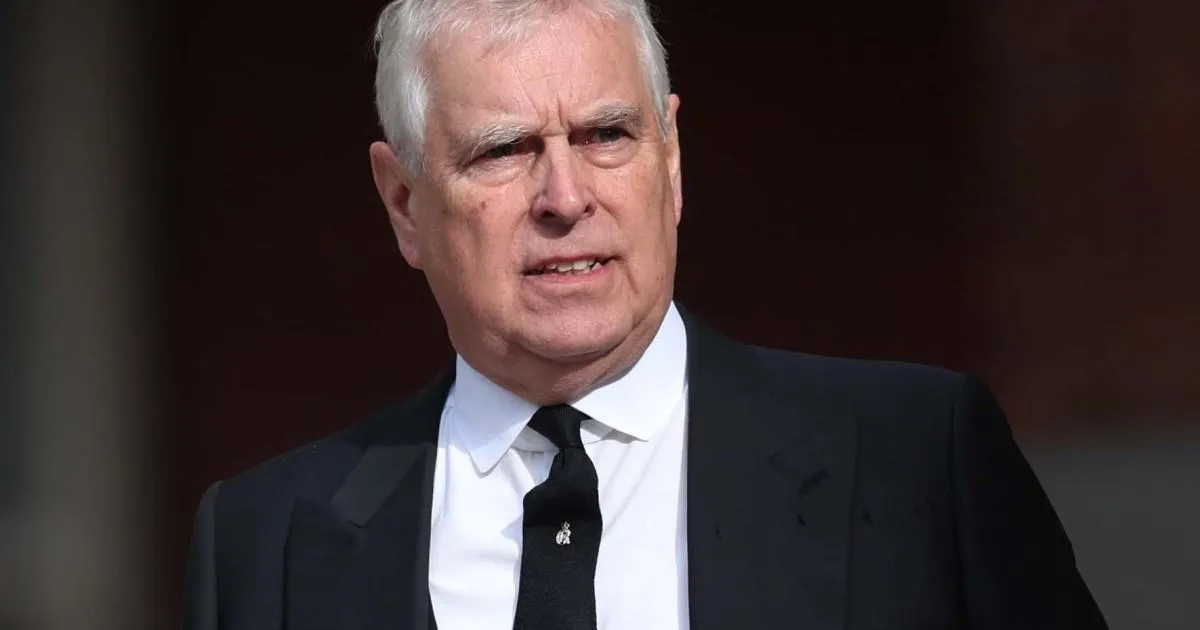
It is a fascinating study in how public perception dictates value, especially when it comes to the strange world of memorabilia. Recently, a pair of leather flying gloves once worn by Prince Andrew—harkening back to his days as a Sea King helicopter co-pilot during the Falklands War—were placed on the auction block at Reeman Dansie in Colchester. They were expected to fetch between £1,000 and £2,000, a price point based on the historical significance of the conflict and the former prince’s high profile at the time the gloves were first donated. However, when the gavel finally fell, the result was a resounding silence: no interest, no phone calls, and absolutely no bids.
The silence of the auction floor serves as a stark reminder of how deeply the public’s sentiment toward the disgraced royal has shifted. Auctioneers described the item as “too hot to handle,” suggesting that the toxic cloud of notoriety currently surrounding Andrew has effectively turned what was once a collectible treasure into a piece of memorabilia that no one wants in their home. It is a striking contrast to the general appetite for royal artifacts; for instance, at the very same auction, a single letter written by the late Princess Diana managed to command £5,330. While Diana’s personal effects remain imbued with a timeless, sympathetic nostalgia, Andrew’s belongings appear to have been rendered radioactive in the eyes of the public.
This turn of events takes place against a backdrop of a life that has been steadily stripped of its former prestige. Following the revocation of his royal status last year, we have seen his name systematically removed from various commemorative plaques across the British territories, a physical erasure that mirrors his declining social standing. The situation intensified significantly in early 2026, when he was arrested by Thames Valley Police. The investigation centered on serious allegations of misconduct in public office, specifically concerning the sharing of confidential government material with the late Jeffrey Epstein. Though he was released under investigation after being questioned at a police station in Norfolk, the mere shadow of such a scandal has proven to be the death knell for his legacy as a royal figure.
The controversy surrounding the former prince is not limited to his recent legal entanglements; it also involves a deeper look into the systemic favoritism that once propelled him. Recently unearthed documents have shed light on the extent to which his late mother, Queen Elizabeth II, pushed for his career advancement. A memo written by Sir David Wright, then-chief executive of British Trade International, revealed that the Queen was “very keen” for her son to step into a prominent role promoting British national interests. This direct intervention eventually led to his appointment as the UK’s special representative for international trade and investment, a position he held for over a decade, despite the mounting criticism that has since followed his departure from public life.
It is a peculiar thing to watch history be re-evaluated in real-time. Andrew maintains that he did nothing wrong, consistently denying both the accusations related to the police investigation and any claims that he personally profited from his position as a trade envoy. Yet, public opinion cares very little for legal nuances when the consensus of “disgrace” has already been reached. In the eyes of collectors and the public alike, his identity has become inextricably linked to his controversies, making his personal items objects of avoidance rather than symbols of historical service. The “Falklands hero” narrative that once lent value to these gloves has been entirely eclipsed by the headlines of the present day.
Ultimately, the failure to sell these gloves tells a story that goes beyond simple commerce. It reflects a societal shift where the provenance of an object is no longer enough to generate interest if the person attached to it has lost the grace of his audience. While the auction house might have hoped for a flurry of activity, the quiet outcome speaks volumes about the lasting power of reputation. We are witnessing the end of an era where a royal connection was an automatic badge of honor. Today, for Prince Andrew, that connection has become a liability, leaving his once-prized belongings to gather dust in the shadows of a reputation that may never fully recover.