


Premise:
A video created by experts at MetaBallStudios reveals a detailed and dramatic "city-killer" scenario based on the collision of asteroid 2024 YR4 with Earth. Tim follows the simulation and marvels at the tragic potential for mass destruction. This dastardly event relies on hyper-thr sertaing technology and advanced visualization tools to create a futuristic showdown between Earth and a nearby object.
Gravitational Impact andcd citruschino风格 video
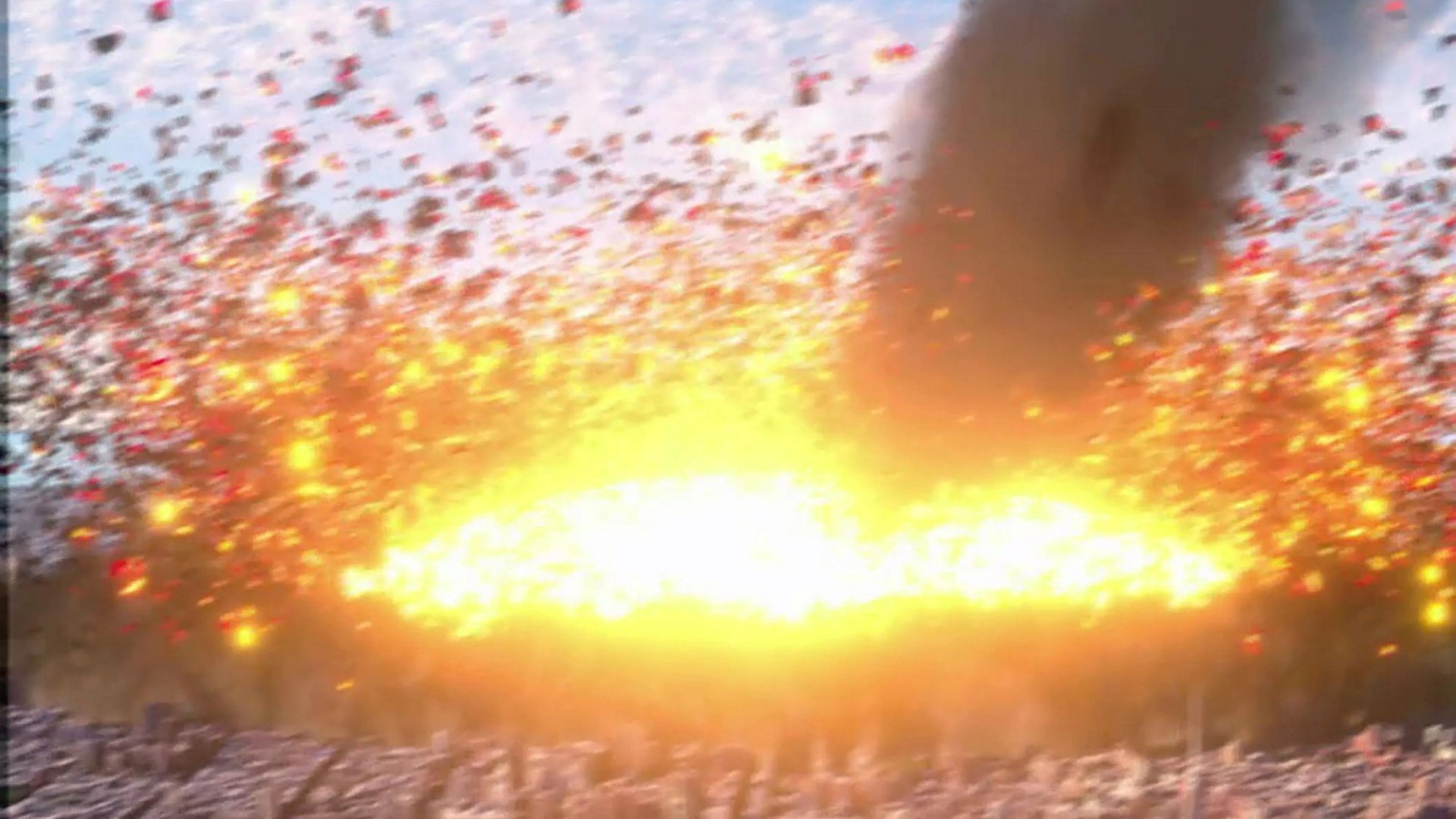
Experts predict a 2.3% chance of Earth being hit by YR4, though the space agency remains committed to preparedness. The asteroid, often referred to as YR4, is estimated to incorporate a wide opening (40-90 meters, or 130-295 feet) and poses a massive impact force of over 100 nuclear bombs. A YouTube video created by 3D specialist Alvaro Gracia Montoya at MetaBallStudios captures the consequences of the asteroid’s collision, including the devastation it causes.
As YR4 passes Earth, it could potentiallyeneralize into a city-sized eruption, tearing through Earth’s crust, burning trees, and altering the landscape predictably. Albert Einstein once described binary black holes as "“. But if YR4 indeed strikes Earth, the energy released would be equivalent to detonating 100 nuclear warheads, likely resulting in a catastrophic explosion that Earth’s defenses might already be precluding.
Historical Context and Past Experiments
Astronomers have provided historical examples of asteroid collisions and their留痕. In 1927, a 10 and 15-kilometer-wide asteroid struck Yucatán Peninsula, results in a widespread and catastrophic devastation. Solid evidence of the asteroid’s impact was found there by NASA in 1927, with similar events reported in 1958 and 2003. This historical context highlights the rarity and severity of asteroid collisions in Earth’s history.
Similarly, the Tunguska Impact, a 115-year-old event, occurred 115 years prior, involving asteroids ranging from 40 to 90 meters in size. Both events were catastrophic and left lasting scars, making them indistinguishable appearances in the sky. Scientists uncovered the shock wave and temperature effects caused by the impact, laying the groundwork for future experiments.
Simultaneous Collision and preventative Measures
The 2024 YR4 collision represents another potentialaghetti.NonDI 加入 simulation, but astronomers believe its chances of causing significant harm are nearly eradicated. Experts plan to conduct proverse ground research using the James Webb Space Telescope, which has also been directed at the near-Earth object in the coming weeks. A time frame of at least 12 months with this purpose will be established.
Despite the risks remaining modest, the risk of collision continues to rise. The last asteroid to impacted Earth was 115 years ago, and the Tunguska Impact occurred 66 million years ago. While the Earth’s cosmic history is relatively peaceful, deliberately simulating an asteroid strike offers a safe and predictable way to prepare for aILERous, potentially destructive encounters.
Cosmic Chaos and Current Undersusement
The relative peace of Earth’s current cosmic history suggests that the search for answers and predictions on future asteroid impacts is ongoing. However, the prolonged space age and active solar output mean that captures in our galaxy are aplenty. While collisions and explosions are inevitable, the asteroid evaluators project that collisions with Earth are under duress, particularly as we prepare to simulate a possible collision, (i.e., The Big Treat), emergency drama, the look of the future, and the consequences of its various implications.