



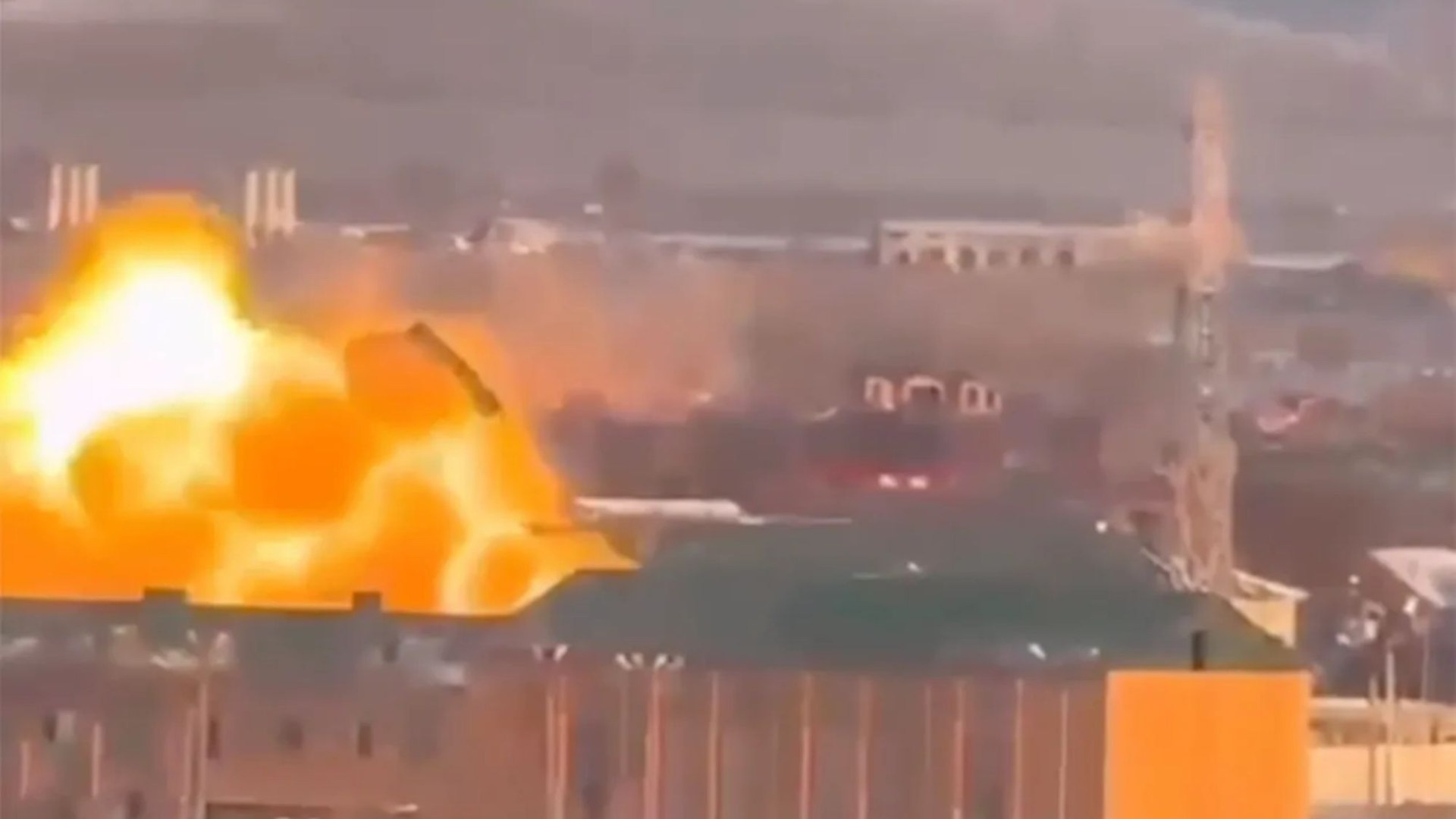
A Ukrainian drone strike targeted a special operations base in Grozny, Chechnya, the heartland of Ramzan Kadyrov, a key ally of Russian President Vladimir Putin. The attack, captured on video, shows a World War II-style aircraft, repurposed as a drone, colliding with the facility, resulting in a massive explosion and plumes of smoke. While the extent of the damage remains unclear, this incident marks the third such strike on Grozny in just eleven days, highlighting the evolving nature of the conflict and Ukraine’s increasing use of drone technology. This bold attack against a high-value target deep within Russian territory underscores the escalating tensions and Ukraine’s growing capabilities in projecting force.
The targeted base serves as a crucial hub for Kadyrov’s forces, who have been heavily involved in Russia’s war in Ukraine. The attack not only represents a significant blow to Kadyrov’s military infrastructure but also carries symbolic weight, demonstrating Ukraine’s ability to strike at the heart of Putin’s support network. The use of a relatively unsophisticated, propeller-driven aircraft to deliver the attack further underscores the adaptability and resourcefulness of Ukrainian forces. The incident raises questions about the effectiveness of Russian air defenses, particularly against slower-moving drones.
The drone strike comes shortly after Putin awarded Kadyrov with a prestigious state honor, highlighting the close relationship between the two leaders. Kadyrov, who has been sanctioned by the West for human rights abuses and his role in the Ukraine conflict, had previously requested enhanced air defense systems for Grozny. This attack underscores the vulnerability of even heavily guarded targets and raises concerns about the security of Russian infrastructure. The incident also highlights the growing importance of drone warfare in the conflict, with both sides increasingly relying on unmanned aerial vehicles for various purposes.
The escalating use of drones in the conflict, ranging from inexpensive commercially available models to sophisticated military-grade systems, has transformed modern warfare. Ukraine has particularly embraced the use of First Person View (FPV) drones, which are cost-effective and readily adaptable for combat operations. These drones, often equipped with grenades or improvised explosives, have proven remarkably effective against Russian armor and personnel. The relatively low cost and ease of deployment of these drones have made them a valuable asset for Ukrainian forces, allowing them to inflict significant damage on Russian targets while minimizing risk to their own personnel.
The rise of FPV drones has become a key element of Ukraine’s defense strategy. The drones’ agility and precision, coupled with their affordability, have allowed Ukraine to counter Russia’s larger, more conventional military force. These small, fast drones are difficult to detect and intercept, posing a significant challenge to Russian air defense systems. Their widespread use represents a shift in the balance of power, giving Ukraine an asymmetric advantage against a technologically superior opponent. The effectiveness of these drones has prompted increased production and training efforts in Ukraine, with both civilian and military personnel involved in their development and deployment.
The ongoing conflict has spurred a rapid evolution in drone technology and tactics. Both sides are constantly adapting and innovating, seeking new ways to utilize and counter drones. The use of electronic warfare to jam GPS signals, a common method for controlling drones, has led to the development of drones guided by artificial intelligence, making them more resilient to enemy interference. Ukraine continues to rely on its allies for the supply of more advanced drone technology, highlighting the crucial role of international support in this technological arms race. The future of the conflict will likely be shaped by the continued development and deployment of these unmanned aerial systems.