



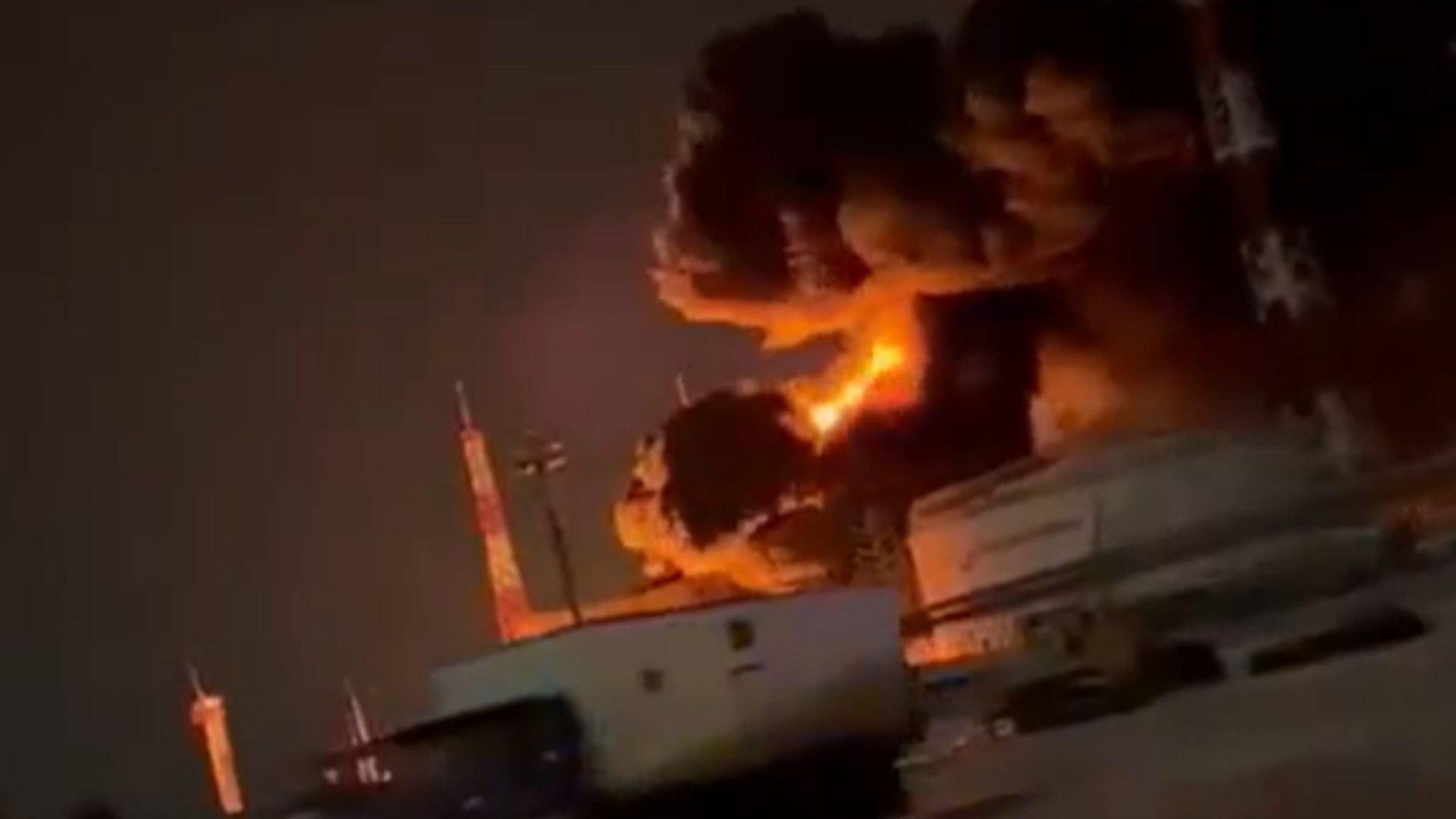
A Ukrainian drone attack struck a Russian oil depot in the Oryol region, igniting a massive fire and sending plumes of black smoke billowing into the night sky. Footage of the attack showed a bright flash followed by an intense inferno that engulfed the facility. Regional governor Andrey Klychkov confirmed the attack, stating that operational services were working to contain the blaze. This incident underscores the escalating conflict between Russia and Ukraine, with Ukraine increasingly targeting Russian infrastructure, including oil depots supplying the Russian military. While Russia claimed to have downed numerous Ukrainian drones, this successful strike demonstrates Ukraine’s growing capacity to penetrate Russian air defenses and inflict damage deep within Russian territory. The attack occurred against the backdrop of warnings about a potential imminent Russian strike using the hypersonic Oreshnik missile, a weapon touted by Putin as possessing destructive power equivalent to a tactical nuclear weapon.
The timing of the drone strike coinciding with the threat of the Oreshnik missile deployment suggests a strategic move by Ukraine to disrupt Russian military logistics and potentially deter further escalation. Russia’s reported downing of other Ukrainian drones highlights the ongoing aerial battle between the two nations. Ukraine’s persistent targeting of Russian oil facilities aims to cripple Russia’s war machine by disrupting its fuel supply lines, a tactic that has seen some success in recent months. The attack on the Oryol depot adds to a growing list of such incidents, demonstrating Ukraine’s resolve to hit critical Russian infrastructure. This ongoing strategy aims to weaken Russia’s military capabilities and potentially force a change in their strategic approach.
The Oreshnik missile, a modified version of the RS-26 Rubezh, presents a significant threat due to its hypersonic speed and potential nuclear capability. While initially tested in 2011, its recent deployment against Ukraine demonstrates its operational readiness. Putin’s claim of its destructive power, even with conventional warheads, adds to its psychological impact. The reported U.S. intelligence suggesting an imminent Oreshnik strike, potentially aimed at intimidating Ukraine following its use of Western-supplied weapons against Russian territory, underscores the escalating tensions and the potential for further devastating attacks. Putin’s plan to station the missile in Belarus next year, from where it could theoretically reach the UK in minutes, further amplifies the threat and expands the potential scope of the conflict.
The grim statistics of the ongoing war paint a devastating picture, with estimates of over a million casualties, including a significant number of Ukrainian soldiers. NATO chief Mark Rutte’s stark warning about the West’s unpreparedness for potential future conflicts and the escalating danger emphasizes the urgency of the situation. His call for increased defense spending reflects the growing concern within NATO about the evolving security landscape and the need for a more robust response to potential threats. The staggering casualty figures highlight the human cost of the conflict, underscoring the need for a resolution and a concerted effort to prevent further bloodshed.
The timeline of the Russo-Ukrainian war, from the initial invasion in February 2022 to the recent events, illustrates the escalating nature of the conflict. Key events such as the siege of Mariupol, the liberation of Kherson, and the Wagner Group mutiny demonstrate the complex and dynamic nature of the war. The ongoing supply of Western aid to Ukraine, including tanks and missiles, and Zelensky’s recent replacement of his top army leader point to a protracted conflict with no clear end in sight. The recent Ukrainian incursions into Russian territory and the subsequent missile exchanges further escalate tensions and increase the risk of a wider conflict.
The drone attack on the Oryol oil depot, occurring within this broader context, represents another escalation in the ongoing conflict. It highlights Ukraine’s increasing willingness and capability to strike targets deep within Russian territory. Coupled with the looming threat of the Oreshnik missile deployment and the staggering casualty figures, the attack underscores the urgency of finding a peaceful resolution to the conflict before it spirals further out of control. The international community must work together to de-escalate tensions and prevent further loss of life in this devastating war.