


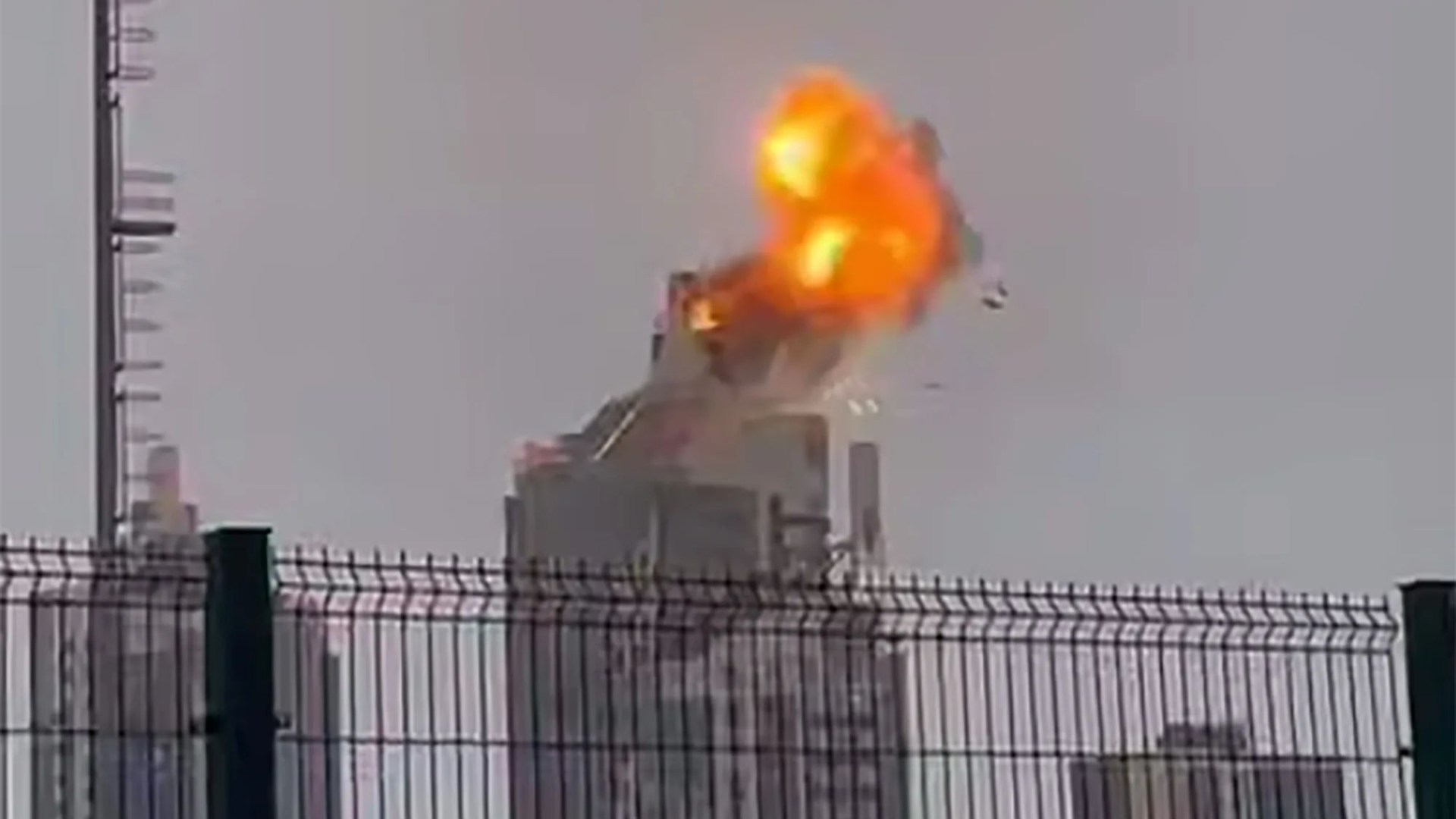
The city of Kazan, Russia’s self-proclaimed “third capital,” became the target of a series of drone strikes, igniting widespread concern and disruption. Dramatic footage captured the moment a drone collided with the Azure Skies residential tower, a prominent 37-story skyscraper, resulting in a fiery explosion. Simultaneously, another high-rise building, the 23-floor Manhattan residential complex, also sustained a drone strike, triggering a massive blast and subsequent fire. A third drone attack targeted a five-story building in Kazan, further escalating the situation. The attacks, which commenced around 8:30 am local time, sent shockwaves through the city, prompting evacuations and instructions for residents to seek shelter in basements.
The source and motive behind the drone strikes remained unclear in the immediate aftermath. While speculation arose regarding Ukrainian involvement, the attacks originated from the east, and the nearest Ukrainian-controlled territory lies a significant distance away, approximately 670 miles. Russian sources attributed the strikes to Lyuti drones, known as “Fierce,” but this claim seemed improbable given the drones’ limited range. Kazan, the capital of the Republic of Tatarstan, holds strategic importance as a leading manufacturer of Russian military drones, adding another layer of complexity to the incident.
The series of drone strikes triggered a wave of alarm throughout Kazan, a city with a population of 1.3 million. Air raid sirens blared, urging residents to remain calm and seek refuge on lower floors or basements. Authorities reported a total of eight drone strikes, with only one drone successfully intercepted. The targets included an industrial enterprise, a river, and six residential areas, highlighting the indiscriminate nature of the attacks. Kazan’s international airport was temporarily closed as a precautionary measure. Students in several schools were evacuated, adding to the sense of disruption and unease.
Several theories emerged regarding the intended targets of the drone strikes. Some Russian war channels suggested the attacks aimed at a gunpowder plant in Kazan, criticizing the “clumsy enemy” for disregarding the presence of residential buildings. Other speculations pointed towards the Kazan Aviation Plant or an airfield as potential targets. The confirmed strike on the Azure Skies residential tower, a luxurious high-rise, raised concerns about the precision and intent of the attacks. Russian air defenses claimed to have shot down a drone approaching Kazan, indicating an ongoing threat.
Beyond Kazan, the Kursk region also experienced attacks, resulting in five fatalities and twelve injuries in Rylsk, a city located close to the Ukrainian border. Heavy fighting and shelling further destabilized the region, with multiple buildings ablaze. The escalating conflict extended to Kherson, where a cancer hospital was struck by a Russian aerial bomb, thankfully without causing casualties, though the building caught fire. These incidents underscored the widening impact of the conflict and the increasing vulnerability of civilian populations.
The drone strikes on Kazan exposed the vulnerability of Russian cities to aerial attacks, raising questions about the effectiveness of air defense systems. The targeting of residential buildings fueled anxiety and uncertainty among the population. While the true motive and origin of the attacks remained under investigation, the incident highlighted the escalating tensions and the potential for further disruptions and civilian casualties as the conflict continues. The international community expressed concern over the attacks, urging all sides to exercise restraint and prioritize the safety of civilians. The incident further complicated the already tense geopolitical landscape, underscoring the urgent need for a diplomatic resolution to the ongoing conflict.