



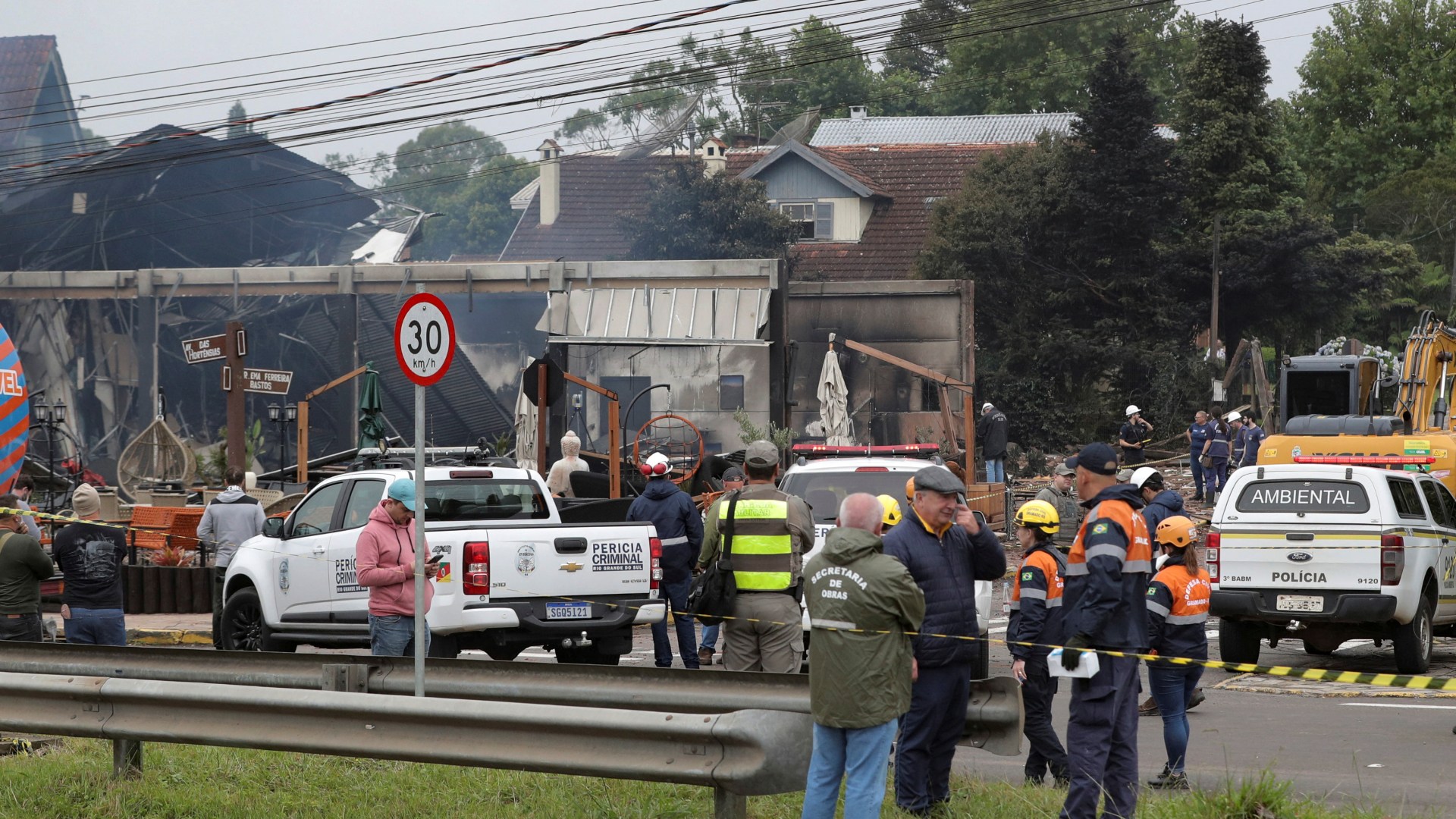
The picturesque tourist town of Gramado, Brazil, was shattered by tragedy just days before Christmas when a small plane crashed into a residential neighborhood, claiming the lives of all ten people on board and injuring seventeen others on the ground. The aircraft, piloted by Luiz Claudio Galeazzi, was carrying members of his family and was reportedly en route to Sao Paulo state from another town within Rio Grande do Sul. The plane’s fatal descent began with a collision with the chimney of a building, followed by impact with a house before ultimately crashing into a furniture store. The resulting wreckage and ensuing fire sent thick plumes of smoke into the air, leading to several injuries from smoke inhalation, with two individuals sustaining critical injuries.
The idyllic mountain setting of Gramado, renowned as the most popular tourist destination in Rio Grande do Sul, was bustling with activity in anticipation of the Christmas holidays. This festive atmosphere was abruptly transformed into a scene of devastation and grief as emergency responders raced to the crash site. Governor Eduardo Leite confirmed the tragic loss of life and the extent of injuries, while investigators began the arduous task of determining the cause of the crash. The loss of an entire family, coupled with the injuries suffered by residents and the disruption to the town’s holiday preparations, cast a pall over the community.
The incident underscores the inherent risks associated with air travel, especially with smaller aircraft. While details regarding the specific circumstances leading to the crash remain under investigation, the rapid sequence of events – from the initial chimney strike to the final impact with the furniture store – suggests a potential loss of control or mechanical failure. The close proximity of residential buildings in the area amplified the impact of the crash, resulting in damage to multiple structures and endangering those on the ground.
This tragic event in Gramado follows closely on the heels of another fatal helicopter crash in Turkey. An air ambulance, operating in heavy fog, collided with a hospital building shortly after takeoff, resulting in the deaths of all four crew members – two pilots, a doctor, and a medical worker. The helicopter, departing from the Mugla Training and Research Hospital, lost visibility in the dense fog and tragically impacted the fourth floor of the hospital. The resulting damage to the building and the complete destruction of the helicopter highlight the perils of flying in adverse weather conditions.
The Turkish crash, captured on video, reveals the helicopter’s struggle to maintain altitude and orientation in the thick fog. The footage shows the aircraft slowly ascending before disappearing completely into the fog, followed moments later by the devastating impact. The images of the wreckage and the damaged hospital underscore the violent nature of the crash and the immense loss of life. Turkish President Recep Tayyip Erdoğan expressed his deep sorrow over the loss of the medical personnel, extending condolences to their families, colleagues, and the healthcare community.
Both incidents, the plane crash in Brazil and the helicopter crash in Turkey, serve as stark reminders of the inherent dangers of aviation. While air travel remains statistically safer than many other forms of transportation, these tragedies highlight the potential for catastrophic consequences when accidents occur. The investigations into both crashes will undoubtedly focus on a range of factors, including pilot error, mechanical malfunction, and weather conditions. The findings will hopefully contribute to improved safety measures and protocols to mitigate the risk of similar incidents in the future. The impact on the communities affected by these tragedies, however, will undoubtedly be long-lasting, underscoring the human cost associated with such accidents.