


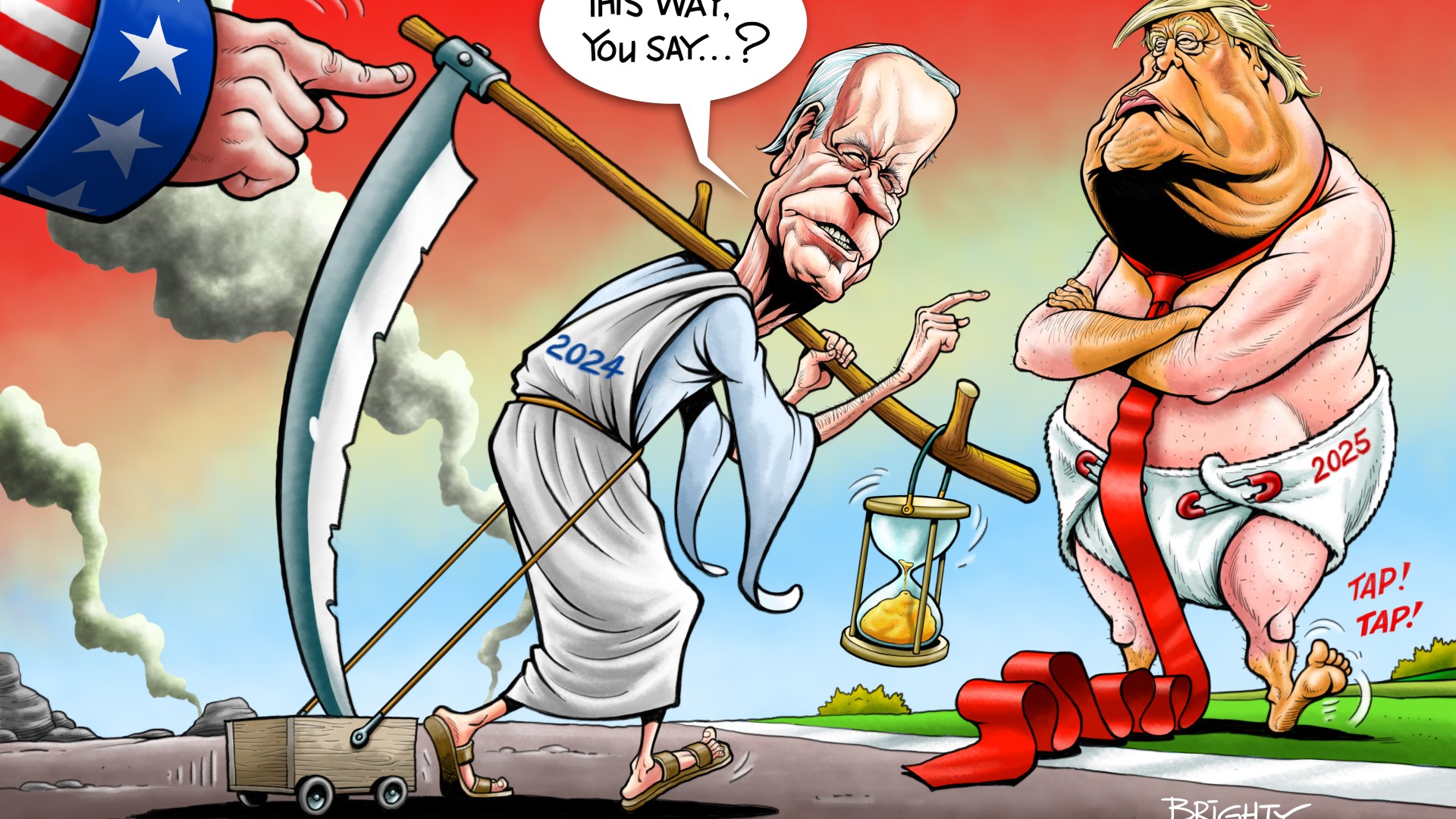
The impending return of Donald Trump to the presidency has sparked reflection, particularly among left-leaning media outlets, on the failures of the Biden administration. These reflections, however, largely echo observations made by conservative media throughout Biden’s term, highlighting a disconnect within the American political landscape. The central issue revolves around President Biden’s cognitive decline, a concern that was evident yet consistently downplayed by the Democratic establishment. This denial, coupled with a tightly controlled media strategy that shielded Biden from scrutiny, ultimately backfired, contributing to a landslide victory for Trump in the recent election.
The Biden White House operated under a veil of secrecy, limiting press conferences, cabinet meetings, and unscripted interactions. This approach, ostensibly implemented to manage the President’s cognitive vulnerabilities, only served to reinforce suspicions about his fitness for office. The tightly controlled environment, where even meetings with officials were heavily scripted, painted a picture of a president detached from the day-to-day governance of the nation. Key figures within the administration, including the Secretary of Defense, appeared to have limited direct interaction with the President, raising further concerns about his leadership.
The Democrats’ insistence on Biden’s fitness for a second term, despite clear signs of decline, ultimately proved disastrous. The pivotal debate against Donald Trump exposed Biden’s cognitive struggles to a national audience, prompting the Democratic party to attempt a last-minute switch to Vice President Kamala Harris as their candidate. This desperate maneuver, bypassing a conventional selection process, further alienated voters and solidified Trump’s path to victory. Harris, perceived as lacking the necessary experience and gravitas, failed to resonate with the electorate, contributing to the Democrats’ crushing defeat in the general election.
Trump’s resounding victory, capturing not only the presidency but also both houses of Congress and the popular vote, can be attributed in part to the Democrats’ own missteps. Their persistent denial of Biden’s cognitive decline, coupled with the ill-fated attempt to replace him with Harris, ultimately handed Trump a significant advantage. This political miscalculation left many voters with no viable alternative but to support Trump, despite reservations about his previous presidency.
Beyond the domestic political fallout, Biden’s perceived weakness on the world stage had significant geopolitical consequences. The chaotic withdrawal from Afghanistan, the emboldened invasion of Ukraine by Vladimir Putin, and Iran’s increased aggression in the Middle East all transpired under Biden’s watch. These events are seen by critics as evidence of a lack of strong American leadership, creating a vacuum that was readily exploited by adversaries. The perception of a weakened United States, coupled with the administration’s perceived inability to effectively deter aggression, contributed to a more unstable global landscape.
The contrast between Biden’s perceived weakness and Trump’s projected strength formed a central theme of the election campaign. Trump positioned himself as a decisive leader capable of restoring American influence and deterring aggression, while Biden’s campaign struggled to address concerns about his cognitive abilities and foreign policy record. The election results suggest that voters ultimately favored Trump’s promise of strong leadership, even amidst concerns about his past behavior and rhetoric. The hope, for many, is that Trump’s return to the White House will usher in an era of renewed American strength and global stability, reversing the perceived decline that occurred under Biden’s leadership.