
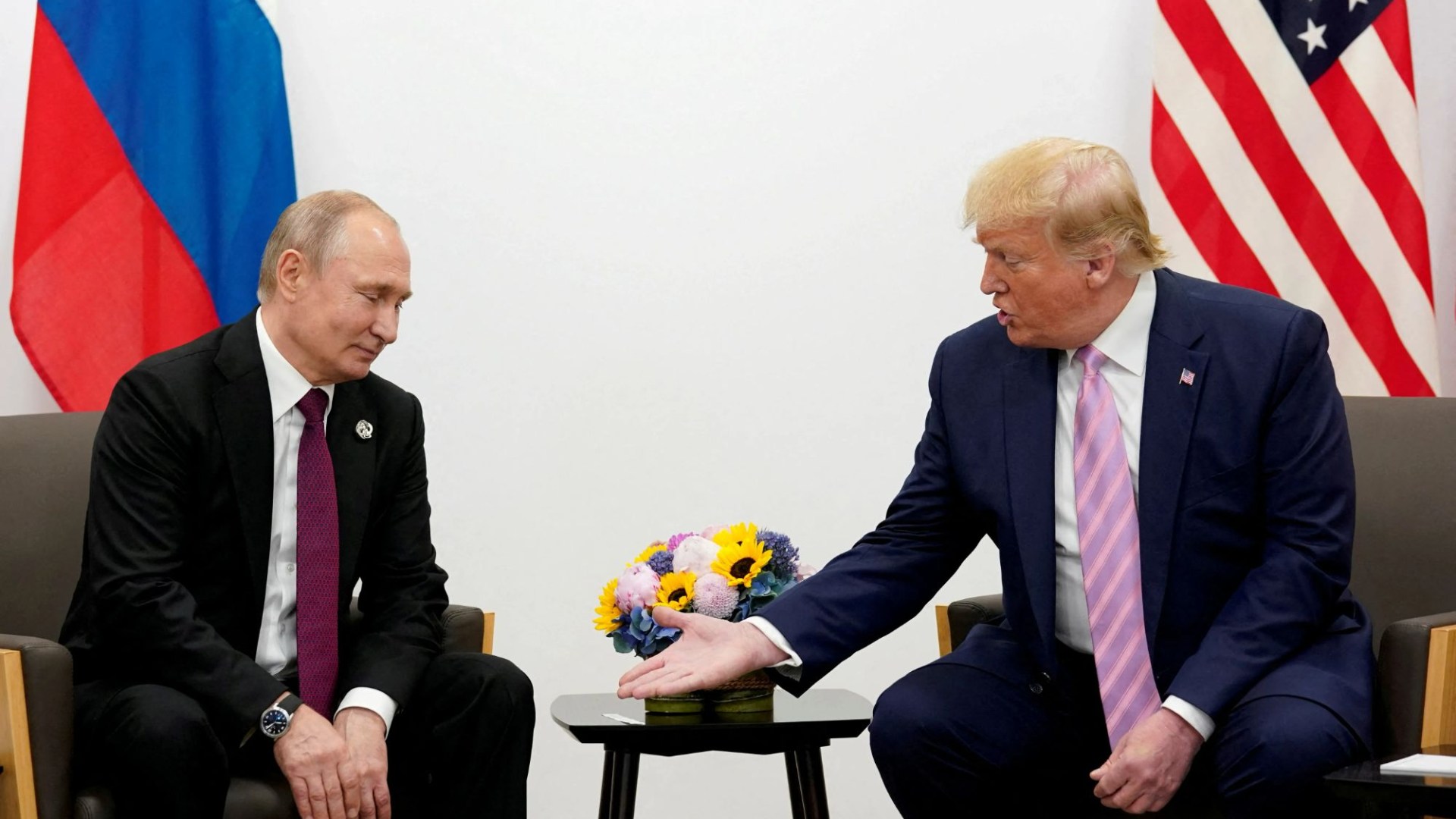
In a lengthy, four-hour question-and-answer session at the Kremlin, Russian President Vladimir Putin declared his desire for “lasting peace” with Ukraine, despite the ongoing war he initiated over a year ago. This declaration comes as a stark contrast to his previous hardline stance, where he refused negotiations and asserted Russia’s claim over annexed Ukrainian territories. Putin’s sudden shift in rhetoric suggests a potential willingness to engage in diplomatic solutions, though his actions and pronouncements are often contradictory and manipulative. He further expressed openness to meeting with former US President Donald Trump, who has previously boasted of his ability to swiftly resolve the conflict. Putin suggested they would “have things to discuss,” indicating a possible avenue for future dialogue, despite no direct contact between the two men currently.
Putin’s assertion of seeking peace is juxtaposed against the grim reality of the war’s continued devastation. He downplayed Ukraine’s resistance, claiming their fighting force would soon dwindle, a prediction that has consistently proven inaccurate throughout the conflict. He argued against a ceasefire, suggesting it would only benefit Ukraine by providing an opportunity to regroup and rearm. This rationale contradicts his stated desire for peace, revealing a strategic calculation aimed at maintaining pressure on Ukraine and justifying continued aggression. His underlying message remains consistent with previous narratives, blaming Ukraine for the conflict while presenting Russia as the party seeking resolution.
While professing peaceful intentions, Putin simultaneously reaffirmed his territorial claims based on the “situation on the ground,” which refers to the illegally annexed regions of Ukraine following sham referendums conducted under military occupation. He specifically mentioned Kherson, Luhansk, Zaporizhzhia, and Donetsk, regions seized by Russia and subjected to coercive “votes” designed to legitimize annexation. This insistence on recognizing the altered territorial reality demonstrates Putin’s unwillingness to compromise on his primary objective of expanding Russian territory. His peace overtures, therefore, appear conditional on Ukraine accepting these illegal annexations, a highly improbable scenario given Ukraine’s unwavering commitment to its sovereignty and territorial integrity.
Putin also admitted, with a degree of self-criticism, that Russia should have been better prepared for the invasion, acknowledging the miscalculation that led to the initial setback in capturing Kyiv. However, he framed this admission within a narrative of Russian strength, claiming the country has emerged stronger in the past few years. He touted Russia’s economic resilience and boasted of having the “strongest military capability in the world,” a claim demonstrably contradicted by the realities of the war in Ukraine. This narrative of strength serves to bolster domestic support and project an image of unwavering power despite the ongoing conflict’s substantial costs.
Ukrainian President Volodymyr Zelensky responded to Putin’s pronouncements with skepticism, questioning Putin’s sanity. Zelensky’s reaction underscores the deep mistrust between the two sides, fueled by Russia’s continued aggression and blatant disregard for international law. The chasm of mistrust makes meaningful negotiations incredibly difficult, highlighting the significant challenges in achieving a genuine and lasting peace. The international community also largely views Putin’s words with suspicion, given his history of deceptive pronouncements and manipulative tactics.
Beyond the geopolitical implications of his statements, Putin also inadvertently revealed a personal detail during the session. He made a seemingly unguarded reference to watching films with his “little ones,” inadvertently confirming long-standing rumours of having two young sons with Alina Kabaeva, an Olympic gymnast. While the Kremlin officially acknowledges only two daughters, persistent reports suggest the existence of these additional children. This slip-up provides a rare glimpse into Putin’s carefully guarded personal life, a subject typically avoided in public discussions. The revelation, while seemingly minor, adds another layer of intrigue to the already complex portrait of the Russian leader.