



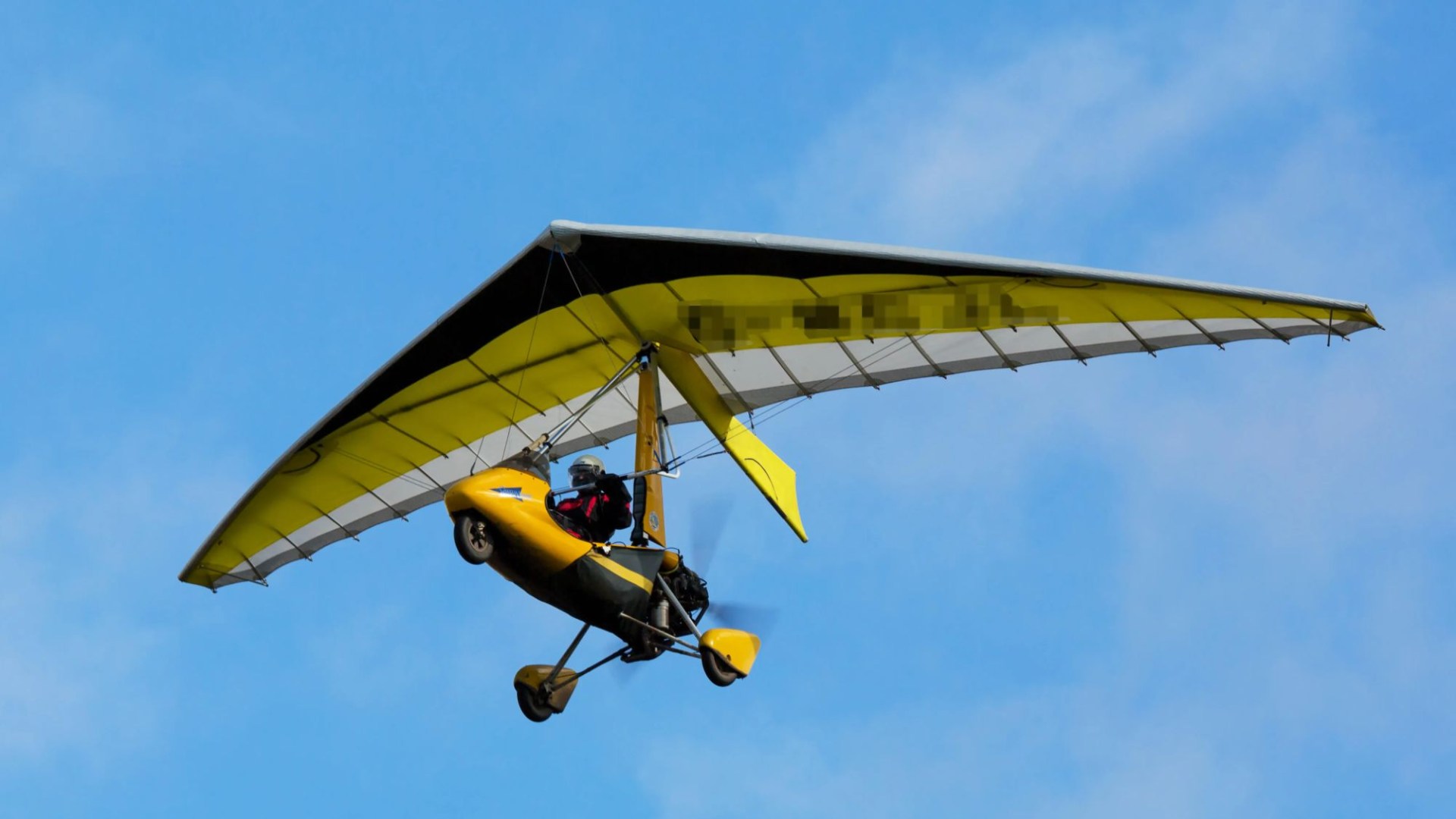
The aviation world witnessed a peculiar incident on October 3rd at Athey’s Moor Airfield in Northumberland, England, when a Pegasus Quantum 15 microlight aircraft embarked on an unmanned flight after its pilot had disembarked to manually start the engine. The pilot, facing a dead battery, followed standard procedure, exiting the cockpit and accessing the rear-mounted engine to initiate the starting sequence by turning the propeller. Successfully igniting the engine, the pilot was then confronted with an unexpected turn of events as the aircraft, free from restraint, began to roll forward down the runway. To his astonishment and horror, the two-seater microlight proceeded to lift off, taking an unscheduled and pilotless flight.
The runaway aircraft’s trajectory was monitored by radar as it traversed the coastline north of Newcastle, venturing out to sea. Despite search efforts, the Pegasus Quantum 15 was never recovered. The Air Accidents Investigation Branch (AAIB), tasked with investigating aviation incidents, concluded in their official report that the aircraft was presumed to have crashed, given its disappearance and the lack of any further sightings. This incident has been dubbed by some aviation enthusiasts as one of the most bizarre documented in accident reports, highlighting the unpredictable nature of even seemingly routine procedures in aviation.
The pilot’s fortunate escape from injury underscores the inherent risks associated with aircraft operations, even in the relatively benign environment of a small airfield. The incident serves as a cautionary tale about the potential for unforeseen consequences when dealing with mechanical devices and the importance of adhering to safety protocols, even in seemingly familiar situations. While the pilot’s actions were seemingly standard practice for starting an aircraft with a dead battery, the unusual outcome highlights the possibility of unexpected mechanical behavior and the necessity for vigilance.
The Northumberland incident evokes memories of a similar occurrence in the United States, where an unmanned light aircraft engaged in an uncontrolled taxiing episode across an airfield, causing widespread panic and scattering ground personnel before miraculously becoming airborne. This rogue aircraft, unlike its Northumberland counterpart, reached a significant altitude of 12,000 feet before ultimately exhausting its fuel supply and performing an unplanned landing in a field. While both incidents involved unmanned aircraft movements, the US incident underscores the potential for even greater damage and disruption, particularly in more congested airspace.
The Northumberland incident prompted immediate investigation by the AAIB, the UK’s dedicated body for analyzing civil aircraft accidents and serious incidents. Their primary objective is to identify causal factors and make safety recommendations to prevent future occurrences rather than apportion blame. The AAIB’s meticulous investigation involved reviewing available evidence, including eyewitness accounts, radar data, and the aircraft’s maintenance history. The specific circumstances that allowed the aircraft to move forward and become airborne are central to the investigation, potentially including factors such as inadequate braking, improper chocking, or unforeseen mechanical failures.
While the exact chain of events leading to the unmanned flight and subsequent loss of the Pegasus Quantum 15 may remain partially shrouded in mystery, the incident serves as a stark reminder of the unforgiving nature of aviation. The pilot’s fortunate escape, juxtaposed with the aircraft’s disappearance, highlights the thin line between routine procedure and unexpected mishap. The AAIB’s final report will likely offer more detailed insights into the sequence of events, potentially contributing to enhanced safety procedures and preventing future occurrences of this unusual but potentially dangerous scenario. The incident serves as a testament to the need for constant vigilance and adherence to best practices in all aspects of aircraft operation, no matter how seemingly mundane.