
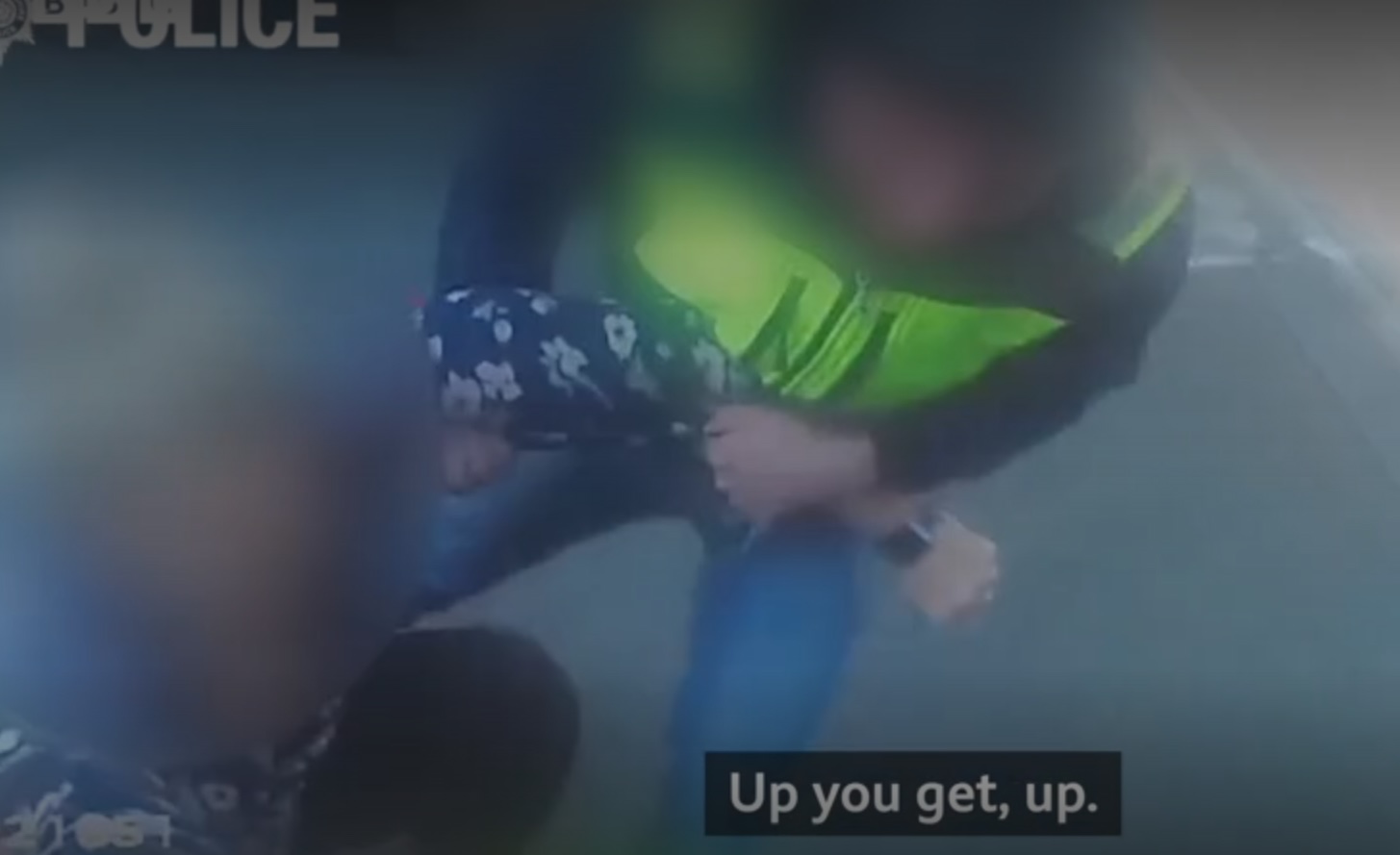
The incident unfolded on a Thursday on the M1 motorway in South Yorkshire, captured in video footage released by the South Yorkshire Police. The video depicts a police officer attempting to assist a visibly intoxicated woman out of her vehicle, which is precariously stopped in the middle of the motorway. The officer initially takes hold of the woman’s wrist and then proceeds to remove her feet from the footwell. The woman expresses a desire for a moment to compose herself, but the officer stresses the urgency of the situation, emphasizing their dangerous location in the middle of the motorway. Despite the officer’s efforts, the woman collapses onto the road surface. The officer, along with another individual present at the scene, attempts to lift her to safety by each taking hold of one of her arms. Growing increasingly concerned for the woman’s safety and the safety of other motorists, the officer radios for backup, emphasizing the imminent danger of their position in a live lane of traffic and his inability to move the woman from the road. The woman remains resistant to the officer’s pleas to get up, verbally rebuffing his instructions.
The video further captures the officer requesting a breath sample from the woman, after which she can be heard sobbing. The 39-year-old woman was subsequently arrested and appeared in Sheffield Magistrates’ Court the following Friday. She pleaded guilty to failing to provide a specimen for analysis. The court granted her bail, with a scheduled reappearance set for February 17th. This incident underscores the persistent and serious problem of drunk driving on UK roads. Temporary Roads Policing Inspector Brandon Brown emphasized the stark statistic that one in six fatal collisions involve a drunk driver, highlighting the potentially devastating consequences of choosing to drive under the influence of alcohol. He recounted the somber experience of having to deliver news of fatalities to grieving families, particularly during the festive season, emphasizing the emotional toll this takes on officers and the profound impact on the lives of those affected.
Inspector Brown stressed the shared responsibility in preventing such tragedies. He urged anyone planning to consume alcohol to make alternative arrangements for transportation, emphasizing the importance of leaving their vehicles at home. This incident comes on the heels of another high-profile drunk driving case that occurred in October. In this separate incident, a drunk driver crashed into the Prime Minister’s country residence, Chequers, causing substantial damage. The driver, Matthew Wootten, intentionally drove his vehicle into the main gate of the 16th-century mansion, causing extensive damage to the 80-year-old iron railings and bollards. The impact left Wootten’s vehicle severely damaged, and he was subsequently arrested. Cans of alcohol were discovered inside the wreckage. A breathalyzer test revealed that Wootten was driving with nearly three times the legal limit of alcohol in his system.
The collision at Chequers resulted in nearly £40,000 worth of damage to the historic property. Wootten pleaded guilty to charges of dangerous driving, damaging property being reckless as to whether life is endangered, and drink-driving. He received a 32-month prison sentence for his actions. These two incidents highlight the ongoing problem of drunk driving and the potentially severe consequences that can result. The incident involving the woman on the M1 demonstrates the immediate danger posed to both the driver and other road users, while the incident at Chequers highlights the potential for significant property damage and the severe penalties that can be imposed for such offenses.
The message from law enforcement is clear: do not drink and drive. Plan ahead, arrange alternative transportation, and prioritize the safety of yourself and others. The consequences of drunk driving can be devastating, ranging from minor traffic incidents to serious collisions resulting in injury or death. The emotional and financial repercussions can be far-reaching, affecting not only the individuals involved but also their families and communities. Both incidents serve as poignant reminders of the importance of responsible decision-making and the potential consequences of choosing to drive under the influence of alcohol. The statements made by Inspector Brown resonate powerfully, highlighting the human cost of these preventable tragedies. The emphasis on shared responsibility and the need for careful planning underscore the crucial role individuals play in preventing drunk driving incidents and promoting road safety.
The legal consequences of drunk driving are significant, as demonstrated by the sentencing of Matthew Wootten. The combination of dangerous driving, property damage, and the high level of intoxication all contributed to the severity of his sentence. The woman arrested on the M1 also faces legal repercussions, although the specific outcome of her case is yet to be determined. These cases underscore the importance of adhering to the law and the serious penalties that can be imposed for driving under the influence of alcohol. The message is clear and consistent: make responsible choices, plan ahead, and never drive under the influence of alcohol. The safety of yourself and others depends on it.