



Paragraph 1: The Incident
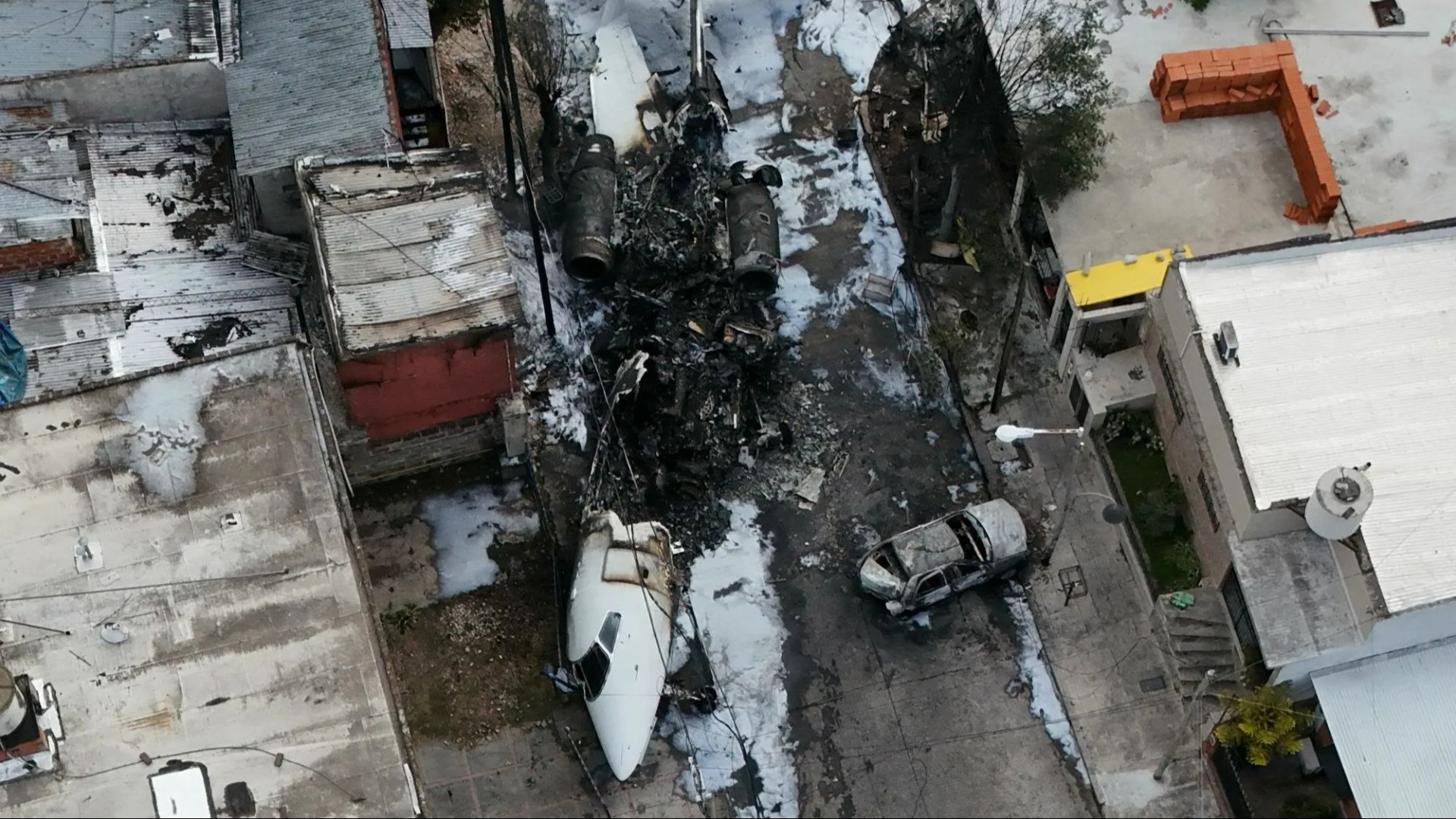
A tragic aviation accident unfolded at San Fernando Airport in Buenos Aires, Argentina, as a private jet crashed into a building during its landing approach, resulting in a devastating fire and the loss of two lives. The aircraft, reportedly experiencing difficulties while landing, overshot the runway and collided with a residential structure, immediately igniting a fierce blaze. The pilot and co-pilot, the sole occupants of the plane, perished in the crash. Identified as 35-year-old Agustín Orforte and 44-year-old Martín Fernández Loza, they were returning from a chartered flight to Uruguay earlier that morning.
Paragraph 2: Emergency Response and Investigation
First responders swiftly arrived at the crash site to combat the raging fire engulfing the aircraft and the impacted building. Firefighters worked diligently to extinguish the flames, preventing further spread and damage. Following the containment of the fire, investigators commenced their meticulous examination of the wreckage, searching for clues to determine the precise cause of the accident. The scene, marked by charred debris and the mangled remains of the aircraft, underscored the severity of the impact.
Paragraph 3: Airport Details and Flight Information
San Fernando Airport, located in a northwestern suburb of Buenos Aires, serves a relatively low volume of air traffic annually. The private jet involved in the accident had embarked on a chartered flight to Uruguay earlier on the day of the crash, and the pilots were returning to Buenos Aires when the tragedy occurred. The nature of the chartered flight and the details regarding the passengers or cargo transported during the initial leg of the journey remain undisclosed.
Paragraph 4: Preliminary Findings and Speculation
Initial reports suggest that the pilots encountered difficulties controlling the aircraft during the landing phase. The plane’s apparent failure to adhere to the runway trajectory indicates a potential loss of control, ultimately leading to the disastrous collision with the building. While the exact factors contributing to the loss of control remain under investigation, several possibilities are being explored, including potential mechanical malfunction, pilot error, or adverse weather conditions.
Paragraph 5: Impact and Aftermath
The crash has sent shockwaves through the local community and the aviation industry. The loss of two experienced pilots and the dramatic nature of the accident highlight the inherent risks associated with air travel. The incident serves as a stark reminder of the importance of stringent safety protocols and thorough investigations to prevent future occurrences. The families of the deceased pilots are undoubtedly grappling with immense grief and loss.
Paragraph 6: Ongoing Investigation and Future Implications
The investigation into the crash is expected to be comprehensive and involve a detailed analysis of various factors, including the aircraft’s maintenance records, pilot training and experience, weather conditions at the time of the accident, and air traffic control communications. The findings of the investigation will be crucial in determining the root cause of the accident and potentially informing future safety measures to mitigate similar risks. The aviation community will closely monitor the investigation’s progress and the resulting recommendations to enhance aviation safety.