


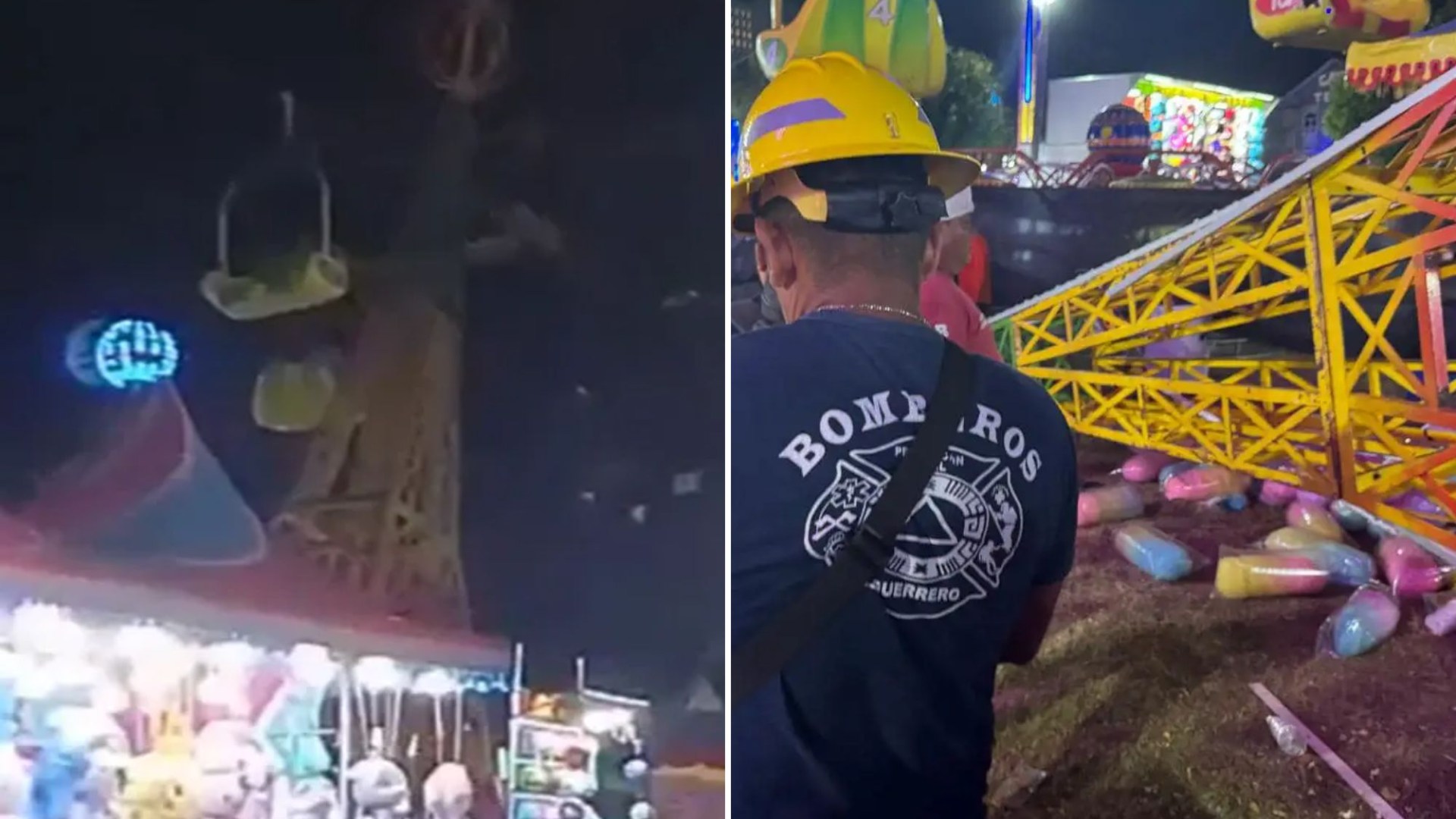
The festive atmosphere of a Christmas fairground in Acapulco, Mexico, was shattered when a towering “Eiffel Tower” ride catastrophically collapsed, sending cable cars plummeting to the ground and injuring multiple people. Footage of the incident captures the slow-motion horror as the central pylon of the ride begins to tilt, ultimately crashing down onto the fair below. The suspended cable cars, filled with fairgoers, plunged from a significant height into the chaos, amid the backdrop of Christmas stalls and festive decorations. Concerned witnesses rushed to the scene to aid the wounded, who lay amongst a twisted wreckage of metal, cables, and scattered remnants of holiday treats. While initial reports varied, at least two individuals were hospitalized with injuries, with several others treated for shock at the scene. The cause of the collapse remains under investigation, prompting serious questions about safety standards and oversight at the fair. Local authorities have suspended the fair’s operations indefinitely and pledged a thorough investigation to determine the cause of this devastating incident and to implement measures to prevent future occurrences.
The Acapulco incident echoes a disturbing trend of fairground ride failures, highlighting the inherent risks associated with these attractions and the critical importance of robust safety protocols. The visual documentation of the collapse underscores the sheer force and suddenness of the event, leaving little time for reaction from those on the ride or those nearby. The scene in the aftermath – injured individuals, tangled debris, and scattered festive items – paints a stark contrast to the joyous atmosphere that preceded the tragedy. The incident has understandably shaken the community and raised concerns about the safety of similar attractions, placing pressure on organizers and authorities to demonstrate a commitment to stringent safety regulations. The suspension of the fair’s operations reflects the gravity of the situation and the need for a comprehensive assessment before any resumption of activities.
The incident in Acapulco resonates with a similar tragedy that occurred two years prior at a Dussehra fairground in Mohali, India. In that incident, a spinning wheel ride malfunctioned, plummeting approximately 50 feet to the ground and injuring over 50 people, including children. The horrifying footage of the Mohali incident shows the ride tilting before crashing to the platform, throwing riders from their seats and creating a chaotic scene of panicked witnesses tending to the injured. The absence of ambulances at the fairground, as reported by a local police official, further compounded the crisis and sparked accusations of negligence against the organizers. This incident, like the one in Acapulco, underscored the potential for catastrophic consequences when safety measures are inadequate or ignored.
Both incidents serve as stark reminders of the potential dangers lurking beneath the surface of seemingly innocent amusement. While fairgrounds are designed to provide entertainment and joy, these tragedies highlight the critical need for rigorous safety protocols, regular maintenance checks, and vigilant oversight by organizers and local authorities. The aftermath of these incidents inevitably leaves a trail of physical and emotional trauma, impacting not only the victims and their families but also the wider community. The shock and fear generated by such events can erode public trust in these forms of entertainment and necessitate a renewed focus on safety as paramount.
The investigation into the Acapulco incident will likely focus on several key areas, including the structural integrity of the ride, the maintenance history, the adherence to safety regulations, and the training and oversight of the ride operators. Determining the root cause of the collapse is crucial to preventing future tragedies and restoring public confidence. Similarly, the Mohali incident should serve as a case study in the importance of emergency preparedness at such venues. The reported lack of ambulances at the scene likely exacerbated the situation and highlighted the need for comprehensive emergency plans, including readily available medical personnel and equipment.
Beyond the immediate investigations and responses, these incidents call for a broader discussion about safety standards at fairgrounds and amusement parks worldwide. Implementing more stringent regulations, enhancing inspection procedures, and promoting greater transparency regarding ride maintenance and safety records could significantly reduce the risk of such tragedies. Further, public awareness campaigns can empower individuals to make informed decisions about participating in these activities and to recognize potential warning signs. Ultimately, ensuring the safety of fairgoers requires a collaborative effort between ride operators, regulatory bodies, and the public, with safety prioritized above all other considerations. The memories of these devastating incidents should serve as a constant reminder of the importance of vigilance and the human cost of neglecting safety protocols.