

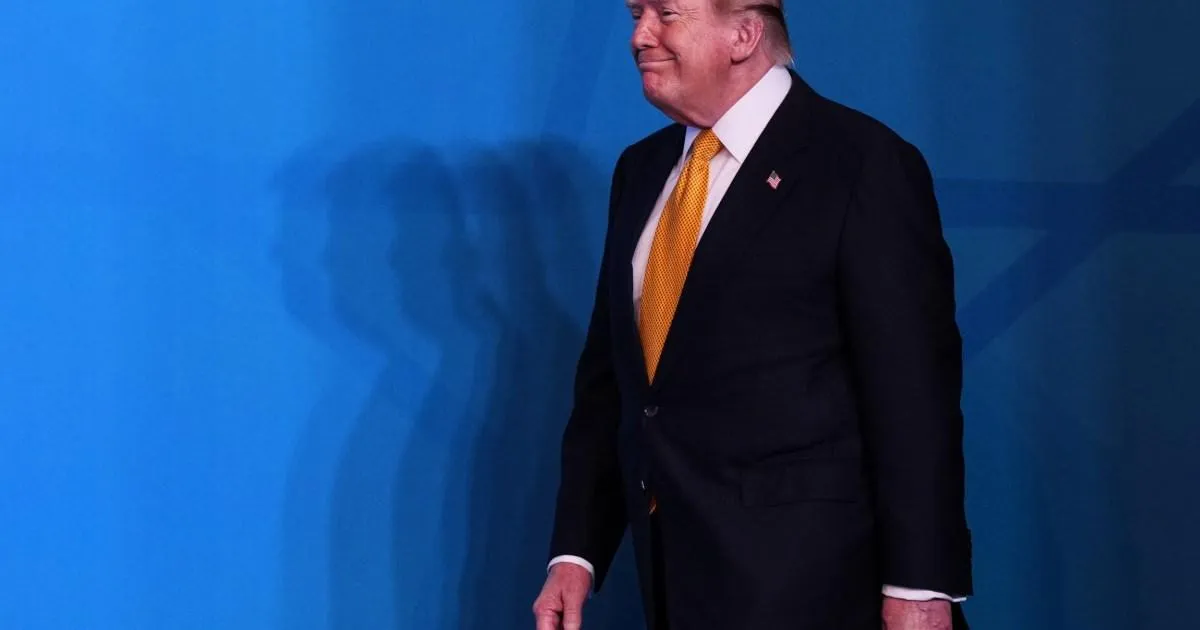
The geopolitical landscape has shifted dramatically following Donald Trump’s recent remarks at a NATO summit, where the former president signaled a significant escalation in the ongoing conflict between the United States and Iran. Speaking with his characteristic bluntness, Trump painted a sobering picture of his own security, openly suggesting that he has become a primary target for the Iranian regime. By framing his position as being in the crosshairs of Tehran, Trump injected a personal, high-stakes narrative into a conflict that has been simmering for decades. His rhetoric underscores a belief that the cycle of violence is not merely a matter of statecraft, but a direct, existential struggle between himself and Iranian leadership.
In his address, Trump dismissed any notion that the current military engagement represents a “strategic dead end.” Instead, he staunchly defended the U.S. approach, labeling the campaign a “tremendous military success.” This perspective stands in stark contrast to observers who fear the region is spiraling toward an uncontrollable war. By suggesting that the current objective is to “finish the job” rather than negotiate a new diplomatic path, Trump effectively closed the door on the possibility of a peaceful resolution. His comments suggest a fundamental shift in strategy: moving away from the bargaining table and toward a total military-centric posture that prioritizes dominance over diplomacy.
The situation on the ground has deteriorated rapidly, fueling the fire ignited by Trump’s verbal sparring. The U.S. Central Command, citing the need to protect international shipping lanes from Iranian aggression, recently carried out fresh strikes against vessels in the Strait of Hormuz. In retaliation, Iran’s Revolutionary Guard Corps launched coordinated attacks on dozens of U.S. military sites across Bahrain and Kuwait. These tit-for-tat exchanges have made one thing clear: the fragile ceasefire that was intended to bring stability to the region has effectively collapsed. The reality now is one of recurring hostilities, where every strike is met with a swift and dangerous counter-strike.
For those watching the conflict unfold, the chaos is grounded in a series of broken promises and escalating provocations. The recent violence follows weeks of accusations from both Washington and Tehran, with each side claiming the other violated the terms of an agreement that now exists in name only. When the U.S. moved to reinstate sanctions following the attacks on commercial ships, it signaled a move toward isolating Iran economically while simultaneously targeting them militarily. This “maximum pressure” tactic, which Trump has long favored, has now left both nations in a state of open, albeit undeclared, warfare that threatens to redraw the regional map.
Humanizing this crisis requires looking past the rhetoric of “scum” and “enemies,” peering instead at the innocent crews navigating the Strait of Hormuz and the thousands of military personnel stationed at these exposed sites. The geopolitical chess match described by high-level officials has real, bloody consequences for individuals caught in the crossfire. As supply chains are disrupted and maritime safety vanishes, the ripples of these decisions are felt far beyond the Middle East. It is a reminder that when leaders stop talking and start striking, it is the sailors, the ground troops, and the civilians in the path of the conflict who bear the true, heavy weight of the aggression.
As we look toward the future, the volatility of the situation remains profound. The declaration that the ceasefire is over and the promise to “hit them hard again” essentially guarantees a period of intense instability. Whether this is a strategic endgame aimed at forcing a total surrender or an unraveling of order that leads into a broader conflict, remains to be seen. What is clear, however, is that both sides have staked their credibility on this struggle. With the stakes firmly set, the world now waits to see if there is any room left for de-escalation, or if the current rhetoric is the prelude to something even more devastating.