



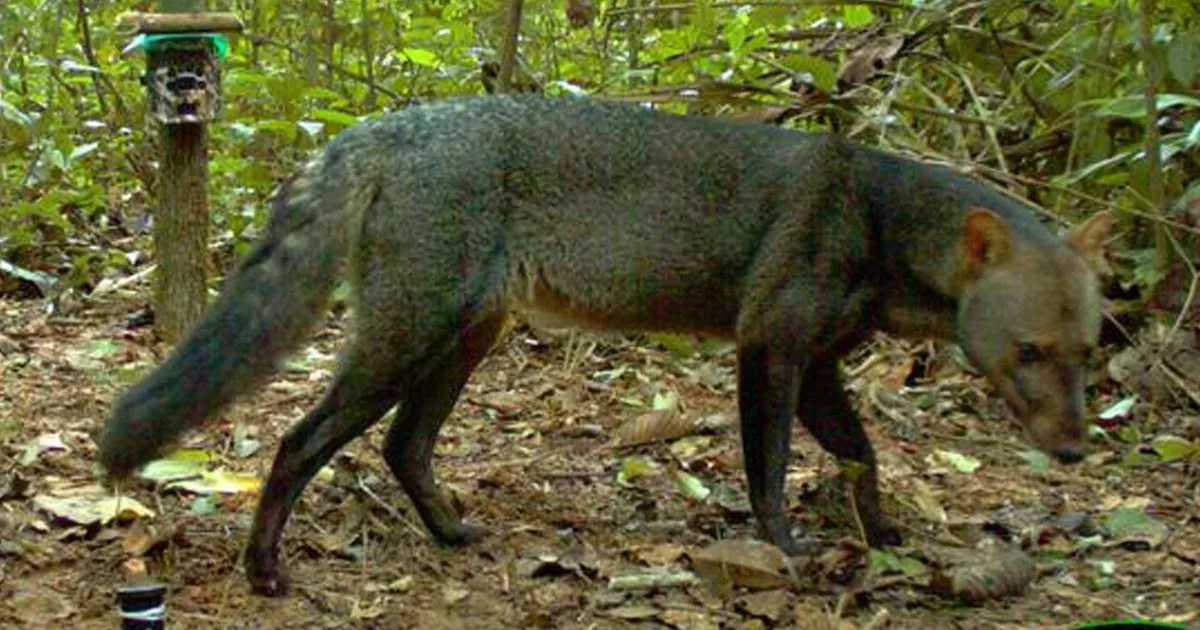
For decades, the short-eared dog—or Atelocynus microtis—has lived in the shadows of the Amazon, a creature so elusive it earned the nickname “the ghost dog.” In the dense, sprawling wilderness of South America, this mysterious carnivore has mastered the art of vanishing, using its razor-sharp hearing and keen sense of smell to steer clear of humans. For years, scientists had almost nothing to go on, capturing only a handful of fleeting glimpses that kept the species cloaked in legend. It seemed like a relic of the jungle that simply didn’t want to be found, leaving researchers wondering if they were chasing a shadow or a real, thriving population.
However, a massive, 25-year collaborative research project across Bolivia and Peru has finally pulled back the curtain, proving that technology can be a bridge to the wild. By utilizing an extensive network of camera traps—motion-activated devices capable of watching the forest 24/7—scientists have finally caught the ghost in the machine. As lead researcher Robert Wallace noted, this breakthrough wasn’t just a lucky snap; it was the result of two decades of painstaking fieldwork. With nearly 600 confirmed sightings now documented, the team has managed to compile the most significant collection of data on the species in history, turning a mythological footnote into a well-documented biological reality.
The footage and images captured by these cameras reveal a creature that is as unique as its reputation suggests. To the untrained eye, the short-eared dog looks like a mix of several species, featuring a bushy tail, a sturdy head, and a coat that shifts from deep gray to a rich, earthy red. Yet, the most fascinating physical trait is hidden beneath them: they possess partially webbed paws, a feature absent in any other wild dog in the Amazon. This physical quirk is a testament to their evolution, helping them navigate the complex, water-logged terrain of the rainforest in ways other predators simply cannot.
Perhaps the most jarring discovery to come out of this study is that we were wrong about their scarcity. While we viewed them as rare, mythical beasts, the data suggests they are actually far more common than any of us dared to hope. In the right habitats, researchers estimate there are roughly 15 individuals for every 100 square kilometers. While they haven’t quite reached the numbers of common medium-sized predators, they are arguably more numerous than the mighty jaguar in some regions. It turns out the ghost dog didn’t disappear because it was dying out; it simply preferred to live where we weren’t looking.
The cameras also taught us about the “business day” of the short-eared dog. It turns out they are absolute morning people, showing the highest activity levels between sunrise and noon. They are creatures of the “terra firme”—the elevated, solid woodlands that sit away from the shifting river banks. Because they stick to these specific, high-ground rainforest reaches, they have managed to avoid the human traffic that clogs the river corridors. This preference for the most intact, secluded sections of the rainforest is exactly what has kept them hidden from our eyes for so long, acting as a natural shield against the pressures of human encroachment.
Ultimately, this study is a roadmap for conservation. The findings paint a clear picture: the ghost dog is thriving, but only because it lives in protected areas and well-managed Indigenous territories. If we want this elusive survivor to endure, we must double down on protecting the Amazonian canopy. Their survival is inextricably linked to the health of the rainforest itself. While they have proven to be resilient, the “ghosts” of the Amazon are now firmly in our sights, and with that comes a responsibility to ensure their quiet, morning-dwelling lives remain undisturbed for generations to come.