

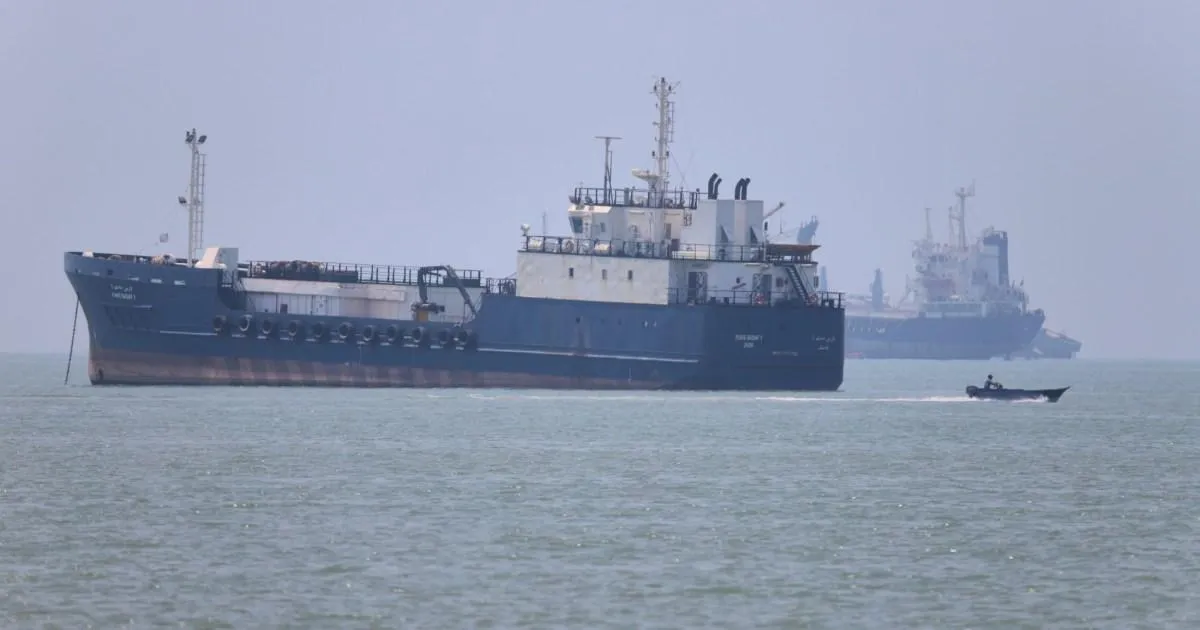
The Strait of Hormuz, long considered the world’s most vital maritime artery for global energy, has once again become a flashpoint for international tension. After a fragile period of relative calm, the Iranian government has declared the strait effectively “closed” to unapproved traffic. This bold move stems from a deepening frustration in Tehran, where officials claim the United States has failed to uphold its side of a ceasefire agreement. By demanding that all vessels now seek official permission to transit the waterway—and hinting at the future implementation of transit fees—Iran is effectively flexing its geopolitical muscle, reminding the world that the flow of global oil and gas sits precariously in their hands.
At the heart of this friction is a fundamental disagreement over what “peace” actually looks like. Iran justifies its restrictive stance by pointing to ongoing Israeli military strikes in Lebanon, arguing that the U.S. has violated the spirit of the ceasefire by failing to halt these actions. However, the situation is complicated by the fact that Israel is not a signatory to the U.S.-Iran agreement. Israel remains resolutely outside the tent, refusing to cease its operations against Hezbollah, which they view as a necessary defense against northern border incursions. This leaves the U.S. caught in a diplomatic bind, struggling to juggle the demands of its ally while attempting to keep the volatile standoff with Tehran from spiraling back into open conflict.
The maritime community is feeling the brunt of this uncertainty, with ship captains left in a state of confusion regarding safety protocols and, more importantly, whether they can proceed without facing detention or delays. Despite the recent diplomatic efforts, international shipping remains in a limbo where even a 60-day window of “toll-free” passage feels tenuous at best. While U.S. Vice President JD Vance has maintained a firm public stance—insisting that international waters must remain open and that the U.S. “holds all the cards” in the ongoing negotiations—the reality on the water tells a more anxious story, as trade routes remain as clogged with bureaucracy as they are with political posturing.
Iran’s tactical maneuver to regain control of the strait is masked as a safety measure. They have formally requested that all vessels submit transit information 48 hours in advance, citing the need to navigate through mine-affected zones and prevent collisions. While they have promised to bear the costs of security and emergency services during this initial two-month period, the underlying message is clear: the privilege of passage is something Iran intends to manage, if not regulate, moving forward. It is a strategic move designed to assert sovereignty over a channel that serves as a lifeblood for the global economy, effectively turning a trade route into a legitimate bargaining chip.
Back in the halls of power, the political fallout is sharpening. Former President Barack Obama recently offered a sobering assessment of the broader conflict, suggesting that the United States is arguably in a worse position today than it was before the hostilities began in February. He pointed to the immense human and financial costs of the struggle, noting that the gains made—if any—hardly justify the strain placed on the military and the loss of life. His critique strikes at the heart of the modern approach to the Middle East, highlighting how the dismantling of previous nuclear frameworks has only accelerated the cycle of escalation, leaving the U.S. scrambling to regain the stability that was arguably within reach years ago.
Ultimately, we are witnessing a global game of chess where the pieces are actual ships, and the board is the world’s most expensive corridor for oil. The diplomatic rhetoric from Washington, characterized by confidence and an emphasis on structural leverage, feels increasingly detached from the practical realities faced by those navigating the choppy waters of the Strait of Hormuz. As the 60-day ceasefire window ticks down, the international community is left to wonder whether the path ahead involves a lasting, structured peace or a return to the brink of catastrophe. For now, the world waits, watching to see if the rules of the sea will be dictated by global consensus or by the shifting currents of regional power.